Key Takeaways
- The integrity of Nigeria's democracy hinges on the Independent National Electoral Commission (INEC) remaining strictly unbiased for the 2027 general elections.
- Government must take decisive and firm action against religious extremists attempting to transform Nigeria into a caliphate state.
- Politicians are urged to prioritize competence over ethnic or religious affiliations when selecting leaders.
- A balanced presidential ticket, representing both Christian and Muslim faiths, is crucial for Nigeria's secular identity.
- Criminal acts, including kidnapping and violence, must be prosecuted vigorously, regardless of any religious guise.
- Church titles, while not always explicitly biblical, serve vital administrative functions for organizational structure and growth.
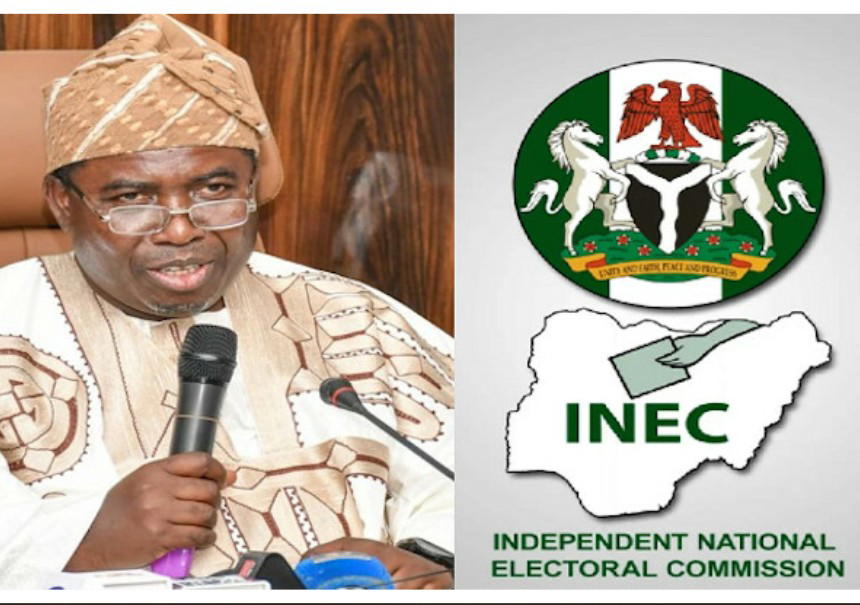
Akure, Ondo State – The National President of the Pentecostal Fellowship of Nigeria (PFN), Bishop Wale Oke, has issued a powerful warning, asserting that the very integrity of the nation's democracy rests on the Independent National Electoral Commission (INEC) maintaining absolute impartiality as the country gears up for the 2027 general elections. Speaking to journalists at the 38th annual convention of Agape Christian Ministries in Akure, Bishop Oke also called upon the Federal Government to 'come down hard' on religious extremists whose agenda, he stated, is to forcefully transform Nigeria into a caliphate state.
Safeguarding Electoral Integrity for 2027
Bishop Oke underscored the critical importance of an electoral body free from political influence, stressing that INEC's role is to be an impartial arbiter. 'INEC is a government functionary. It is not part of any political party. INEC is to regulate all political parties and to conduct elections, not to take sides with any,' he declared. He further emphasized, 'We are demanding that for the exercise of our civil rights, INEC does not partake in partisan politics. The integrity of Nigeria’s democracy hangs in the balance.' This call comes amidst ongoing national conversations about electoral reforms and the need to bolster public trust in democratic processes, especially after past elections have been marred by controversies surrounding the electoral body's conduct.
Confronting Religious Extremism and Upholding the Constitution
Addressing the pervasive issue of insecurity, Bishop Oke vehemently condemned violence perpetrated under the guise of religion. He highlighted the constitutional guarantee of freedom of religion and worship in Nigeria, stating, 'There are radicals who are bent on turning Nigeria into a caliphate state. But the constitution guarantees freedom of religion and freedom of worship.' He unequivocally labeled acts of violence and unlawful killings in the name of religion as 'satanic' and 'wrong,' urging the government to act decisively. 'Kidnapping is criminal. Taking children from school is criminal. Beheading is criminal. If anybody is doing that in the name of religion, he is a criminal, whether he is from the Christian side or from the Islamic side,' he asserted, clarifying that such acts do not represent the generality of any faith but are perpetrated by 'radicals' who should be identified and handed over to law enforcement agencies by their respective communities. He differentiated between peaceful persuasion and violent coercion, stating, 'If you can persuade me to change from being a bishop into becoming a Muslim, and you succeed, God bless you. If I persuade you to convert to Christianity, God bless me. Let it be by persuasion. But if it is by violence, no. There is a difference between criminality and religion. The government must not tolerate criminality.'
A Call for Competence and Inclusivity in Politics
Looking ahead to the 2027 elections, the PFN President advised politicians to rise above ethnic and religious biases, advocating instead for a focus on competence and merit. 'Politicians should not play the ethnic card in choosing who leads us. They should not play the religious card,' he advised. He proposed a balanced approach to national leadership, suggesting, 'If the presidential candidate is a Muslim, is it not fair to have the vice-presidential candidate as a Christian so that both faiths will be represented in the Villa? If the presidential candidate is a Christian, the vice president should be a Muslim to balance it.' This, he argued, reflects Nigeria's secular state status, ensuring no religion is favored and promoting equitable representation for all citizens, regardless of their faith.
Faith, Administration, and Divine Intervention
Beyond political and security concerns, Bishop Oke also urged Nigerians to seek divine intervention for the country’s myriad challenges, including persistent insecurity and economic hardship. He also took the opportunity to clarify his recent remarks regarding church titles. While acknowledging that titles like 'Senior Pastor' or 'Archbishop' are not explicitly mentioned in the Bible, he explained their administrative necessity within growing religious organizations. 'The bishop is in the Bible. The evangelist is in the Bible. The archbishop is a senior bishop, or father of bishops. As the church grows and expands, structure is adjusted,' he explained. He concluded that such titles are part of the 'wisdom that God gave them to cope with the growth rate that they were faced with,' emphasizing that there is a crucial difference between what is not explicitly mentioned in the Bible and what is unbiblical, asserting that these administrative roles are not sinful but evolve with growth and enlargement.
Why This Matters
Bishop Wale Oke's pronouncements highlight critical fault lines in Nigeria's socio-political landscape: the fragility of electoral integrity, the persistent threat of religious extremism, and the divisive nature of identity politics. His call for an unbiased INEC and decisive government action against those who weaponize religion underscores the urgent need for institutional strengthening and a unified national front to safeguard Nigeria's secular democracy and foster genuine peace and stability.