Key Takeaways
- Portugal coach Jorge Jesus has asserted his absolute authority over team selection and tactics, stating no player, including Cristiano Ronaldo, will influence his decisions.
- Jesus informed Ronaldo he would not start against Norway and Denmark, citing workload management based on the forward's physical condition.
- The coach dismissed reports of Ronaldo's unhappiness, reiterating that player status does not grant special treatment within the squad.
- Ronaldo reportedly expressed frustration after being benched for the Norway game, missing subsequent training sessions.
- Jesus remains non-committal on Ronaldo's involvement in the upcoming UEFA Nations League clash against Denmark.
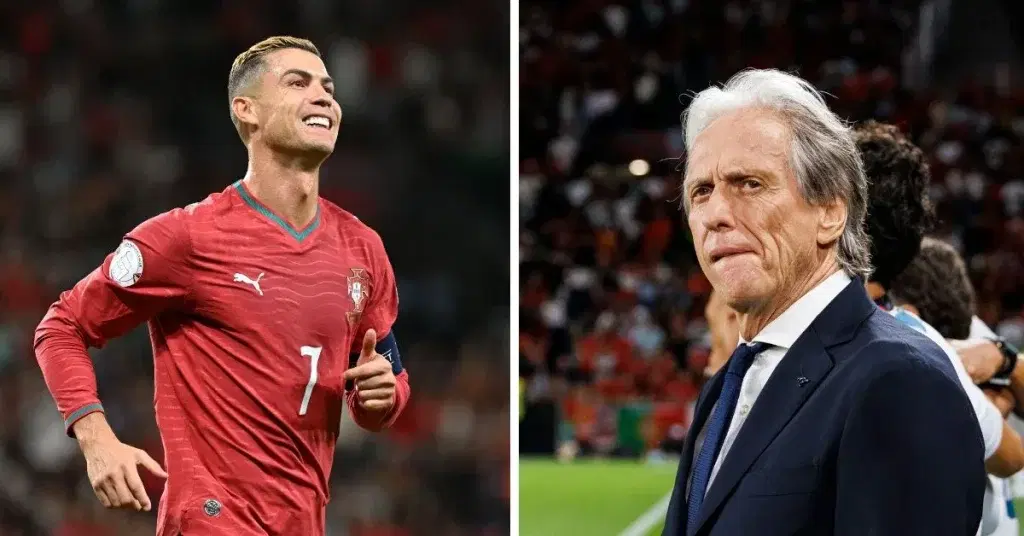
In a bold declaration that underscores the evolving dynamics of modern football, Portugal's head coach Jorge Jesus has firmly asserted his unyielding authority over team selection and tactical strategy, explicitly stating that even a global icon like Cristiano Ronaldo will not sway his decisions. The remarks come ahead of Portugal’s crucial UEFA Nations League encounter with Denmark, scheduled for Thursday at the Parken Stadium in Copenhagen.
Jesus, known for his strong personality and tactical acumen, made it clear that his word is final. He revealed that he had already communicated to Ronaldo that the 41-year-old veteran forward would not be in the starting lineup for Portugal’s matches against Norway and Denmark. This decision, according to Jesus, is rooted in a meticulous approach to managing Ronaldo’s workload, taking into account his physical condition and the demands of international football.
Jesus Takes Firm Stance on Ronaldo's Role
“I told him (Ronaldo) that he would not start the matches against Norway and Denmark,” Jesus explained, detailing his proactive communication with the star player. “I worked for a year with Cris. I know his physical condition perfectly. I was already doing that in Saudi Arabia, when we were playing every three days… And I mentioned to him that he would be there where and when the need arose. And that is what happened.” This statement highlights Jesus's long-standing professional relationship with Ronaldo, suggesting a foundation of mutual understanding, even amidst tough decisions.
Addressing swirling media reports that suggested Ronaldo was unhappy after being left out of Portugal’s 2-1 victory over Norway, Jesus remained unflustered. He emphasized that while he might discuss potential involvement with players, the ultimate responsibility for who plays and when rests solely with him. “I can promise whatever I want, I am the coach,” Jesus declared, leaving no room for ambiguity.
Managing a Legend's Workload
The coach further elaborated on his philosophy: “I told the player that he would not start the match, and that he would be on the substitutes’ bench. If I need him for 30 minutes then he will play, and if I do not need him then he will not play.” This pragmatic approach underscores a focus on team performance and player welfare, particularly for a player of Ronaldo's age and career longevity. Jesus's experience managing high-profile players, including his previous stint with Ronaldo in Saudi Arabia, provides a precedent for his current strategy.
In a powerful affirmation of his leadership, Jesus stated, “There is no player who will change my ideas, neither him nor anyone else in football, not even any president, that will never happen.” This unwavering stance sends a clear message about the hierarchy within the national team setup, reinforcing the coach's absolute authority.
Reports of Ronaldo's Discontent
Jesus, who has a distinguished coaching career managing top clubs like Sporting Lisbon and Benfica, reiterated that Ronaldo’s unparalleled status and achievements do not exempt him from the team’s rules. “Status is one thing, but the rules are the same for everyone. Status comes from his past and his career… One must pay attention, but I always decide according to the team’s goal,” he affirmed. “I am the one who decides. Whoever has worked with me knows that. At the club, the president is the one who gives the orders, but in the team, I am the one who gives the orders.”
These comments gain further context from recent events. Ronaldo reportedly expressed frustration after being left out of Portugal’s win over Norway. Following the match, he did not feature and subsequently missed training with his teammates on Monday and Tuesday. Reports also indicated that after the final whistle in Oslo, Ronaldo went directly from the substitutes’ bench to the tunnel instead of joining his teammates in acknowledging the travelling Portuguese supporters, an action that fueled speculation about his discontent.
The Broader Implications for Team Dynamics
The situation highlights a perennial challenge for national team coaches: balancing the immense individual talent and legacy of a superstar with the collective needs and tactical coherence of the squad. As players like Ronaldo enter the twilight of their illustrious careers, managing their roles becomes a delicate but necessary task. Jesus's firm stance reflects a modern coaching philosophy that prioritizes team cohesion and strategic flexibility over individual star power, even when that star power is legendary.
Ahead of Denmark Clash
When asked whether Ronaldo could come on against Denmark in place of first-choice striker Goncalo Ramos, Jesus remained non-committal, stating, “I do not know. It depends on the match.” This response further solidifies his position that decisions will be made purely on merit and tactical necessity, rather than reputation or past achievements. As Portugal prepares to face Denmark, the focus remains on Jesus's tactical plans and how he continues to manage Ronaldo’s involvement while prioritizing the team’s overall objective.
Why This Matters
This situation is a critical test of leadership for Jorge Jesus and a significant moment for the Portuguese national team. It underscores the principle that even the most iconic players must adhere to team discipline and the coach's vision, especially as they age. Jesus's decisive actions send a clear message about authority and equality within the squad, potentially shaping Portugal's performance in the Nations League and setting a precedent for how football's aging superstars are managed on the international stage.