An Unexpected Knock: A Nightmare Begins
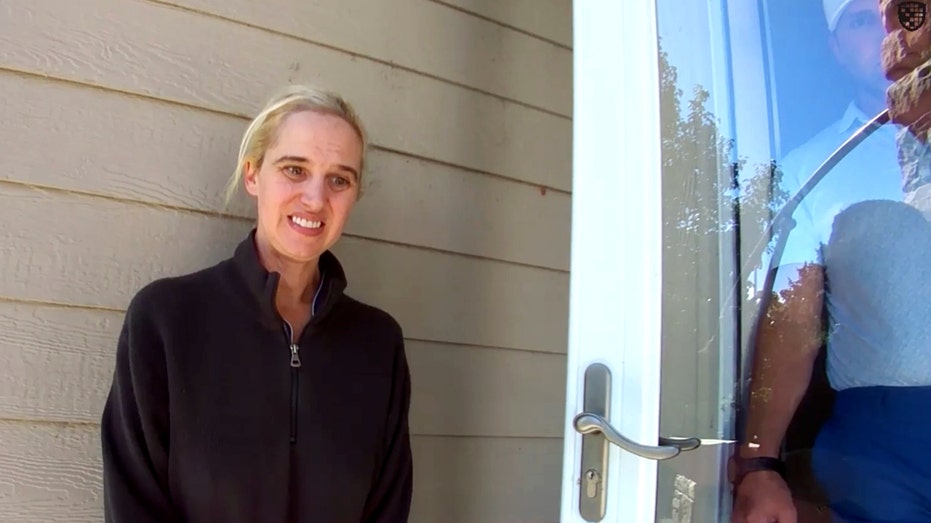
Chrisanna Elser’s ordinary day in the Denver suburbs took a shocking turn when a police officer from the Columbine Valley Police Department arrived at her door. The accusation? Stealing a package from a porch in neighboring Bow Mar, Colorado. The evidence? Surveillance technology that pointed directly to her forest green Rivian R1T electric pickup truck. But Chrisanna knew one thing for certain—she was innocent.
The Surveillance Web: How Technology Became the Accuser
The officer, Sgt. Jamie Milliman, claimed Flock license plate reader cameras had captured Chrisanna’s vehicle driving through Bow Mar between 11:52 a.m. and 12:09 p.m. on the day of the theft. Bodycam footage later revealed the officer’s chilling confidence in the town’s surveillance network: *“You can’t get a breath of fresh air in or out of that place without us knowing.”*
Flock Safety’s automated license plate readers are widely used across the U.S. to track vehicles linked to crimes like thefts, kidnappings, and hit-and-runs. In Bow Mar and Columbine Valley, these cameras are a key tool for law enforcement. But as Chrisanna’s case shows, they generate leads—not definitive proof.
A Flawed Investigation: When Technology Replaces Due Diligence
Despite Chrisanna’s insistence that she was innocent, the officer refused to review her evidence. Instead, she was issued a summons to appear in Jefferson County court. The accusation hinged on a neighbor’s doorbell camera footage posted on Nextdoor, which initially seemed to show someone resembling Chrisanna. However, closer inspection revealed critical differences:
- The suspect was significantly younger.
- She had a distinctive shaved undercut.
- Most importantly, she fled on foot—no vehicle was involved.
Yet the investigation pressed on, treating the surveillance data as conclusive rather than a starting point.
Fighting Back: How Chrisanna Proved Her Innocence
Determined to clear her name, Chrisanna launched her own investigation. What she uncovered was staggering:
- Flock Camera Evidence: Her truck had been parked in front of another Flock camera in Bow Mar during the entire alleged theft window.
- Google Location Timeline: Her phone data confirmed she was at a tailor’s shop over a quarter-mile away from the crime scene at the time of the theft.
- Onboard Vehicle Data: GPS and camera footage from her Rivian R1T provided additional proof of her whereabouts.
- Photos and Receipts: Documentation from other stops that day further supported her alibi.
After compiling this evidence, Chrisanna presented it to the Columbine Valley Police Department. Two weeks later, the summons was voided, and the case was dropped. While the real thief was never caught, internal police documents revealed that the officer involved received a formal reprimand and was ordered to complete additional training.
The Bigger Picture: Surveillance, Privacy, and Accountability
Chrisanna’s ordeal highlights the double-edged nature of modern surveillance. While technologies like Flock cameras and Google Location Timeline can aid investigations, they are not infallible. In this case, overreliance on automated data led to a wrongful accusation—and a civilian had to step in to correct the record.
For those concerned about privacy, Chrisanna’s story offers a crucial lesson: “If they have evidence on you, you should have evidence on yourself.” Many people don’t realize that tools like Google’s Location Timeline can serve as a digital alibi. This feature, accessible via Google Maps, tracks your phone’s movements if enabled—data that could be vital in proving your whereabouts.
Know Your Rights: Accessing Surveillance Footage
Many assume police surveillance footage is off-limits, but in some cases, it can be obtained through public records requests. In Colorado, residents can use the Colorado Open Records Act (CORA) to request government-held records, similar to the federal Freedom of Information Act (FOIA). Rules vary by state and department, but if cameras are owned by a city or town, the footage may be accessible.
A Call for Guardrails: Balancing Safety and Justice
Chrisanna doesn’t advocate for eliminating surveillance tools—she recognizes their value in solving crimes. However, she stresses the need for clear safeguards to prevent misuse. *“They are a useful tool, but they are not a replacement for police work,”* she said.
Her case serves as a wake-up call: Technology can protect communities, but when investigators treat it as infallible, innocent people can pay the price. The question remains—if surveillance data ever pointed the finger at you, would you have the evidence to prove where you really were?
How to Protect Yourself: Key Takeaways
- Enable Location History (Carefully): Google’s Location Timeline can serve as a digital alibi, but weigh the privacy trade-offs.
- Document Your Whereabouts: Save receipts, photos, or other proof of your activities, especially during disputed timeframes.
- Know Your Rights: Research public records laws in your state to access surveillance footage if needed.
- Stay Informed: Understand how technologies like license plate readers and doorbell cameras operate in your area.
For more on Chrisanna’s story, listen to the full episode of the Beyond Connected podcast at getbeyondconnected.com.