Key Takeaways
- Sitting for most of the day can lead to poor posture, stiffness, and muscle weakness.
- Certified fitness and yoga instructor Hilaria Baldwin recommends regular movement and targeted stretches.
- Five chair-based exercises focus on the upper back, core, neck, and hip flexors.
- Experts advise checking in with your body and adjusting movements to your workspace.
Why Desk Work Takes a Toll
For millions of American workers, the nine-to-five grind means hours of uninterrupted sitting. That stationary position can compress the spine, shorten the hip flexors, and leave the back and neck muscles overworked and underused.
According to Hilaria Baldwin, a certified fitness and yoga instructor, the effects are hard to ignore. "Many people sit every day for most of the day, and this can cause so many problems in the body," she told Fox News Digital. "We've all heard of tech neck, carpal tunnel – most of that has to do with the alignment of our spine."
The good news? Simple desk-side movements can help. Baldwin shared five exercises that can be done in a chair, but she cautioned workers to "be the judge of what's appropriate" for their particular workspace before trying them.
Five Moves to Counteract Sitting
1. Goal-Post Squeeze
Start by sitting tall in your chair. Bring your arms into a goal-post position, with elbows aligned to your shoulders. Pull your core in, squeeze your shoulder blades together, and tuck your chin slightly as if pressing the back of your head against a wall.
Keep your arms fixed and bring both elbows forward until they touch in front of you. Open back up and squeeze. Repeat about 10 times. "This, for me, feels really good," Baldwin said. "Check in with your body during the day."
2. Cross-Body Upper Back Opener
Lower your arms so your palms face the floor. Squeeze the shoulder and back muscles, then bring your arms forward to cross one over the other, stopping when the elbows are aligned. As you cross, round your head forward and bring the forehead toward the elbows. Open and repeat about 10 times.
Baldwin described the sensation as pulling the shoulder blades away from the spine like a gentle hug. "It's going to help remind you that you need to be sitting up with your shoulders back, chin back," she added.
3. Neck and Upper Spine Release
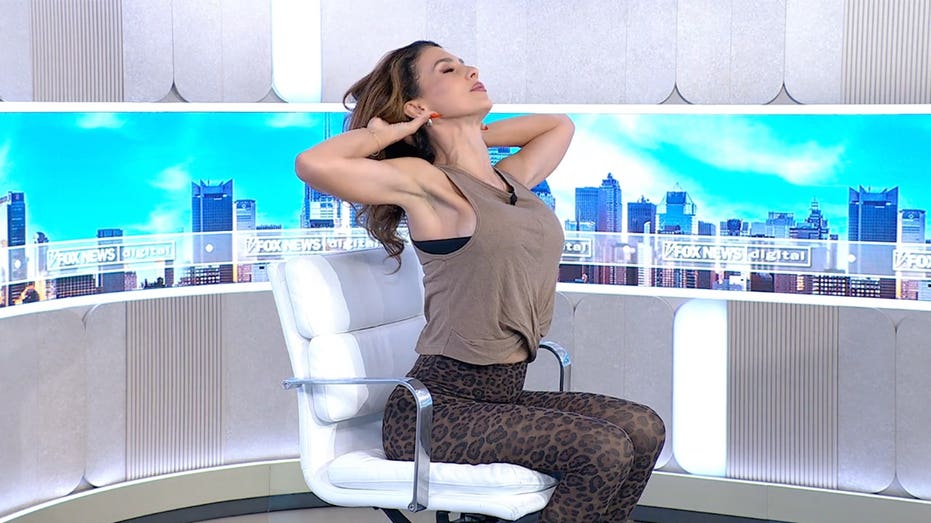
Interlace your fingers behind your head and draw the elbows inward. Slowly drop your chin toward your chest, lightly pulling down through the spine. Then reverse the motion: open the elbows wide, arch the back, and lift the chin upward.
Focus on breathing throughout. "We stop breathing and that just puts tension in our body," Baldwin said.
4. Seated Core Activation
Though subtle, this move strengthens the deep abdominal muscles. Sit up straight and pull your belly button toward your spine, sensing where your sit bones press into the chair. Rock back and forth while maintaining the pull, imagining engagement in the lower gut or the "seatbelt muscle."
"This is actually a really good ab exercise," Baldwin noted.
5. Standing Lunge Stretch
If you can stand, Baldwin recommends stepping one foot forward into a slight lunge with the front knee bent. Press through the back heel, open through the back of the leg, and bring your hips to center. Switch sides and repeat.
"Anything where you can stretch it out is going be really great for you," she said. "I like to mix it with a calf stretch as well."
Why This Matters
Regular movement is not just a break from work; it is essential protection for the body's alignment and long-term comfort. By adding these small exercises to the workday, employees can reduce muscle strain and build healthier habits without leaving their desks.