The escalating internal crisis within the All Progressives Congress (APC) in Kwara State has thrown up many questions about the future of the ruling party ahead of the 2027 general elections.
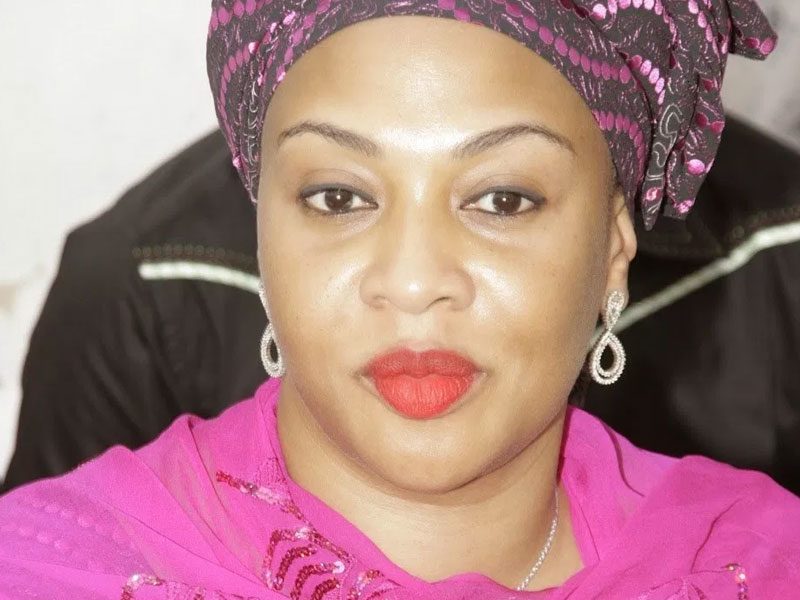
Among them is the political silence of one of the state’s most experienced politicians, Senator Gbemisola Rukayat Saraki.
For a politician who once occupied the forefront of Kwara’s political landscape as a member of the House of Representatives, two-term senator, governorship candidate and later Minister of State under former President Muhammadu Buhari, her limited public engagement at a period of intense political contestation has become a subject of growing interest among party faithful and political observers.
The development is particularly significant coming at a time when the APC appears to be facing its most serious internal challenge since the coalition that birthed the “O To Ge” movement wrested power from the Peoples Democratic Party (PDP) in 2019.
The latest indication of the widening cracks within the party came with the decision of about ten APC governorship aspirants and influential stakeholders to petition President Bola Tinubu over the deteriorating state of the party in Kwara.
The petition reportedly accused the state leadership of sidelining key stakeholders and called for the intervention of the national leadership to avert a deeper crisis.
Although Senator Gbemisola Saraki has neither publicly aligned herself with the aggrieved stakeholders nor openly defended Governor AbdulRahman AbdulRazaq, she is however not on the same page with the Governor
Also her refusal to participate in the public exchanges has fuelled fresh political interpretations.
Within political circles, opinions differ on what her silence represents.
Some APC members privately argue that the Gbemisola Rukayat Saraki (GRS) political movement has gradually lost its cohesion following years of shifting political alliances.
According to them, some members of the movement have allegedly integrated into a certain political structure, while others are said to maintain relationships with politicians across party lines, including the opposition.
There are also unconfirmed reports that some former loyalists of the movement are quietly identifying with emerging political interests as preparations for the 2027 elections gather momentum.
None of these claims has been independently verified.
However, they reflect the uncertainty surrounding the present status of a political structure that, for more than a decade, ranked among the most organised and influential in Kwara politics.
A member of the APC and an aide to one of the aggrieved governorship aspirants, who requested anonymity because he was not authorised to speak on the matter, told Daily Trust that Senator Gbemisola Saraki’s current political disposition remains subject to interpretation.
He however maintained that she is still a member of the party.
“Looking at her experience in the APC, particularly her relationship with the governor over the years, one might think she would be considering many options following her experience.
“Above all, I think she may simply have chosen her peace of mind because of what is happening in the party. Even those of us who remained in the mainstream and stayed loyal, what have we really gained from it? Many of us have been sidelined despite our commitment and literally beaten with sticks,” he said.
But the GRS movement dismisses suggestions that it has become fragmented or politically irrelevant.
In an exclusive interview, the movement’s Press Secretary, Adisa Ridwan Ajadi, described the perception of Senator Gbemisola Saraki’s political silence as a misunderstanding of her personality and leadership style.
“Senator Gbemisola Saraki is not really quiet because, ordinarily, she is not the loud or flamboyant type, either in politics or in her private life. She prefers to remain reserved,” he said.
According to Ajadi, the former minister remains actively engaged with members of her political family despite maintaining a low public profile.
“What many people describe as silence is simply her absence from the media space, which is a personal choice. Nevertheless, she has continued to work for the success of the APC and the progress of President Bola Tinubu.
“The national leadership is aware of her contributions toward the Renewed Hope Agenda”, he noted.
Ajadi disclosed that Senator Gbemisola Saraki returned to Kwara during the APC membership revalidation exercise, where she interacted with supporters and party leaders in her ward, adding that she has remained in constant communication with coordinators of the movement across the state.
He maintained that the GRS structure remains active in all sixteen local government areas of Kwara.
“She maintains structures across all sixteen local government areas of Kwara State, with coordinators spread across the three senatorial districts.”
The movement also rejected allegations that its members have become divided between the APC and the PDP.
“The GRS movement has never been divided, whether across political movements or political parties. There has never been any directive to work against the collective growth of our party or against President Tinubu,” Ajadi said.
While dismissing reports of internal disunity, the GRS spokesman acknowledged that the movement has consciously adopted a less prominent role in the affairs of the state chapter of the APC.
“We chose to step aside because the governor decided to operate as a sole administrator,” he said.
Although that assertion represents the position of the GRS movement, it resonates with concerns raised by several other APC stakeholders who have publicly complained of exclusion from the party’s decision-making process.
Ajadi said the movement deliberately avoided confrontation in order to protect the party.
“We decided to stay back rather than destabilise the party. Stakeholders at the national level are fully aware of the situation.”
Those remarks offer perhaps the clearest indication yet of the movement’s disposition towards the lingering crisis within the APC.
Rather than openly confronting the state leadership, the GRS camp appears to have adopted a strategy of quiet engagement while allowing the national leadership to address issues affecting the party.
Some political observers say that approach reflects Senator Gbemisola Saraki’s style of politics at times.
Unlike many politicians who maintain visibility through frequent public appearances and media engagements, she may have preferred consultations away from the public glare until perhaps at a time she feels it’s most appropriate.
Whether that approach remains effective in a critical period dominated by aggressive political maneuvering and continuous public engagement remains open to debate.
The questions surrounding her political future are also linked to the changing dynamics within the APC.
The coalition that produced the party’s historic victory in 2019 brought together politicians from different backgrounds, interests and tendencies. Seven years later, many of those relationships appear to have come under pressure as the race to succeed Governor AbdulRazaq gradually gathers momentum.
Within that evolving political landscape, Senator Gbemisola Saraki occupies a unique position.
She remains one of the APC’s most recognisable figures in Kwara, yet she has avoided identifying publicly with any of the competing tendencies within the party.
Her family ties to former Senate President Bukola Saraki, who now leads the PDP in the state, have also continued to generate political speculation.
Ajadi dismissed suggestions that those relationships have political implications.
“The APC does not promote disunity among siblings or blood relations. We can maintain family ties without compromising our commitment to the party.”
He added that Senator Gbemisola Saraki remains committed to the APC and continues to support President Tinubu’s administration while participating in activities of the party at the national level.
Immediate past national president of the Nigerian Political Science Association (NPSA), Professor Hassan Saliu, believes the former minister’s low public profile should not necessarily be interpreted otherwise.
According to him, Senator Gbemisola Saraki appears to have deliberately chosen to remain away from the political spotlight after leaving office as a minister.
“Since she completed her term as a minister, she has not been too visible, and she has the right to that. Maybe she has been influencing things at the Presidential Villa, and the party may still be engaging with her at the national level in ways that are not obvious to us. That is possible. But I don’t know.
“Not much is being heard from her publicly, but it is also possible that she is operating from the background,” Saliu said.
The professor of political science, however, observed that the current political reality in Kwara still favours Governor AbdulRahman AbdulRazaq, who, according to him, remains firmly in control of the state’s political structure despite the ongoing agitation by some stakeholders.
“As far as Kwara politics is concerned, the governor appears to still be in charge, at least for now. He has settled for his preferred governorship candidate and does not appear ready to back down despite the rejection and opposition from aggrieved leaders (irrespective of the whatever implications such choice may have),” he added.
As the struggle for the future leadership of the APC in Kwara intensifies, the significance of Gbemisola Saraki’s silence is likely to remain a subject of political debate.
For some, it reflects caution and strategic patience at a period of uncertainty.
For others, it raises questions about whether one of Kwara’s most enduring political structures is preparing for a new phase in the state’s political contest.
Whichever interpretation ultimately proves correct, one fact remains undeniable and that is in a political environment increasingly defined by competing ambitions and succession calculations, the silence of Senator Gbemisola Saraki has itself become part of Kwara’s unfolding political story.