Key Takeaways
- Boat pose, or Navasana, strengthens the core and improves balance and stability.
- A strong core provides a foundation for exercise and everyday movement.
- Boat pose challenges the entire core to work together, building functional strength.
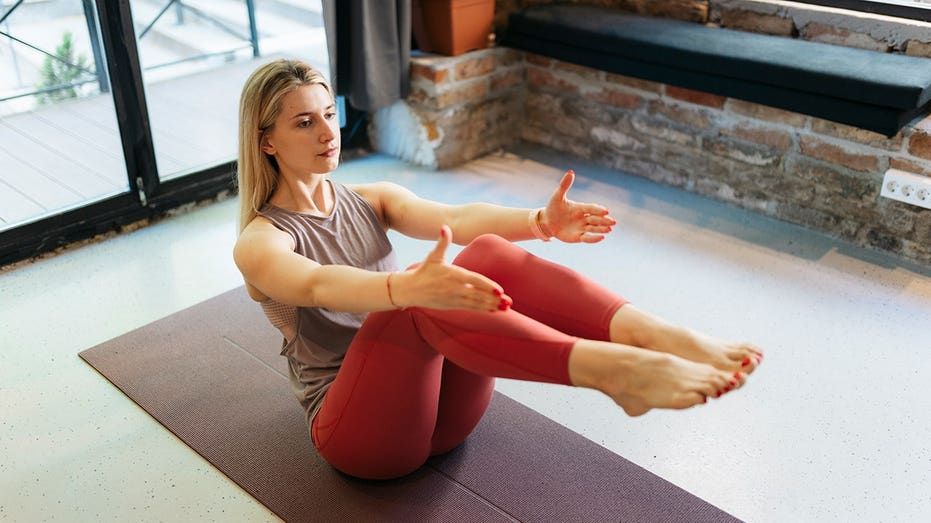
Strengthening the core improves balance and stability, which supports movement, according to experts. While traditional exercises can be effective, one yoga pose may offer added benefits: boat pose, or Navasana, which forms the body into a 'V' and challenges multiple muscles involved in core stability.
Melissa Leach, a certified yoga instructor and strength and conditioning coach, said a strong core provides a foundation for both exercise and everyday movement. 'Ab exercises help support that by engaging muscles such as the obliques, lower back, and deep stabilizers like the transverse abdominis,' she told Fox News Digital.
Together, these muscles work to stabilize your spine, creating a strong foundation for movement and allowing you to transfer force more efficiently between your upper and lower body. Many routine activities, from carrying groceries to getting up from a chair, engage the core muscles to stabilize the trunk, maintain balance, and support controlled movement.
Benefits of a Strong Core
A strong core can also help reduce the risk of injury by improving stability in the spine and ensuring control during lifting and other physically demanding movements, the expert said. 'While injury risk isn’t determined by core strength alone, a well-conditioned core provides a stable foundation for movement in everyday life,' she noted.
Boat pose challenges the ab muscles while also engaging the hip flexors, glutes, and back, according to Leach. This helps to build functional strength rather than just targeting a single muscle group. Compared to the traditional sit-up, which is carried out in 'one plane of motion,' the boat pose requires the entire core to 'work together to stay lifted, which places greater demands on core stability, balance, and control,' Leach said.
How to Perform the Boat Pose
Those looking to make the exercise more dynamic can move in and out of the pose rather than holding it, the expert said. For beginners, Leach recommended some modifications, such as sitting on a folded blanket or cushion to help tilt the pelvis forward, or sitting with the back a few inches from the wall 'for reassurance,' she said.
For individuals with limited core strength, Leach recommends trying a chair-supported version. Sit toward the front edge of a sturdy chair, hold the sides for support, and lean back slightly while lifting one or both feet a few inches off the floor. 'This builds the same engagement without the demand of balancing unsupported, and you can progress to the floor version once you feel steadier,' she advised.
Why This Matters
The boat pose develops both stability and muscular endurance, according to Leach, and can translate into better posture, a stronger lower back, and a core that supports everyday movement. By incorporating boat pose into your exercise routine, you can improve your overall balance, stability, and core strength, reducing your risk of injury and enhancing your overall quality of life.