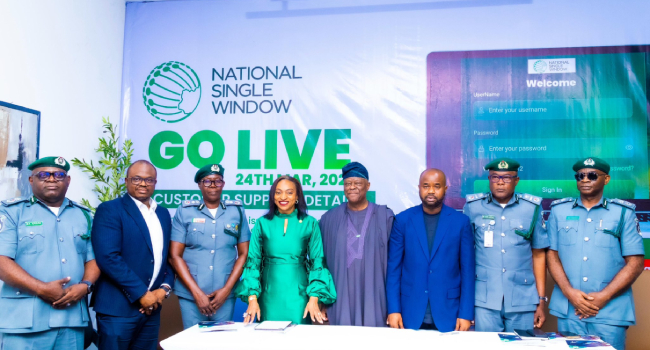
The Federal Government has launched Nigeria’s National Single Window in Lagos, a flagship reform to modernise trade, reduce costs, and improve efficiency across the economy.
Minister of Finance and Coordinating Minister of the Economy, Wale Edun, led the launch in Lagos.
Edun explained that the platform integrates government agencies into a single digital system, streamlining import and export processes, reducing delays, and lowering the cost of doing business.
“This is a decisive shift from complexity to coordination.
“It will ease trade, improve competitiveness, and support economic growth,” the minister was quoted as saying on Monday, in a post by the minister on X.
He further disclosed that for the government, the system strengthens transparency, coordination, and revenue collection.
It also cuts bureaucracy and accelerates access to markets for businesses.
The minister noted that ongoing upgrades to port infrastructure would be critical to ensuring that digital gains translate into real economic impact.
The National Single Window forms part of a broader reform agenda to build a more competitive and investment-ready Nigerian economy, the ministry added.
“This is about creating an economy that works faster, more efficiently, and in the interest of all Nigerians,” it quoted Edun as stating.
Meanwhile, the coordinating minister chaired the Cash Management Meeting, formally welcoming the Minister of State for Finance, Taiwo Oyedele.
The meeting focused on strengthening revenue generation and maintaining close oversight of government finances as efforts continue to close fiscal gaps.
Edun highlighted Oyedele’s role in Nigeria’s tax reform agenda, noting that effective implementation would be critical to improving revenue performance and supporting economic stability.
“Revenue generation is our foremost priority,” he said, emphasising the need for coordinated action across government.
The ministry said that the engagement reflects the Federal Government’s continued focus on prudent cash management, stronger revenue mobilisation, and sustained economic reform.