Key Takeaways
- President Bola Tinubu asserts no negotiations will occur with criminal groups in Nigeria.
- The Nigerian military will expand from eight to twelve divisions to improve operational responsiveness.
- Tinubu highlights the importance of intelligence gathering and vigilance among communities.
During a recent meeting with traditional rulers from Oyo State, President Bola Tinubu reiterated his administration's unwavering commitment to combat crime. He declared that negotiations with criminals would not happen, emphasizing a robust approach towards defeating terrorism, banditry, and other pressing security threats.
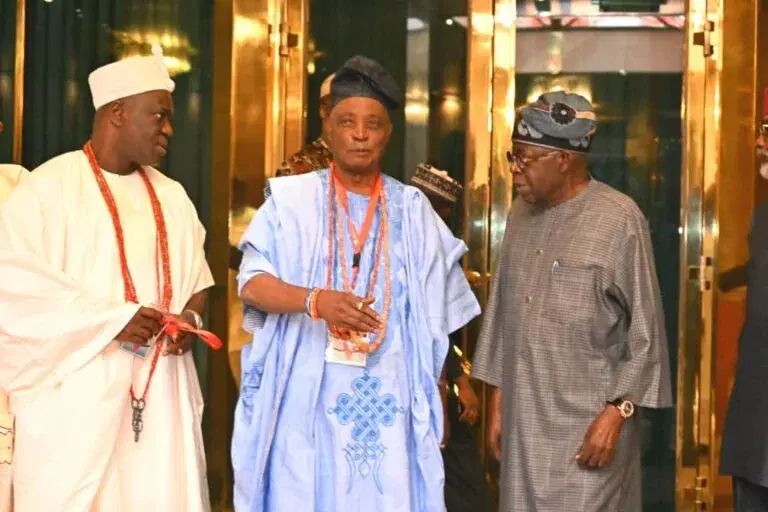
Speaking at the Presidential Villa in Abuja, President Tinubu received the delegation led by Oba Rashidi Ladoja, the Olubadan of Ibadanland. He praised the efforts of Nigeria's armed forces for their recent successful rescue operations and acknowledged the critical support from traditional leaders in the ongoing fight against insecurity.
“I commend our brave men and women in uniform for their exemplary service,” Tinubu remarked. He expressed acceptance of the traditional rulers' messages of appreciation to the military and promised to relay their commendations.
In his address, the President highlighted the evolving security landscape in response to recent challenges, such as the Oyo school abduction case. This incident has prompted a necessary reevaluation of Nigeria's security protocols and operational strategies. “It teaches us to re-examine our security architecture and adapt our operations accordingly,” he stated.
To bolster the military’s effectiveness, the Federal Government has approved an expansion of the Nigerian Army from eight to twelve divisions, designed to enhance their capacity to respond promptly to threats. This strategic decision aims to significantly shorten response times to security incidents across the country.
Tinubu strongly reaffirmed his administration's position against ransom negotiations with criminals. “We refuse to negotiate for ransom. These criminals have committed serious offenses, including murder, and they must face justice,” he asserted emphatically, emphasizing the moral imperatives behind this stance.
Addressing the broader context of Nigeria's security concerns, particularly influenced by instability in neighboring Mali, Burkina Faso, and Niger, Tinubu outlined plans to reinforce forest guards and support the establishment of state police with measures to prevent abuse. “These guards will be trained to confront criminal elements hiding in our forests, not just wildlife,” he explained.
He urged traditional rulers to foster community vigilance, encouraging residents to be aware of their surroundings. “Share the importance of intelligence gathering with your people; they need to know their neighborhoods well,” he advised, highlighting the critical role communities play in the security framework.
Additionally, the President called on state governors to utilize increased federal allocations effectively to improve infrastructure and bolster security measures. He assured the delegation of ongoing improvements in security conditions, encouraging communities to express gratitude to the armed forces for their dedication.
In closing, Oba Ladoja expressed gratitude towards Tinubu for his principled decision not to pay ransom during the recent abduction incident, emphasizing that it demonstrated a government committed to doing the right thing. He called for continued security presence in forest reserves and the advancement of infrastructure projects in Oyo State.
Why This Matters
President Tinubu's steadfast approach to combating crime and his advocacy for intelligent security measures highlight the government's priority in ensuring the safety of Nigerian citizens and restoring confidence in law enforcement.