Key Takeaways
- The Federal Government and TracTrac MSL launched the National Agricultural Mechanisation Policy and Investment Strategy in Abuja.
- Senator Abubakar Kyari says the policies will drive food security and agricultural transformation.
- Nigeria plans a mega tractor assembly plant with annual capacity of 2,000 to 4,000 units.
- The Renewed Hope programme is procuring 2,000 tractors and over 9,000 implements and spare parts.
Policy Launch and Strategic Vision
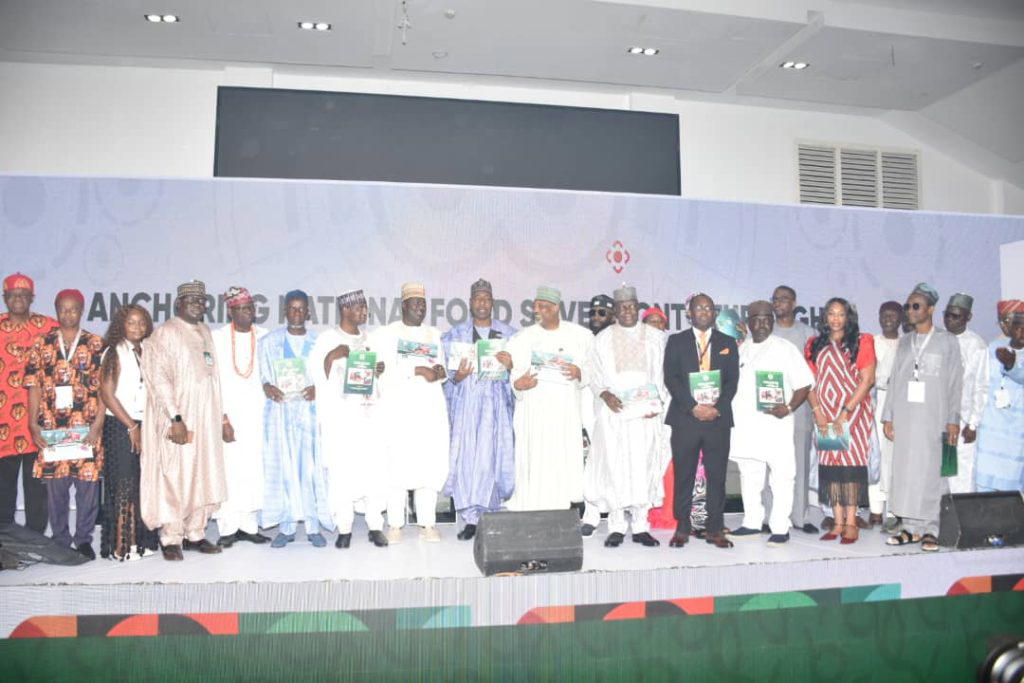
Nigeria moved to anchor its food sovereignty on Wednesday with the unveiling of the National Agricultural Mechanisation Policy and National Agricultural Mechanisation Investment Strategy. The launch took place at a High-Level National Policy Dialogue on Agricultural Mechanisation in Abuja, hosted by TracTrac MSL under the theme 'Anchoring National Food Sovereignty through Sustainable Agricultural Mechanisation Policy, Innovation and Strategic Investment'.
The Minister of Agriculture and Food Security, Senator Abubakar Kyari, described the policies as major drivers of Nigeria's food security and agricultural transformation. He said food security is fundamental to national sovereignty, economic resilience and stability, and that the policies are designed to create an ecosystem where capital, technology, skills and entrepreneurship can converge to make mechanisation commercially viable and accessible to farmers.
Government Commitment and the Mechanisation-as-a-Service Model
Kyari stressed that agricultural mechanisation goes beyond the provision of tractors. The government is pursuing a broader approach to improve access to machinery and other agricultural services. He noted that Nigeria's large agricultural economy, expanding domestic food market, youthful population and growing agro-processing sector offer significant opportunities for mechanisation investment.
The Federal Government is working toward a 'Mechanisation-as-a-Service' economy, enabling farmers to access appropriate technology when and where needed at commercially sustainable costs. The Renewed Hope National Agricultural Mechanisation Programme (RH-NAMP) has already commenced the procurement and deployment of 2,000 tractors and more than 9,000 assorted implements and spare parts. Kyari described it as the largest single agricultural mechanisation intervention undertaken in Africa, adding that its significance will depend on how effectively the equipment is maintained, financed, utilised and made accessible.
Investment Strategy and Local Assembly Plant
The government's investment strategy includes plans to establish a mega tractor assembly plant with an annual production capacity of between 2,000 and 4,000 units. The initiative aims to reduce dependence on imported agricultural machinery and strengthen domestic industrial capacity. Kyari said the strategy is designed to move Nigeria from public procurement to sustainable investment, from fragmented interventions to bankable opportunities, and from government expenditure to a viable private-sector-enabled mechanisation ecosystem.
Minister of State for Agriculture and Food Security, Senator Aliyu Sabi Abdullahi, said the mechanisation initiative will improve farmers' livelihoods and increase food production. Borno State Governor, Professor Babagana Zulum, commended the Tinubu administration's agricultural policies, citing the mechanisation programme's potential to transform the sector. Kyari also cited Borno as an example of state-level commitment, noting its fertiliser support and expanded solar-powered irrigation systems.
Stakeholder Perspectives and Impact
TracTrac MSL's Chief Executive Officer, Godson Ohuruogu, said the new policy marks a shift from years of discussions to a national framework backed by an investment strategy. He said the company's operations and the ISSAM Project with the Mastercard Foundation have reached more than 500,000 farmers, catalysed over N2 billion in investment, trained more than 6,000 youths, women and persons with disabilities, created 3,000 jobs and established 567 cooperatives.
Ohuruogu stressed that the policy must be judged by its impact on farmers: a service that arrives on time at a price they can afford. He called for greater access to finance and investment, particularly for grassroots operators, and emphasised the need to keep the policy focused on farmers, women and young Nigerians who will operate, own and expand the mechanisation ecosystem.
Why This Matters
This coordinated mechanisation framework could determine whether Nigeria transforms its agricultural potential into measurable food security. By linking policy, investment and local assembly capacity, the government is signalling a move toward a more resilient and self-reliant agricultural economy.