Key Takeaways
- The Federal Capital Territory Administration (FCTA) is delivering 12 new Divisional Police Headquarters across its six Area Councils.
- FCTA has issued a severe warning: residents providing information to kidnappers and criminals will face legal consequences, treated akin to the criminals themselves.
- Two facilities in Ushafa and Saburi are completed and awaiting official handover, with most projects over 90% complete ahead of a November deadline.
- The new facilities include modern police stations with detention cells and three-storey residential blocks for officers, enhancing response times and presence.
- FCTA attributes a reduction in kidnapping and serious crimes since 2023 to improved security equipment, expanded infrastructure, and a crackdown on collaborators.
- Beyond infrastructure, FCTA is increasing logistics support and expanding technology-driven surveillance, including aerial assets, to secure the Territory.
ABUJA — The Federal Capital Territory Administration (FCTA) has intensified its efforts to combat crime, particularly kidnapping, by delivering crucial security infrastructure and issuing a stringent warning to residents who might be aiding criminal elements. The administration declared that individuals providing intelligence to kidnappers and other criminals would face severe legal repercussions, underscoring a zero-tolerance approach to collaboration with lawbreakers.
Mr. Adamu Gwary, Director of the Security Services Department of the FCTA, delivered this stern caution on Wednesday during an inspection of newly completed Divisional Police Headquarters in Ushafa and Saburi. He emphasized that the FCT Minister, Nyesom Wike, has directed security agencies to take decisive action against criminal informants and collaborators, signaling a significant escalation in the fight against crime.
FCTA's Unwavering Stance Against Criminal Collaborators
“The minister did not mince his words in terms of issuing a stern warning to those informants that they will be treated like kidnappers,” Gwary stated, highlighting the gravity of the FCTA's position. This declaration aims to deter potential collaborators and reinforce the message that complicity in criminal activities will be met with the full force of the law. Despite this warning, Gwary urged law-abiding residents to continue providing timely and credible intelligence to security agencies, stressing the importance of community vigilance in identifying suspicious activities.
Gwary also reported a notable reduction in reported cases of kidnapping and other serious crimes across the Federal Capital Territory since 2023. He attributed this positive development to a combination of improved security equipment, expanded infrastructure, and the rigorous enforcement against criminal collaborators, demonstrating the efficacy of the FCTA's multi-pronged security strategy.
Strategic Expansion of Security Infrastructure
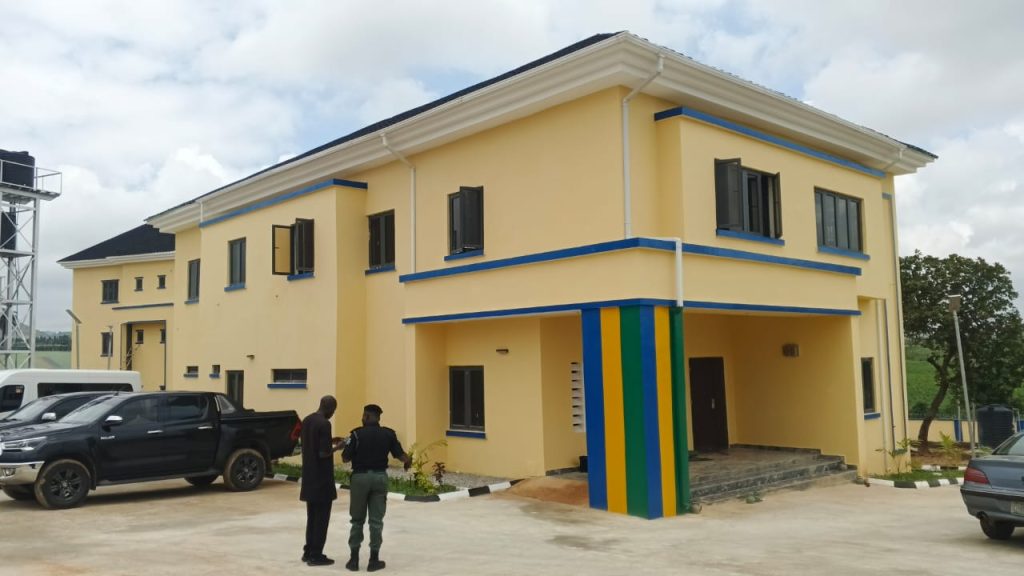
The completed police facilities in Ushafa (Bwari Area Council) and Saburi (Abuja Municipal Area Council) are among 12 Divisional Police Headquarters being constructed across the FCT's six Area Councils, with two facilities allocated to each council. This ambitious project aims to eliminate security 'blind spots' and extend law enforcement presence to previously underserved areas. “Out of the 10 ongoing projects, almost all have achieved more than 90 per cent completion, following Wike’s directive for all contractors to wrap up work before the end of November,” Gwary confirmed, indicating rapid progress.
Modern Facilities for Enhanced Law Enforcement
These state-of-the-art divisional headquarters are designed to significantly bolster police operations. Each facility features a ground floor equipped with a central counter and modern detention facilities, including separate cells for male and female suspects, ensuring adherence to human rights standards. The upper floor houses eight furnished administrative offices, including a dedicated office for the Divisional Police Officer. Crucially, a three-storey residential block provides six furnished two-bedroom en-suite flats for police personnel, ensuring adequate staffing and faster response times to security incidents, particularly in remote areas.
Gwary further explained that a technical team from the Public Building Department of the Federal Capital Development Authority (FCDA) would meticulously verify the facilities against the Bill of Quantities before the official handover, ensuring quality and compliance. He recalled that Minister Wike had promised to decentralize security infrastructure from the city center during town hall meetings in 2023, a commitment now visibly materializing.
Broader Security Initiatives and Technological Edge
Beyond physical infrastructure, the FCTA is enhancing its security apparatus through increased monthly logistics support to security agencies and the expansion of technology-driven surveillance across the Territory. The Airport-to-Villa corridor is already under technological surveillance, managed from the Force Headquarters control room, with plans to extend this network to other high-risk corridors. “Aerial surveillance assets are being finalised for deployment to track criminal elements in rugged terrains,” Gwary revealed, signaling a significant upgrade in intelligence gathering and rapid response capabilities.
Mr. Kabir Muhammed, the Site Engineer for the Ushafa project, commended Minister Wike for entrusting his firm with the project, affirming that the construction team worked diligently with monitoring and evaluation teams to meet the demanding delivery schedule. Gwary expressed strong confidence that the new police infrastructure would substantially strengthen security in satellite communities, enabling residents to carry out their daily activities with greater peace of mind as the November completion deadline approaches.
Why This Matters
The FCTA's comprehensive strategy, combining robust infrastructure development with a firm stance against criminal collaboration and advanced surveillance technology, represents a critical step towards securing the Federal Capital Territory. By decentralizing police presence and empowering law enforcement with modern tools and residential support, Abuja aims to create a safer environment for its citizens, directly impacting economic stability and social cohesion in the nation's capital.