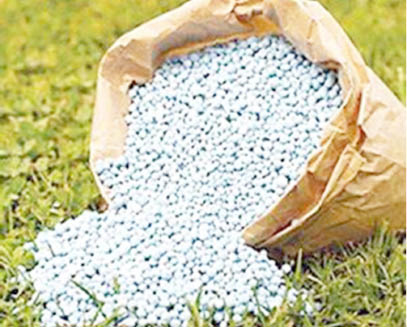
FCT Farmers Voice Concerns Over Rising Fertilizer Costs Ahead of 2026 Season
As farmers gear up for the 2026 farming season, those operating in the Federal Capital Territory (FCT) are increasingly alarmed by the escalating prices of fertilizers and other essential agricultural inputs.
Interviewed by Abuja Metro on Thursday, several farmers outlined the substantial challenges posed by the increasing costs of fertilizers, agro-chemicals, and farming equipment. This rise in expenses has drawn attention to worries about profitability, especially following a decline in food prices last year that left many farmers with negligible returns.
Malam Abdullahi Usman, a farmer from the Godoji community in Kuje Area Council, shared his concerns regarding the spiraling costs as he prepares to cultivate his five-hectare plot. He noted that the price of a bag of NPK and urea fertilizers has jumped from between N42,000 and N45,000 last year to between N52,000 and N56,000 this year. "I was informed that a bag of NPK costs N56,000, while urea is priced at around N48,000," he mentioned.
Usman fears that despite the recent drop in food prices, the high cost of inputs may once again eat into farmers' profits this season.
In a similar vein, Mr. Barnabas Mathew, a farmer located in the Farakuti community within the Kwali Area Council, expressed that the relentless increase in fertilizer and agro-chemical prices poses a severe threat to crop production, particularly for smallholder farmers. "I recently paid N8,000 for a liter of chemical, compared to just N4,500 last year, and a sprayer that used to cost N9,000 now runs at N12,000," he lamented.
Mathew criticized the limited access to government tractors, revealing that he has incurred significant expenses hiring equipment to cultivate his land.
Similarly, Mr. Yakubu Madaki from Paiko community in Gwagwalada Area Council conveyed his frustrations about the situation as he turns to the black market for fertilizers at inflated prices. "I have minimal access to government-sponsored fertilizers or tractors. Annually, I face heavy expenditures on equipment rental to manage my farmland," he stated.
Madaki accused middlemen of manipulating prices and alleged that fertilizer intended for farmers often ends up diverted before reaching its true destination.
The Sarkin Noma of Abaji, Alhaji Mohammed Dangana, attributed the unprecedented rise in costs to the government's neglect of the agricultural sector. He called for enhanced subsidies on farm inputs and a greater commitment to supporting farmers to bolster food security. "Unless agriculture is prioritized by the government, we will continue to face threats to food security," he warned.
Dangana expressed disappointment that tractors introduced last year in Sheda, Kwali Area Council, have not yet been distributed to local farmers.
In response to these concerns, Alhassan Ahmed, a senior official in the Agriculture Department of Gwagwalada Area Council, mentioned that the council distributed fertilizers and agro-chemicals to farmers in the previous year. He also indicated plans to procure new tractors for hire at subsidized rates.
Meanwhile, Solomon Andrew, an official from Kuje Area Council, reassured that provisions have been made in the council's budget for the procurement of fertilizer and tractors for the upcoming farming season. He noted that the Minister of Special Duties, Zephaniah Jisalo, had also assisted Kuje farmers with fertilizer distribution last year.