Key Takeaways
- Former Ekiti Governor Ayodele Fayose alleges the Accord Party spent over ₦40 billion in the Osun State governorship election.
- Fayose's claims contradict Afrobeats star Davido's assertion that the Accord Party relied solely on voter support.
- He insists both major parties involved in the contest exceeded campaign finance limits, distributing vast sums.
- Fayose highlights the decisive political influence of the Adeleke family, particularly in Ede, as a key factor in the election outcome.
- He dismisses the opposition's prospects for 2027, citing their persistent inability to unite as a critical weakness.
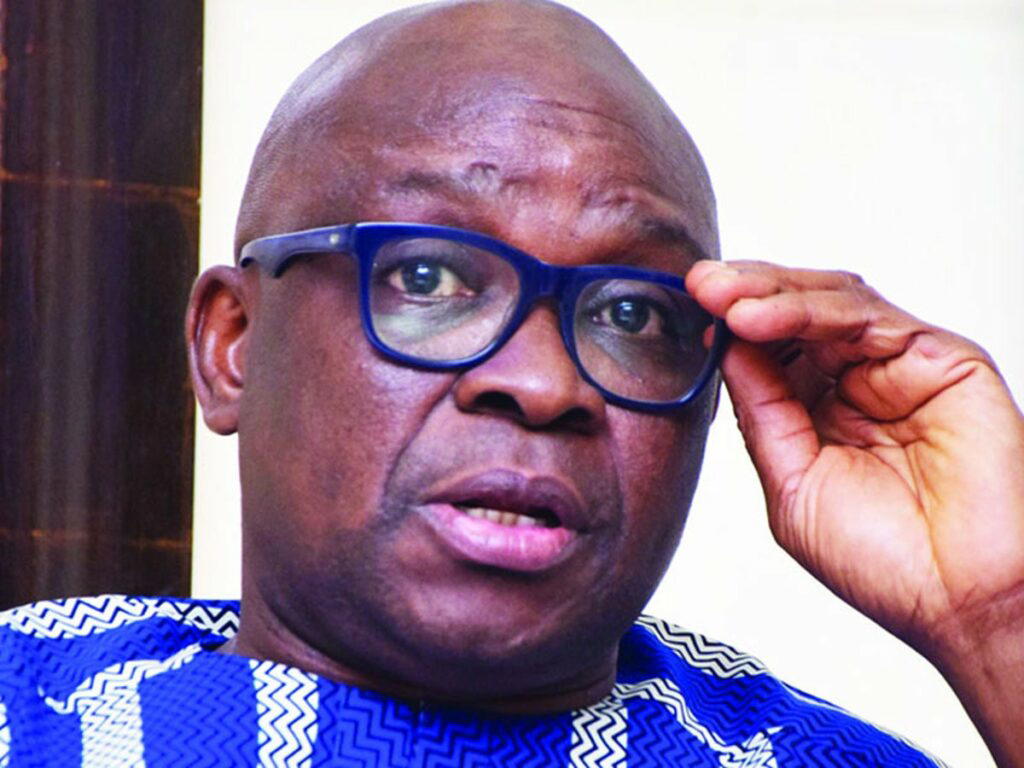
Former Ekiti State Governor Ayodele Fayose has ignited a fresh wave of debate surrounding campaign spending in the August 15 Osun State governorship election. In a recent video interview with TVC journalist Nifemi Oguntoye, shared widely on X, Fayose made a striking allegation: that the Accord Party expended more than ₦40 billion during the fiercely contested polls.
Osun Election Spending: A Deep Dive into Allegations
Fayose's remarks come on the heels of earlier claims by Afrobeats sensation David Adeleke, popularly known as Davido, who is also the nephew of the incumbent Governor Ademola Adeleke. Davido had previously accused the All Progressives Congress (APC) of spending an astronomical ₦110 billion on vote-buying, while insisting that the Accord Party, which supported his uncle, relied solely on genuine voter support rather than financial inducements.
However, Fayose presented a starkly different narrative, asserting that both dominant parties poured 'stupendous' sums into the electoral battle. He specifically alleged that a staggering ₦7.5 billion was distributed across local governments and wards just days before the election, with some individual wards reportedly receiving as much as ₦35 million. While these figures are substantial, Fayose did not provide concrete evidence to substantiate his claims, leaving room for further scrutiny.
“The fact remains that both parties spent stupendously. They spent beyond the threshold like every other political party,” Fayose stated, underscoring his belief that campaign finance rules were flagrantly breached. He further referenced the Economic and Financial Crimes Commission’s (EFCC) freezing of accounts following a ₦20 million transaction, questioning the timing and legality of such large disbursements in the run-up to the election. Nigeria's Electoral Act sets clear limits on campaign spending, and allegations of exceeding these thresholds, coupled with vote-buying, are serious concerns that undermine electoral integrity.
The Shadow of Vote-Buying and Regulatory Scrutiny
The persistent allegations of vote-buying and excessive campaign spending in Nigerian elections highlight a significant challenge to the nation's democratic process. Such practices not only distort the will of the electorate but also create an uneven playing field, making it difficult for candidates without vast financial resources to compete effectively. Regulatory bodies like the Independent National Electoral Commission (INEC) and the EFCC are tasked with enforcing campaign finance laws, but their effectiveness is often questioned amidst widespread claims of violations. Fayose's comments bring these critical issues back into the spotlight, urging a closer look at how elections are funded and contested.
Analyzing the Osun Governorship Outcome
Despite his concerns over spending, Fayose acknowledged the undeniable and decisive role played by Governor Adeleke’s stronghold in Ede. This area alone delivered a remarkable 46,000 votes, contributing significantly to the 66,000-vote margin that separated Adeleke from the APC candidate, Bola Oyebamiji. Ultimately, Adeleke secured victory with 511,067 votes against Oyebamiji’s 444,815.
Fayose dismissed suggestions that the APC’s choice of candidate was the sole reason for their defeat, pointing instead to the deeply entrenched political influence of the Adeleke family in Osun State. He advised the APC to challenge the election result in court, controversially describing the vote tally in Ede as “pirated,” implying irregularities without offering specific proof.
President Tinubu's Role and 2027 Projections
Further reflecting on the political landscape, Fayose argued that President Bola Tinubu could have potentially swayed the outcome of the Osun election but chose not to intervene. He lauded the President as “magnanimous” in his approach, drawing a contrast with his own experience during Ekiti’s 2018 election, where he felt the federal might was deployed against him.
Looking ahead to the 2027 general elections, Fayose expressed a rather bleak outlook for the opposition. He stressed that their inability to unite remains a critical and debilitating weakness. “The only thing that can give them hope has passed, which is they are coming together. They have failed to come together, and they cannot retrieve that back,” he concluded, suggesting a fragmented opposition faces an uphill battle.
Why This Matters
Fayose's allegations reignite crucial conversations about campaign finance transparency and the integrity of Nigeria's electoral process. These claims, regardless of their substantiation, underscore the urgent need for stronger regulatory enforcement and public accountability to ensure that elections truly reflect the will of the people, rather than the depth of political war chests.