The shift is visible before the credits even roll. A Nigerian film opens on a streaming platform in New York, and within minutes, the comments begin to echo across continents — London, Johannesburg, Toronto.
The accents are familiar, but the storytelling feels elevated. The emotions travel. The characters stay with you.
Nollywood is no longer just prolific — it is precise, exportable, and increasingly influential.
At the centre of this transformation is a new generation of actors whose craft is quietly, but powerfully, strengthening Nigeria’s global recognition in the movie industry.
New Generation, Global Language
For decades, Nollywood thrived on speed and accessibility. But the expansion to global platforms like Netflix, Amazon Prime Video, and YouTube has redefined both reach and expectations.
According to UNESCO, Nollywood remains one of the largest film industries globally by volume, but its current phase is marked by rising quality and international appeal. That evolution is being driven not just by platforms, but by performers — actors who understand both the Nigerian experience and its global resonance.
The faces of Nollywood are changing — and with them, the language of performance.
Genoveva Umeh represents this new frontier. With performances in Breath of Life and Blood Sisters, she brings emotional restraint and technical precision shaped by cross-cultural training. Her work has resonated strongly with diaspora audiences, where authenticity is as important as relatability.
Chimezie Imo has built his reputation on emotionally intense roles in Nimbe and Breath of Life. His performances, often described as deeply immersive, have earned critical praise and contributed to Nollywood’s growing reputation for character-driven storytelling.
Then there is Timini Egbuson — a bridge between commercial success and modern screen appeal. Since Elevator Baby, he has become a consistent box office presence, anchoring films that connect strongly with younger audiences both at home and in the diaspora.
Tobi Bakre has followed a similar trajectory. From Brotherhood to Gangs of Lagos, his roles in high-performing films have helped redefine what it means to be a Nollywood leading man — commercially viable, yet grounded in believable storytelling.
Streaming Stars, Global Screens
Streaming has amplified new voices and created unexpected global moments. In To Kill a Monkey (2025), Bucci Franklin delivered a gripping performance that helped push the film into Top 10 rankings in the US and UK on Netflix. Alongside him, rising talents like William Benson, widely recognised for emotionally layered supporting roles in recent streaming titles, signal a pipeline of actors ready for global visibility.
The film’s eight Africa Magic Viewers’ Choice Awards (AMVCA) nominations further reinforced how streaming success now translates into industry recognition.
On another front, Bamike Olawunmi-Adenibuyan (BamBam) has leveraged digital platforms to expand Nollywood’s reach. Her role in Love in Every Word contributed to the film’s over 30 million YouTube views — a reminder that global audiences are no longer confined to cinemas or subscription platforms.
Box Office Meets Global Appeal
What makes this new wave particularly significant is its ability to align critical growth with commercial success.
Bimbo Ademoye exemplifies this balance. Known for her versatility across comedy and drama, she has remained a consistent presence in both cinema hits and streaming successes, reinforcing her appeal across multiple audience segments.
The industry’s commercial milestones provide context for this momentum.
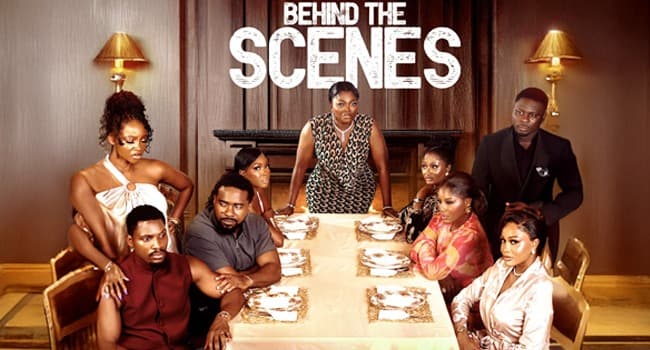
Films with box office numbers like the record ₦2.7 billion by Funke Akindele’s Behind The Scenes, A Tribe Called Judah (₦1.32 billion), Everybody Loves Jenifa (₦758.5 million), Gingerrr (₦522.9 million), and Oversabi Aunty (₦480 million) highlight Nollywood’s growing power. These successes, driven by star performances and strong audience engagement, demonstrate that Nigerian films can compete at scale while maintaining cultural authenticity.
Actors such as Timini Egbuson and Tobi Bakre have been central to this commercial rise, while performers like Bimbo Ademoye continue to bridge the gap between mainstream popularity and global relevance.
Craft, Culture, Connection
Beyond numbers, what defines this generation is its commitment to authenticity. Actors like Chimezie Imo and Genoveva Umeh bring layered interpretations to roles that reflect modern Nigerian realities — identity, migration, ambition, and conflict.
Meanwhile, performers such as Bucci Franklin and Bamike Olawunmi-Adenibuyan are expanding how and where those stories are consumed. Together, they are shaping a Nollywood that is no longer defined by geography, but by connection.
This moment builds on the foundation laid by legends, but it is distinctly forward-looking.
The new generation is not just inheriting Nollywood — it is reimagining it. With every global chart, every sold-out cinema, and every streaming milestone, these actors are positioning Nigeria as a cultural powerhouse in the global film ecosystem.
Other actors rounding the wave are Stan Nze, Etim Daniel, Emeka Nwagbaraocha, Moshood Fattah, Uzoamaka Onuoha, Paul Nnadiekwe, Adaobi Dibor, Tomiwa Tegbe, Olumide Oworu, Tobi Makinde, Uche Montana, Sandra Okunzuwa, Susan Pwajok, Pearl Shim Mugalla, Gbubemi Ejeye, and Efe Irele. Many of these actors share a similar grounding, theatre, formal training, or exposure to diaspora storytelling, which is reflected in their approach.
The focus is no longer on spectacle, but on authenticity. Characters are no longer archetypes; they are layered, conflicted, and human.
Architects Behind The Shift
The momentum and transformation are not limited to actors in the industry alone.
Behind the camera, filmmakers are expanding the scope of Nollywood storytelling.
Innovators and directors such as Jade Osiberu, Kemi Adetiba, and Bolanle Austen-Peters continue to push narrative ambition, numbers, exploring power, history, and identity with increasing sophistication.
Emerging creatives are also redefining the landscape. From Ifeoma Chukwuogo’s award-winning Phoenix Fury to Joel Kachi Benson’s work in documentary and virtual reality winning Nigeria’s first Emmy, and Dika Ofoma’s explorations of modern Nigerian life, storytelling is expanding across genres and formats.
At the same time, industry figures like Funke Akindele continue to prove Nollywood’s commercial power, mentoring new talent while delivering record-breaking box office performances.
Shoulders Of ‘Giants’
This evolution is not a rejection of the past, but a continuation of it. Veterans such as Pete Edochie, Patience Ozokwo, Nkem Owoh, and Chiwetalu Agu gave Nollywood a push to its heels with limited resources but immense cultural influence.
What is unfolding now is a refinement of that legacy, a mix of tradition and innovation, where younger actors collaborate, learn, and push the boundaries further. For international audiences, this is more than entertainment; it is a reframing of Nigeria’s story, told on its own terms.
The new generation of actors and filmmakers is not just redefining storytelling; they are expanding its reach, dissolving the boundaries between local cinema and global content. Nollywood is no longer emerging. It has arrived — and its new stars are leading the charge.