Key Takeaways
- Former Minister Solomon Dalung believes the Osun State governorship election outcome is a blueprint for the 2027 general elections.
- Dalung argues that the Osun result proved that "federal might" and the influence of the ruling party can be defeated at the ballot box.
- He reiterated his prediction that President Tinubu will be "defeated woefully" in 2027, regardless of political appointments.
- The ex-minister criticized FCT Minister Nyesom Wike for blaming the ADC, suggesting Wike should instead address the APC's resource deployment and humiliating loss.
- Dalung emphasized that 2027 will hinge on Nigerians' choice, presidential performance, and regional considerations, not just party structures.
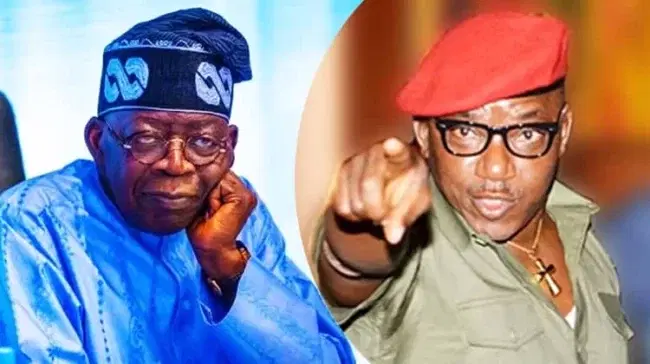
Former Minister of Youth and Sports Development, Solomon Dalung, has declared that the outcome of the Osun State governorship election offers a profound glimpse into what Nigerians should anticipate in the 2027 general elections. Dalung, a prominent chieftain of the African Democratic Congress (ADC), shared these insights during an interview on a national broadcast, emphasizing the significant implications of the state-level contest for the broader political landscape.
According to Dalung, the Osun election served as a powerful demonstration that the formidable influence often associated with the ruling All Progressives Congress (APC), including what he termed "federal might," is not insurmountable at the polls. This concept of "federal might" typically refers to the strategic deployment of federal resources, security apparatus, and the influence of federal appointees to sway electoral outcomes, a practice often criticized in Nigerian politics.
The former minister asserted that the Osun result unequivocally confirmed his earlier predictions regarding the 2027 presidential election. "What happened in Osun is a confirmation of what I said two years ago, that even if Tinubu appointed his wife, Remi Tinubu, as Chief Justice of Nigeria and appointed Seyi, his son, as INEC chairman, he is going to be defeated woefully in 2027," Dalung boldly stated, underscoring his conviction that the ruling party's perceived advantages are not guarantees of victory.
Dalung further elaborated that the Osun election effectively debunked the notion that the political structures and inherent influence of the party in power automatically translate into electoral success. He highlighted that the determination of the electorate could override such factors. "When the election in Osun has come and gone, it has laid the foundation that is going to play out in 2027. The issue of federal might, incumbency, APC being the party in government, has already been put to rest because Nigerians in Osun have proved that there is determination to defend democracy," he explained.
He pointed to the significant presence of numerous political heavyweights and high-ranking government officials from the APC who converged on Osun during the campaign, yet failed to secure a victory for their party. "Despite the federal might, despite the 30 governors, 45 members of the National Assembly, national chairman, Senate president, Speaker, all congregating in Osun, APC suffered a humiliating defeat," Dalung recounted, illustrating the disconnect between political star power and actual electoral outcomes.
The ex-minister also took aim at the Minister of the Federal Capital Territory, Nyesom Wike, for his post-election comments. Dalung argued that Wike's attempt to deflect blame onto the ADC was a diversion from the real issues. "I think reacting to that is what my friend, the Minister of FCT, is trying to cover up. The share of how they lost in Osun, and so for him, he can relocate that blame to look at the ADC. But why is he not talking of the huge mobilisation resources from all the states wasted there and the humiliating loss APC suffered?" Dalung questioned, suggesting a deeper introspection was needed by the ruling party.
Dalung maintained that the Osun result carried immense significance because, in his view, it demonstrated that political power and governmental structures alone are insufficient to determine electoral outcomes. He vehemently disputed any suggestion that the ADC was responsible for the APC’s defeat in Osun, stressing that his party was not the determinant factor in the outcome.
Looking ahead to 2027, Dalung posited that the presidential election would ultimately be about the choice Nigerians make at the ballot box, rather than merely a contest between President Tinubu and opposition parties. "2027 is not going to be an issue of Tinubu; it is not even going to be an issue of opposition. No. But the man Nigerians are going to be electing in 2027," he affirmed. He also identified regional considerations and the incumbent president's performance as crucial factors that would heavily influence the 2027 election. "In 2027, regionalism is going to be a factor in the determination of the election. In 2027, too, the President’s performance is going to be an issue," said the former minister.
Dalung remained convinced that President Tinubu would ultimately be defeated, arguing that the governors who have recently aligned with the APC would not be enough to secure victory for the president. "But on the overall, the President will be defeated woefully because he has assembled the people who have also abandoned the people. The governors whom he has brought to his party can never bail him out. It has been established in Osun. Their gatherings were gatherings of mourners," he concluded.
Beyond the immediate electoral predictions, the former minister offered a broader critique of what he described as poor leadership, urging political office holders to prioritize the welfare of Nigerians and their constitutional responsibilities. "If we have leaders that believe in the people and believe in their oath of office and know that the Constitution imposes on them an obligation that they should protect lives and property and the social wellbeing of the people, they will definitely do that," Dalung asserted.
He also issued a stern warning to political leaders against concentrating solely on wealth accumulation at the expense of leaving a positive, enduring legacy. "If we have leaders who have conscience, who know that all this money they are busy stockpiling, one day they will depart this earth without anything, they will concentrate on building a legacy that they will be remembered for," he advised, advocating for a more principled approach to governance.
Why This Matters
Solomon Dalung's analysis of the Osun election provides a critical perspective on the evolving dynamics of Nigerian politics, suggesting that the traditional advantages of incumbency and "federal might" are increasingly being challenged by an engaged electorate. His predictions for 2027 highlight the growing importance of presidential performance, regional sentiments, and the collective will of the people over party structures, signaling a potentially transformative period for Nigeria's democratic future.