Key Takeaways
- FIFA President Gianni Infantino convened emergency talks with directors in Morocco following widespread backlash.
- The meeting addressed the fallout from his recently shelved proposal to open the World Cup to private investment.
- Internal dissent, including a leaked email from FIFA Secretary-General Mattias Grafstrom, has intensified calls for Infantino's resignation.
- The controversial plan, which aimed to create a new commercial subsidiary valued at $20 billion, promised substantial payouts to member associations.
- Major confederations like UEFA and CONCACAF vehemently rejected the proposal, citing concerns over transparency and governance.
- The crisis has significantly eroded Infantino's authority, casting a shadow over his previously secure path to a fourth term.
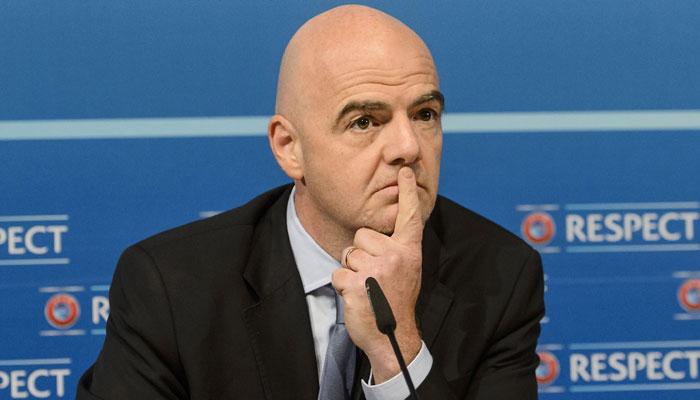
FIFA President Gianni Infantino found himself at the center of an escalating storm this week, holding emergency talks with other FIFA directors in Morocco. The urgent meeting, confirmed by sources to AFP, comes amidst a furious wave of criticism directed at Infantino over his now-abandoned plan to introduce private investment into the World Cup, football's most prestigious tournament.
The pressure on Infantino has mounted significantly, not only from external bodies but also from within FIFA itself. Calls for his resignation have grown louder since he was forced to withdraw the controversial proposal last Saturday, marking a significant blow to his leadership.
Among those believed to have attended the high-stakes meeting was FIFA's Secretary-General Mattias Grafstrom, whose internal email to staff, sharply critical of the plan, was leaked just days prior. Grafstrom's candid assessment described the fiasco as “a sad and reproachable series of events,” adding, “Individuals, unstable moments and unfortunate episodes come and go. The institution, its mission and its responsibility towards world football continue.” This internal dissent underscored the depth of the crisis facing the Swiss lawyer.
Infantino, 56, was in Morocco to celebrate the Feast of the Enthronement and utilized FIFA’s Africa regional office in Sale, near Rabat, for the critical discussions. Morocco, set to co-host the 2030 World Cup, has seen its football chief, Fouzi Lekjaa, emerge as one of the few public supporters of Infantino following the humiliating climbdown. Lekjaa had praised Infantino's “wise” decision to scrap the plan, citing the interests of “unity and cohesion,” and reiterated his backing for the president's “initiatives aimed at the development of world football” during his decade-long tenure.
The controversy erupted after FIFA, the world governing body for football, floated a plan to establish a new commercial subsidiary, the FIFA Forward Enterprise (FFE). This entity, proposed to manage major events like the World Cup and Club World Cup, was valued at an ambitious $20 billion and projected to raise up to $42 billion. The proposal dangled a significant carrot: a one-off payment of $20 million to each of FIFA’s 211 member associations in early 2027, alongside an increase in their funding allocation for the 2027-2030 cycle from $8 million to $20 million.
Far from acting as a sweetener, the proposal triggered a furious backlash. European football’s governing body, UEFA, escalated its opposition to the “nuclear option” of boycotting the World Cup. UEFA condemned the proposal as a “shabby, back-room, opaque deal” orchestrated by Infantino, stating, “The current FIFA leadership has not only lost UEFA’s confidence but also that of many other members of the football family.” North and Central American football’s governing body, CONCACAF, went even further, calling for “a comprehensive reckoning with this presidency” and lambasting Infantino’s “poor governance and leadership.”
Infantino had previously enjoyed a period of relative calm, basking in the success of the expanded 48-team World Cup co-hosted by Canada, Mexico, and the US. His path to a fourth and final term seemed assured, with no other candidates emerging to challenge him ahead of the election slated for Rabat next March. However, the events of last week have dramatically altered this landscape, transforming a seemingly secure position into one fraught with uncertainty.
Why This Matters
This crisis represents a significant challenge to Gianni Infantino's authority and raises fundamental questions about transparency and governance within global football. The strong resistance from major confederations underscores a deep-seated power struggle and highlights the ongoing tension between FIFA's centralizing ambitions and the autonomy of its regional bodies, potentially reshaping the future leadership and direction of the sport.