By Clifford Ndujihe & Luminous Jannamike
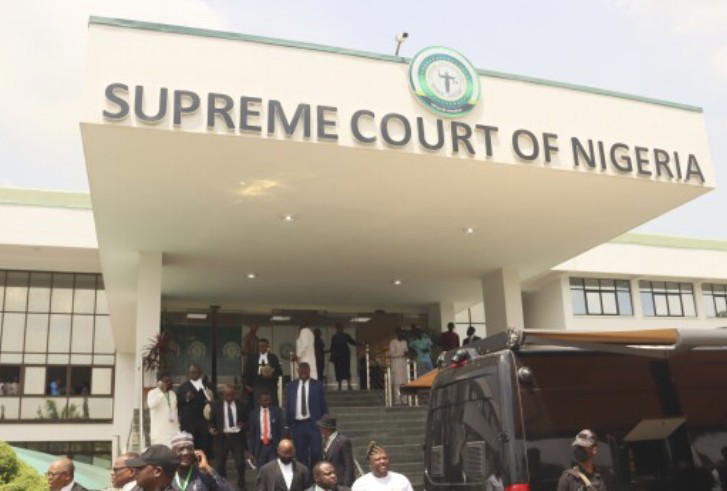
The Supreme Court’s restoration of key provisions of the Electoral Act 2026 has opened a fresh legal front over the nominations of some Peoples Democratic Party, PDP, and other opposition parties’ candidates ahead of the 2027 elections
With the apex court’s verdict other parties affected include the Social Democratic Party, SDP; Allied Peoples Movement, APM; People’s Redemption Party, PRP; and a candidate of the All Progressives Congress, APC
The judgment does not automatically disqualify the affected candidates Rather, it restores statutory requirements that could expose individual nominations to legal challenges where evidence shows that membership, registration or nomination procedures did not comply with the law.
In its unanimous judgment of September 24, 2026, the apex court restored Sections 77(5), 77(6), 77(7) and 84(2) of the Electoral Act, holding that the provisions were not inconsistent with the 1999 Constitution and setting aside the earlier Court of Appeal decision that had voided them
The restored provisions require parties to rely on the membership register submitted to the Independent National Electoral Commission, INEC, at least 21 days before a primary A party cannot use a different register, while nominations are to be conducted through direct primaries or consensus.
That means candidates could face challenges where evidence shows that they were not on the relevant register, joined a party after the register was submitted, participated in another party’s primary or emerged through a process that did not comply with the applicable requirements
PDP candidates in the eye of the storm
Although, the Supreme Court made no candidate-specific findings against PDP candidates, those in the eye of the storm include Senator Saliu Mustapha, Kolo Jiya, Professor Iyabo Obasanjo and Senator Olubiyi Fadeyi
Pantami’s case already before court
In Gombe State, the case involving former Minister of Communications and Digital Economy, Professor Isa Ali Pantami, predates the Supreme Court judgment
A Federal High Court had nullified the PDP governorship primary that produced Pantami and ordered the party to conduct a fresh exercise in accordance with its constitution, guidelines and applicable electoral laws The court also barred Pantami from continuing to present himself as the party’s candidate.
The PDP has fixed Tuesday (tomorrow) September 29 for the fresh governorship primary, with Pantami, Khamisu Ahmed
Mailantarki and Usman Aliyu Garry cleared to participate
Pantami’s case is, therefore, not a consequence of the Supreme Court judgment alone It is already governed by a separate Federal High Court order.
His movement into the PDP after failing to secure the APC governorship ticket had featured in the dispute over the earlier primary, including questions around the process through which he emerged as the party’s candidate
The fresh exercise now provides another opportunity for the party to establish compliance with the applicable membership and nomination requirements
Mustapha, Jiya face register questions
Questions have also been raised over the PDP senatorial candidacies of Senator Saliu Mustapha in Kwara Central and Kolo Jiya in Kwara North
Both politicians were previously associated with the APC before moving into the PDP camp, backed by the Saraki-led G15 alliance, which is working with the FCT Minister Nyesom Wike-led Rainbow Coalition
The central questions concerned whether their names appeared on the PDP membership register submitted to INEC within the prescribed period and whether waivers granted them were sufficient to qualify them for participation in the party’s nomination process
The Kwara PDP has rejected suggestions that the Supreme Court judgment automatically invalidated their candidacies
The party said Mustapha did not participate in the earlier PDP senatorial primary and became the candidate after the withdrawal of the initial nominee
It also maintained that the affected new members obtained the required waivers before taking part in party activities
The PDP maintains that the waivers regularised their membership and made them eligible for the relevant processes
Any challenge, however, would turn on the documentary record; the PDP register submitted to INEC, its date of submission, the terms of the waivers and the process through which each candidate emerged
Iyabo Obasanjo’s return under scrutiny
The candidacy of Dr Iyabo Obasanjo in Ogun Central has also come under scrutiny, following the judgment
Obasanjo resigned from the APC on May 31, 2026, after losing the party’s governorship ticket, returned to the PDP on June 15 and was presented as its Ogun Central senatorial candidate two days later
The timing has prompted questions over whether her name was contained in the PDP register submitted to INEC at least 21 days before the relevant nomination exercise
There is, however, no Supreme Court ruling directly disqualifying Obasanjo
Her media aide, Dr Odun Agbalajobi, rejected suggestions that the judgment had invalidated her candidacy
“Senator Iyabo Obasanjo was not a party to that case,” her media aide said, adding that the judgment did not issue any order disqualifying her from contesting the Ogun Central senatorial election
A PDP chieftain in Ogun, Adeoye Adewale Adeniran, also accused the APC of twisting the judgment in relation to Obasanjo’s candidacy
“The APC is twisting the Supreme Court judgment to stop Iyabo Obasanjo,” Adeniran said, accusing the opposition of using misinformation and political propaganda over her eligibility
Those are political claims and do not constitute a judicial finding on Obasanjo’s eligibility
Fadeyi rejects disqualification claim
In Osun, Senator Olubiyi Fadeyi has rejected reports that the Supreme Court judgment had ended his bid to return to the Senate
Fadeyi said no court had issued an order disqualifying him and described reports to that effect as speculative
“For clarity sake, there is no clear evidence on Fadeyi’s disqualification from any court sitting, hence, the report of his alleged disqualification remains speculative and unfounded,” Fadeyi said
He also defended the process through which he obtained the PDP ticket
“The processes to bestow the PDP ticket on Senator Olubiyi Fadeyi for second term in office is clear, legal and approved by all relevant party executives,” he said
Fadeyi further maintained that the PDP complied with the electoral law and its own rules
“The Peoples Democratic Party, PDP followed the provisions of electoral law and everything was done in accordance with the law and party’s laid down rules,” he said
The Supreme Court made no specific finding concerning Fadeyi’s membership status or nomination
The emerging disputes will, therefore, turn on the records behind individual nominations rather than on the Supreme Court judgment as an automatic disqualification order
The critical documents are the membership registers submitted to INEC, their dates of submission, any waivers granted to new members and the records showing how candidates emerged through the relevant primary or consensus process
Where those records establish non-compliance, they could provide grounds for candidate-specific litigation Until such a defect is established, political strategists believe the Supreme Court ruling itself does not invalidate the PDP nominations.
Other opposition parties’ candidates that appear disqualified include formee IGP Adamu Idris, SDP; Nasarawa; Abdulrahman Haske, APM, Adamawa; Sen Shehu Buba, PRP, Bauchi; Lawal Daura, APM, Seyi Makinde’s running mate; and Farouk Mustapha, APC, Bauchi deputy governorship candidate.