Key Takeaways
- Egypt suffered a dramatic 3-2 defeat to Argentina in the World Cup, despite holding a 2-0 lead.
- Coach Hossam Hassan vehemently accused officials of "cheating" his team through controversial VAR interventions and unaddressed penalty claims.
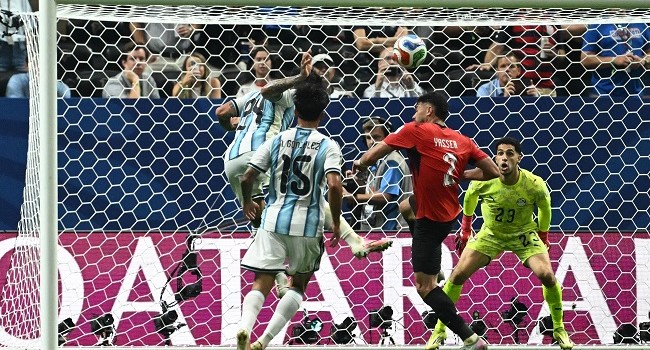
- A goal by Mostafa Zico was disallowed after VAR spotted an earlier foul on Lisandro Martinez.
- Egypt believes they were denied a clear penalty for a foul on Hamdy Fathy in the build-up to Argentina's winning goal.
- Lionel Messi missed a first-half penalty but later scored a crucial equalizer for Argentina.
- Hassan also criticized the tournament's scheduling, specifically a noon kick-off, and hinted at bias towards the defending champions.
A storm of controversy has erupted at the World Cup after Egypt’s national team coach, Hossam Hassan, launched a scathing attack on match officials, alleging his side was "cheated unfairly" out of a quarter-final spot. The dramatic claims followed a stunning 3-2 comeback victory for Argentina on Tuesday, a result that saw the Pharaohs relinquish a two-goal lead in a match marred by contentious decisions.
In an explosive post-match press conference, Hassan did not mince words. "I do not want to put it nicely and talk about hard luck. We have been cheated unfairly today, we have suffered injustice," he declared, his frustration palpable. His accusations centered on several pivotal moments that he believes unfairly tilted the balance in favor of the reigning champions.
Controversial Moments Define Thrilling Encounter
The match itself was a rollercoaster of emotions. Egypt, aiming for their first-ever World Cup last-eight appearance, initially seized control. After Yasser Ibrahim's header put them ahead, Mostafa Zico appeared to double their advantage, only for VAR to intervene. The goal was controversially ruled out due to an earlier foul on Argentina's Lisandro Martinez, a decision that deeply incensed the Egyptian camp. Despite this setback, Zico eventually found the net again, legitimately putting Egypt on the brink with a 2-0 lead.
However, the defending champions mounted a formidable comeback. Cristian Romero reduced the deficit, setting the stage for a dramatic finale. Lionel Messi, who had earlier seen his first-half penalty saved by Mostafa Shobeir – marking his fourth missed non-shootout spot-kick in eight World Cup attempts – then smashed in the equalizer, his eighth goal of the tournament. The controversy escalated further in the build-up to Argentina’s winning goal, scored by Enzo Fernandez. Egypt vehemently argued that Alexis Mac Allister had pulled Hamdy Fathy’s shirt, a clear penalty that was neither awarded nor reviewed by VAR.
Coach Hassan's Vehement Protest
"We haven’t seen respect or fair play. There has not been respect or fair play," Hassan reiterated, emphasizing his profound disappointment. He specifically highlighted the alleged uncalled penalty, stating, "A penalty was ruled out, was not even checked by VAR. A second goal was remarkably disallowed. There has not even been a VAR check when we have all seen the image of the (shirt) being pulled back." So profound was his sense of injustice that Hassan vowed to cease watching the remainder of the tournament. "I am not going to continue following the matches of this World Cup, watching the matches of this World Cup," he stated, adding, "This is my own way of speaking up."
Allegations of Bias and Scheduling Concerns
Beyond the on-field decisions, Hassan speculated about external pressures influencing the officiating. Speaking to BeIn Sports, he suggested, "Perhaps they wanted to keep the world champions in the competition. Perhaps they wanted Messi to stay in the running." He further elaborated, "In football, there are sometimes external factors that go beyond the technical aspects. The world champions received support at every level."
Hassan also voiced strong criticism regarding the match's scheduling, particularly the noon kick-off time (1600GMT), just four days after both teams had played their round of 32 fixtures. "Whoever schedules those matches has never played football. You never schedule a game for 12pm. At noon you go for a walk or to eat brunch, you do not go to play football," he argued, questioning the impact on player recovery and performance. "When are the players supposed to eat? At 7.30am? There have been a lot of things to be questioned on and off the pitch."
The Egyptian coach's impassioned remarks have cast a shadow over Argentina's dramatic victory, igniting a fierce debate about fairness and the integrity of officiating at the highest level of international football. His unwavering stance underscores the deep frustration felt by his team and raises significant questions that demand scrutiny.
Why This Matters
These serious allegations from a national team coach regarding officiating bias and unfair treatment at a major international tournament can significantly impact public perception of the sport's integrity and the fairness of its governing bodies. Such claims fuel debates among fans and pundits, potentially eroding trust in the competition's impartiality and the VAR system's effectiveness.