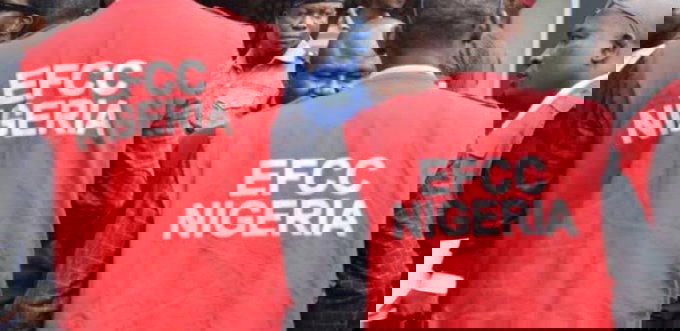
Key Takeaways
- The Economic and Financial Crimes Commission (EFCC) insists its temporary restriction on an Osun State Government bank account is lawful and backed by relevant legislation.
- The action was prompted by 'suspicious transactions' observed on the account over the past week, according to the anti-graft agency.
- EFCC spokesperson, Wilson Uwujaren, rejected claims by the Osun State Government and the Nigerian Bar Association (NBA) that a court order is a prerequisite for such an initial restriction.
- Only one specific account of the Osun State Government is affected, not all state accounts, ensuring continued government operations.
- The legal basis for the restriction is cited as Section 34 of the EFCC Act and Section 7, Subsection 6 of the Money Laundering (Prohibition) Act 2022.
- Such temporary restrictions can last up to 72 hours, after which the commission must seek judicial backing for an extension.
- The EFCC has been investigating the Osun State Government since March 2026 over alleged fraudulent management of approximately N11bn in public funds.
The Economic and Financial Crimes Commission (EFCC) has staunchly defended its decision to place a temporary restriction on a bank account belonging to the Osun State Government, asserting that the move is entirely lawful and fully supported by Nigeria's anti-graft legislation. This declaration comes amidst a growing dispute with the state government and the Nigerian Bar Association (NBA), both of whom have challenged the commission's authority to act without a prior court order.
Speaking on Arise Television, Mr. Wilson Uwujaren, the EFCC's spokesperson and Director of Public Affairs, unequivocally dismissed the criticisms. He maintained that the commission's action was a necessary step to 'preserve the account' following the detection of what the agency described as suspicious transactions over the preceding week. “We observed in the past one week that activities on that account looked suspicious, and based on the mandate of the Commission, we took the step of placing a restriction on that account to preserve it,” Uwujaren stated, emphasizing the EFCC's proactive role in safeguarding public funds.
Unpacking the 'Suspicious Transactions'
The EFCC's intervention was triggered by a pattern of financial movements deemed irregular. Uwujaren elaborated that the commission noticed 'multiple transfers from the account to several corporate entities within a short period.' This rapid movement of funds, particularly to various corporate bodies, raised significant red flags for the anti-graft agency, prompting its swift response. The spokesperson underscored the commission's statutory obligation, arguing that inaction would have drawn public condemnation. “If we don’t take that step and, for instance, funds are looted from the account of the Osun State Government, I’m sure the Nigerian public will also ask, ‘Where was the EFCC when those funds were being moved?’” he queried, highlighting the agency's dilemma.
Targeted Action, Not a Blanket Freeze
Crucially, Uwujaren clarified that the restriction is highly targeted and does not amount to a freeze on all Osun State Government accounts. “That restriction order does not mean that all the accounts of Osun State have been frozen. No. It is just a targeted restriction on one account of the Osun State Government,” he explained. This distinction is vital, as it implies the state government retains access to other financial resources, enabling it to continue its administrative functions, including the crucial payment of salaries and other routine expenditures. The EFCC spokesperson reassured that the restriction is temporary and will be lifted once the commission is satisfied that the activities on the account are no longer suspicious.
Legal Framework and Due Process
Addressing the legal challenges, Uwujaren firmly asserted the EFCC's statutory powers. He pointed to specific provisions within Nigerian law that empower the commission to take such pre-emptive measures. “Section 34 of the EFCC Act and Section 7, Subsection 6 of the Money Laundering (Prohibition) Act 2022 give us that authority to take that step,” he affirmed. He further clarified the procedural limits, stating that a temporary restriction can remain in place for up to 72 hours. Beyond this period, the commission would then be required to seek a formal court order if it intends to extend the restriction, ensuring a balance between investigative urgency and judicial oversight.
Ongoing Investigation into Osun Finances
This recent development is set against the backdrop of an existing, broader investigation into the Osun State Government's financial management. The EFCC had previously announced its probe into the state's finances since March 2026, focusing on the alleged fraudulent management of approximately N11 billion. These funds reportedly include allocations from Ecology Funds, Intervention Funds, and the Federation Account Allocation Committee (FAAC). As part of this ongoing inquiry, several officials, including the Accountant General, have already been questioned, indicating a comprehensive effort to uncover potential financial malfeasance within the state administration.
Why This Matters
The EFCC's assertive stance on its powers to temporarily restrict state government accounts underscores the ongoing tension between anti-corruption mandates and principles of state autonomy and due process. This incident highlights the critical role of financial oversight in governance, emphasizing the need for transparency in public fund management while also sparking important debates about the scope of investigative agencies' powers versus the rights of entities under investigation.