Key Takeaways
- The new ECOWAS headquarters in Abuja symbolizes ambition but masks deep-seated issues of trust and political will within the bloc.
- The departure of Mali, Burkina Faso, and Niger to form the Alliance of Sahel States (AES) significantly undermines ECOWAS's founding objectives.
- Disregard for rulings by the ECOWAS Court of Justice by member states erodes the rule of law and the institution's legitimacy.
- ECOWAS must prioritize concrete actions, including neutral mediation with breakaway states and renewed commitment to implementing judicial decisions.
- Economic integration and genuine security cooperation, rather than military intervention, are crucial for regional reconciliation and stability.
- Nigeria, as a regional powerhouse, must lead with prudence, humility, and respect for established legal frameworks to rebuild trust.
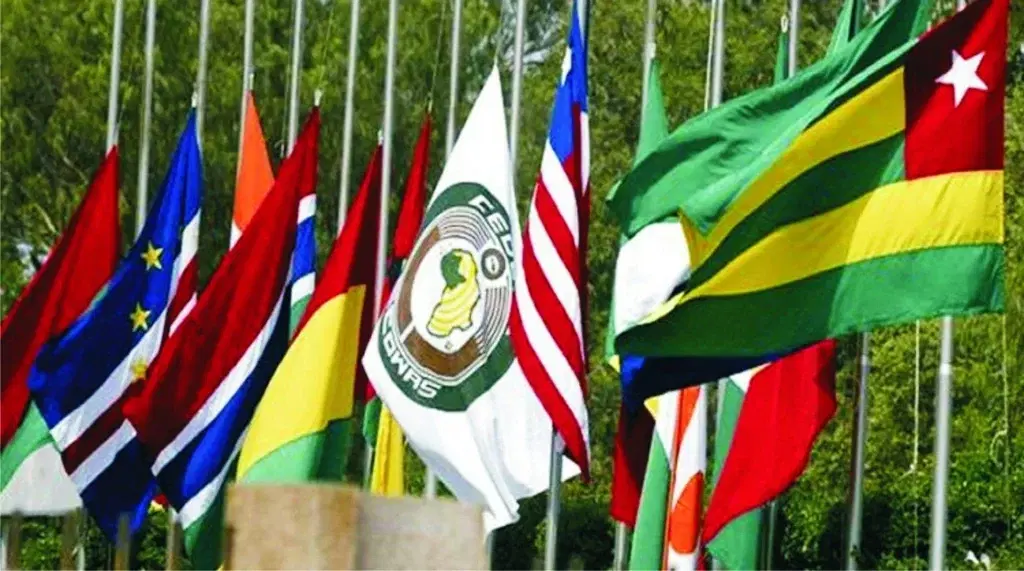
The recent ribbon-cutting ceremony for the gleaming new ECOWAS headquarters in Abuja, presided over by President Bola Tinubu, offered a visually impressive display of regional ambition. Yet, beneath the polished brick and glass, the Economic Community of West African States (ECOWAS) grapples with profound fractures that threaten its very purpose. Fifty-one years after its 1975 founding in Lagos, intended to foster economic integration, collective security, free movement, and democratic stability across West Africa, ECOWAS finds itself severely diminished by a palpable absence of trust and political will among its members.
This critical trust was severely rent during President Bola Tinubu’s tenure as Council Chairman, when Mali, Burkina Faso, and Niger dramatically abandoned the bloc to establish the Alliance of Sahel States (AES). This significant rupture was largely precipitated by what many observers deemed an ill-advised posture, particularly Nigeria's contemplation of military intervention in Niger, reportedly at Western prompting. Such actions severely set ECOWAS back from its ambitious founding objectives, creating a chasm that continues to widen.
The original blueprint of 1975 and subsequent charters meticulously outlined goals such as the removal of barriers to trade and movement, harmonized policies for robust economic development, a collective response to threats against constitutional order, and the establishment of institutions to adjudicate disputes and uphold rights. Instead of advancing these crucial goals, recent years have witnessed a troubling fragmentation of membership, a noticeable weakening in the enforcement of common decisions, and mounting skepticism among citizens about whether ECOWAS truly serves their interests or, conversely, external agendas.
The unfortunate result is a regional body that, while appearing impressive in official photographs, struggles significantly to deliver fundamental public goods and services to its populace. It is particularly disheartening that prominent member states repeatedly choose to ignore the rulings of the ECOWAS Court of Justice, thereby fundamentally undermining the rule-based order that grants the Court its essential legitimacy. When verdicts handed down in Abuja are treated as optional suggestions rather than binding legal directives, the Court inevitably devolves into a symbolic ornament rather than a robust mechanism for justice. This insidious erosion of legal authority corrodes the very foundations of regional integration and emboldens recalcitrant actors within the community.
Looking forward, it is imperative that ECOWAS prioritizes substantive action over mere ceremony. Leaders must commit to concrete measures aimed at rebuilding trust: this includes immediate and credible steps to engage with the breakaway Sahel states through neutral mediation, the establishment of a clear timetable for reinstating an inclusive membership framework, and a renewed, unwavering commitment to implement Court decisions through domestic legislation and rigorous enforcement mechanisms.
Economic integration should serve as the primary engine of reconciliation. This necessitates the removal of tariffs, the harmonization of transit and customs procedures, and joint investments in crucial regional infrastructure and industrial value chains designed to retain jobs and wealth within West Africa. Security cooperation must also be upgraded, not as a pretext for interventions, but as a genuine partnership to counter the alarming spread of ISIS and other global jihadist terror groups converging on the Sahel. This requires combining enhanced intelligence sharing, improved border management, and effective community-based counter-radicalization programmes.
Nigeria, blessed with significant resources and considerable diplomatic weight, bears a critical responsibility to lead with prudence, humility, and profound respect for regional legal institutions. Constructing magnificent palaces for ECOWAS is a relatively straightforward task; however, rebuilding the invisible architecture of trust, upholding the rule of law, and fostering a shared purpose demands unwavering resolve, genuine humility, and sustained, concerted action from all member states.
Why This Matters
The stability and prosperity of West Africa hinge on a strong, unified ECOWAS that can effectively address regional challenges. The current fragmentation not only threatens economic development and security but also undermines the collective voice of the region on the global stage, making a concerted effort to rebuild trust and enforce common principles more critical than ever.