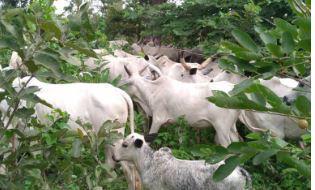
Ajase-Ipo market in Ifelodun Local Government Area of Kwara State was winding down for the day when an unusual drama unfolded, one that left traders stunned, security operatives on alert and a suspected cattle rustler in handcuffs.
What began as an ordinary livestock trading evening on January 11, 2026, suddenly turned into a scene many witnesses are still struggling to forget, after five cows reportedly recognised their owners and exposed the man who brought them for sale.
The market had worn its usual busy look that evening. Traders moved around rows of livestock, buyers bargained loudly over prices, while herders struggled to keep restless cattle under control amid clouds of dust rising from the crowded arena.
Nothing suggested that before sunset, the market would become the centre of a dramatic recovery operation.
Amid the crowd was a man later identified as 30-year-old Mohammed Jabi, a native of Buju village in Wushishi Local Government Area of Niger State, who resides in Waji village, Patigi Local Government Area of Kwara State.
Quietly, he reportedly tied five cows among other livestock displayed for sale and waited for buyers.
But unknown to many at the market, the animals had allegedly been stolen.
At about the same time, a group of herders searching for cattle earlier rustled from them reportedly arrived at the market. For days, they had moved from one livestock market to another in search of their missing animals.
Like experienced herders familiar with the trade, they quietly observed the cattle on display without drawing attention to themselves.
As the herders approached the section where the five cows were tied, the animals suddenly became agitated. Eyewitnesses said the cows pulled repeatedly against their ropes, turned sharply toward the approaching men and began making low sounds, as though reacting to familiar faces.
The unusual behaviour immediately attracted attention. Traders reportedly abandoned negotiations midway, while curious buyers and onlookers gathered around the scene.
One of the traders, who identified himself as Danjuma Bature, said: “What made the development even more striking was that the herders had not yet claimed ownership of the cows. But the animals appeared to have recognised them first. This is normal because cattle recognise their owners. This belief has existed for generations because of years of grazing together, feeding routines and constant interaction. It creates a bond that animals rarely forget.
“Cattle possess the ability to recognise familiar voices, faces and routines even after long periods of separation from their owners. That was what played out at the market,” Bature explained.
Saturday Vanguard gathered that moments later, the herders stepped forward and identified the cows as theirs, pointing out distinct horn shapes, body marks and physical features they claimed matched the animals stolen from them earlier. Attention immediately shifted to Mohammed Jabi.
Bature added: “When questioned, he (Jabi) failed to provide convincing explanations regarding ownership of the livestock.”
Market authorities subsequently intervened and alerted security operatives attached to the Special Task Force established by the Inspector-General of Police, IGP Olatunji Disu, to tackle violent crimes in Kwara State.
Investigations later revealed that the suspect was allegedly acting on the instructions of a bandit commander identified as Bachujo, said to be linked to a criminal network operating within forest corridors across parts of Kwara, Niger and Kogi states.
Security sources alleged that recent joint operations by Police and Military personnel had mounted pressure on criminal groups within the forests, limiting their movement and access to supplies.
Investigators suspect that the cows were brought to Ajap-Ipo market to be sold in exchange for food items and other logistics for members of the group.
Mohammed Jabi was subsequently detained after failing to substantiate ownership claims to the cattle.
Further investigations reportedly confirmed that the animals had been rustled during earlier attacks.
They were later returned to their owners, while security agencies intensified efforts to track other suspected members of the network.
For many residents and traders who witnessed the incident, however, what stood out most was the role played by the cows themselves.