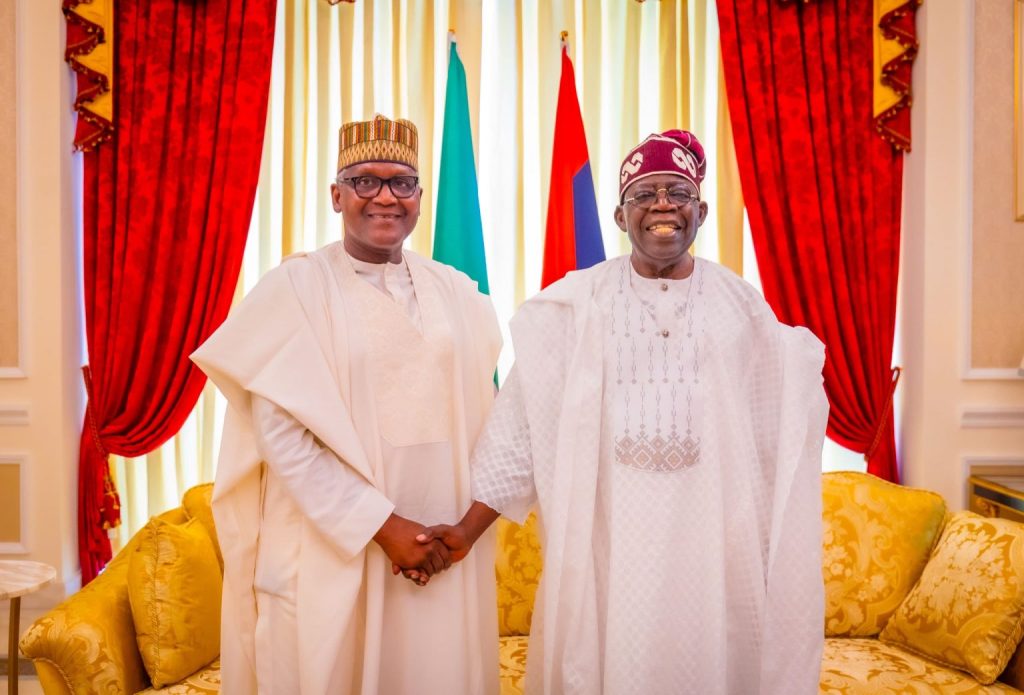
Aliko Dangote, President and Chief Executive of the Dangote Group, has lauded President Bola Tinubu’s recent diplomatic efforts in the United Kingdom, asserting that the mission has successfully opened critical economic doors for Nigeria. Speaking to journalists following a courtesy visit to the President’s Lagos residence, Africa’s wealthiest man highlighted the tangible benefits of combining diplomacy with economic strategy.
A Landmark Deal for Nigerian Infrastructure
Dangote emphasized that the President's visit was more than a formal greeting; it resulted in a significant financial commitment aimed at revitalizing Nigeria’s core facilities. “I believe his visit will open quite a lot of doors,” Dangote stated, pointing to a major agreement signed during the trip.
Key highlights of the diplomatic success include:
- £746 Million Infrastructure Agreement: A substantial funding commitment specifically targeted at improving Nigerian ports and other critical infrastructure.
- Global Investor Confidence: Dangote noted that securing funds from the British government—who are facing their own economic hurdles—signifies a high level of international trust in the current administration’s direction.
- The Ripple Effect: The industrialist predicted that this move would encourage other nations, such as Germany, to follow suit with similar investment packages.
New Avenues for Nigerian Private Investors
Beyond government-to-government deals, Dangote pointed out that the visit has paved the way for the Nigerian private sector to access international credit agencies. He noted that these resources have remained largely untapped by local investors for a long time.
“It means that the agency is now open for business for Nigerians,” Dangote explained. “We will go as private people to look for them to give us support. It shows there is capacity for them to fund our projects.”
A Grave Warning: Global Conflict and Economic Hardship
Despite the optimistic outlook on diplomacy, Dangote issued a stern warning regarding the volatility of the global oil sector and the ongoing crisis in the Middle East. He cautioned that if the conflict does not de-escalate, the economic fallout will be felt by everyone—from large industries to small business owners.
Dangote outlined several critical concerns regarding the global situation:
- Energy Costs: A surge in energy prices would disproportionately affect everyday Nigerians, including barbers, bakers, and factory owners who rely on generators.
- Debt Burdens: Many African nations are already struggling with high debt profiles; additional economic shocks could push these economies to a breaking point.
- Social Strain: Unlike wealthier nations, many in Africa lack the financial reserves to withstand prolonged work stoppages or extreme inflation, meaning a lack of daily work leads directly to food insecurity.
Concluding his remarks, Dangote called for global stability, noting that while Nigeria is not a direct party to the Middle Eastern conflicts, the interconnected nature of the global economy ensures that the country will "feel the heat" if the situation worsens. “We just need all hands on deck to pray that this thing comes to an end,” he urged.