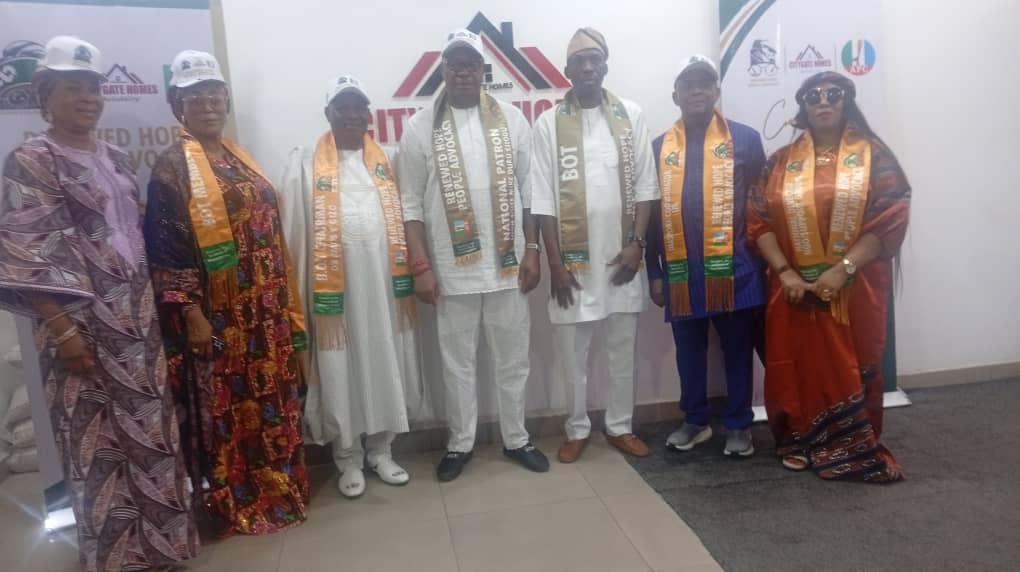
The Chairman of City Gate Group, Chief Michael Duru Ejiogu, has said President Bola Tinubu is committed to addressing Nigeria’s housing deficit through targeted delivery to low-income citizens.
Ejiogu made the remark on Monday in Abuja during his acceptance speech as National Patron of the Renewed Hope People’s Advocacy (RHPA).
He commended the President’s housing initiative, describing it as a bold step toward tackling one of the country’s most pressing social challenges.
According to him, his mandate as patron of RHPA includes promoting the “Renewed Hope” agenda, advocating government programmes, and supporting efforts to expand access to affordable housing.
He noted that City Gate Group is already collaborating with governments in the Federal Capital Territory and other states on housing projects targeted at low-income earners.
He explained that the company plans to leverage donated land and cost-effective building methods to deliver affordable homes, stressing that real impact would depend on reaching Nigerians at the grassroots.
Ejiogu emphasised that beyond policy announcements, success lies in effective “last-mile” delivery, inclusive planning, and access to financing for intended beneficiaries.
Earlier in his welcome address, the Chairman of the RHPA Board of Trustees, Dr. Amos Jizo, expressed support for the administration’s reform agenda, describing it as evidence of decisive leadership. He said the group was established to promote awareness of government policies and ensure citizens understand and benefit from ongoing reforms.
Jizo noted that initiatives such as economic reforms, infrastructure development, local government autonomy, and student support programmes under the Nigerian Education Loan Fund are gradually repositioning the country for sustainable growth.
Also speaking, the National Publicity Secretary of RHPA, Prince Olatayo Teriba Adepuji, reiterated the group’s commitment to grassroots mobilisation. He said the organisation is intensifying community engagement through town hall meetings and sensitisation campaigns to bridge the information gap between the government and citizens.
Teriba added that many Nigerians remain unaware of key interventions, including student support initiatives and economic reforms, noting that direct outreach is essential to building trust and encouraging public participation.
The event underscored the role of advocacy groups in promoting government policies, with speakers agreeing that sustained grassroots engagement will be critical to ensuring that reforms translate into tangible benefits for ordinary Nigerians.