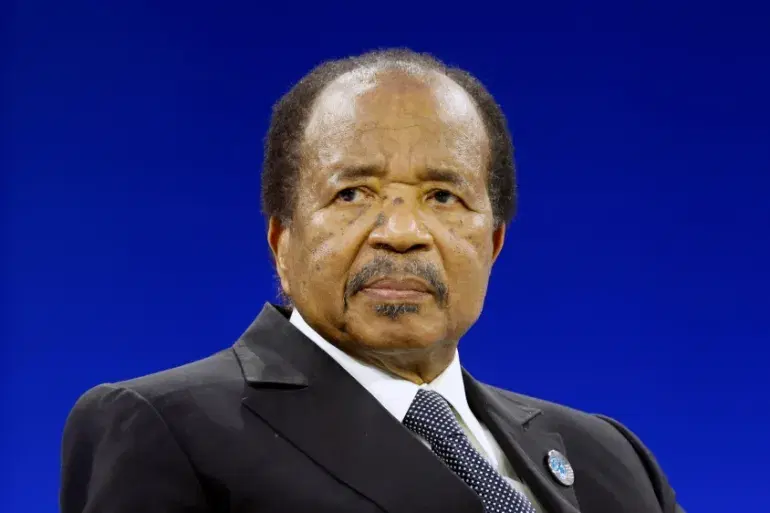
Key Takeaways
- President Paul Biya, 93, returned to Cameroon after a 73-day absence from the country.
- His prolonged stay in Geneva ignited widespread speculation about his health and the stability of his government.
- As the world's oldest serving head of state, Biya's public appearances are closely scrutinized.
- He made a public appearance upon arrival, waving to supporters at Yaounde airport, signaling his presence.
YAOUNDE, CAMEROON – President Paul Biya, the world's oldest serving head of state, made a highly anticipated return to Cameroon on Thursday, ending a 73-day absence that had fueled intense speculation about his health and the nation's political future. The 93-year-old leader landed in the capital, Yaounde, at approximately 1600 GMT, as noted by AFP journalists on the scene.
Biya's prolonged absence began on June 7, when he departed for Geneva, Switzerland, for what his office vaguely described as 'a short private stay.' However, as weeks turned into months, the lack of concrete information regarding his whereabouts and well-being sparked a flurry of rumors and concerns across the Central African nation and beyond. Social media platforms buzzed with unverified reports, and political observers questioned the transparency surrounding the leader's extended hiatus.
The President's return was marked by a brief public appearance at the airport, where he was seen waving to supporters from his car as he departed. This gesture, though fleeting, served as a visual confirmation of his presence and aimed to reassure a populace increasingly anxious about the state of its leadership. For a country grappling with various internal challenges, including separatist conflicts in its Anglophone regions and the persistent threat of Boko Haram in the north, the stability at the top is paramount.
President Biya has been at the helm of Cameroon for over 41 years, making him one of Africa's longest-serving leaders. His advanced age and a history of extended private stays abroad have often led to questions about his capacity to govern and the lack of a clear succession plan. Such absences typically trigger a vacuum of information, allowing rumors to proliferate and potentially destabilize the political landscape.
The opacity surrounding the health of long-serving leaders is a common concern in many parts of the world, and Cameroon is no exception. Critics often point to the need for greater transparency to ensure good governance and to prevent uncertainty from undermining national confidence. Biya's return, while providing immediate relief, is unlikely to fully quell the underlying discussions about the future of Cameroonian leadership and the need for institutional clarity.
Why This Matters
President Biya's return is crucial for immediately stabilizing political discourse in Cameroon, dispelling the intense health rumors that had gripped the nation. However, his prolonged absence underscores persistent questions about governance transparency, presidential succession, and the long-term stability of a country facing significant internal challenges.