Key Takeaways
- President Paul Biya, the world's oldest head of state, has been in Switzerland for over 48 days, sparking national debate.
- Opposition parties decry a "glaring institutional vacuum" and demand clarity on the President's capacity.
- Government officials maintain that President Biya continues to govern remotely, dismissing claims of a power void.
- Unfulfilled promises, including a new government and repeatedly postponed elections, exacerbate public frustration.
- The absence fuels intense speculation about presidential health, succession, and alleged infighting within the ruling elite.
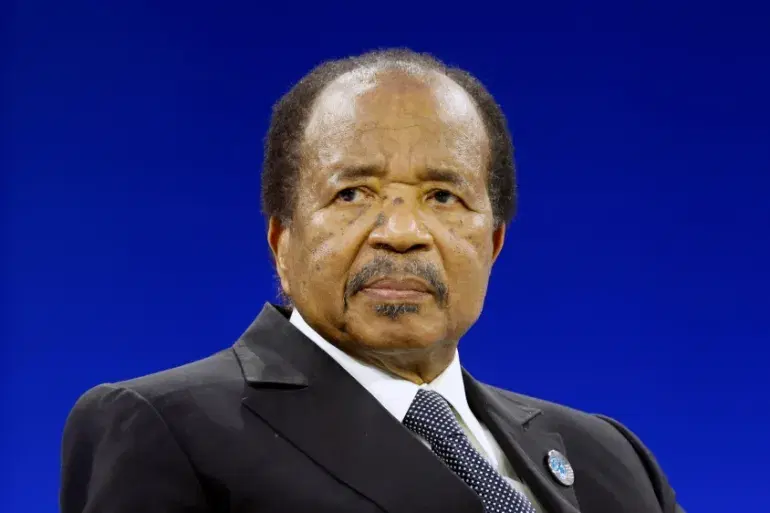
Cameroon finds itself at a critical juncture, grappling with a palpable sense of political uncertainty as its long-serving President, Paul Biya, remains in Switzerland for an extended period. As of this past Saturday, the 93-year-old leader, who has governed the Central African nation for over four decades and holds the distinction of being the world's oldest head of state, marked 48 days since his departure from Cameroon.
President Biya's office initially announced his departure on June 7 for a "short, private stay in Europe" alongside First Lady Chantal Biya. However, the prolonged nature of this absence has reignited a fervent national debate concerning government inaction and a perceived leadership vacuum, a sentiment widely shared by a populace yearning for change.
The President's frequent trips to Geneva over the years have often been accompanied by waves of speculation and rumors regarding his health. While the government has, at times, vehemently denied such claims, the current extended stay has intensified these concerns. Communication Minister Rene Emmanuel Sadi, for instance, issued a statement on June 18 refuting press reports that President Biya had been hospitalized in a Geneva clinic.
Despite official assurances, opposition figures view the President's absence as deeply problematic. Mamadou Mota, Vice-President of the Cameroon Renaissance Movement (MRC), articulated this concern on social media, describing the situation as a "glaring institutional vacuum." Echoing this sentiment, Patricia Tomaino Ndam Njoya, President of the Cameroon Democratic Union (UDC), called for the establishment of "an impartial procedure for determining the temporary or permanent incapacity" of the head of state.
Conversely, senior officials within the ruling party have dismissed these accusations. Jacques Fame Ndongo, a prominent minister and ruling party official, asserted on Tuesday that "Wherever he is, the head of state is meticulously following the files submitted to him… by his aides." Allegations of a power vacuum are not unprecedented in Cameroon; a similar debate arose in late 2024 when President Biya spent approximately 50 days outside the country.
The opposition Social Democratic Front (SDF) party further intensified the critique, declaring on Friday that the country was effectively "on autopilot." This sentiment reflects a broader frustration among many Cameroonians, fueled by President Biya's repeated absences over the past two decades and the perceived inertia of the government. Viviane Ondoua Biwole, a professor of public management at the University of Yaounde, highlighted the public's exhaustion, stating, "People are worn out from waiting." She attributed this weariness to the current government's record-long eight-year tenure and the unfulfilled promise of renewal following a recent election with "very mixed results."
President Biya's re-election for an eighth term in October was met with widespread demonstrations that were violently suppressed, with the government acknowledging "several dozen" deaths without providing an exact toll. The election results themselves were challenged by the opposition and viewed with reservation by Western embassies. Adding to the public's disillusionment, President Biya's December 31 address to the nation promised a new government team "in the coming days," a pledge that remains unfulfilled seven months later. Furthermore, municipal and legislative elections have been postponed multiple times, indefinitely extending the terms of sitting officials.
While Cameroonian authorities have initiated some institutional changes, such as replacing the presidents of both chambers of parliament in March and creating a vice-presidential post via constitutional reform in May, no vice-president has yet been appointed. This inaction has inadvertently fueled various conspiracies, including an incident in June where fake documents replicating a presidential decree, announcing a vice-president's appointment, were delivered to a public radio station. Journalists quickly identified the forgery, preventing its broadcast, but the incident amplified speculation about the post-Biya era and the shrouded race for succession.
Professor Ondoua Biwole noted a "more or less visible crisis at the highest levels of government between those close to the president." Political scientist Stephane Akoa concurred, telling AFP that "increasingly leaks mention infighting between the various factions in his inner circle." Behind one of these factions, First Lady Chantal Biya is reportedly becoming "increasingly present in state affairs," with her name frequently mentioned in decision-making and appointments. In the absence of an appointed vice-president, the Senate President, Aboubakary Abdoulaye, is constitutionally next in line to lead in the event of a power vacuum, until a presidential election can be organized.
Why This Matters
President Biya's prolonged absence and the ensuing political uncertainty threaten Cameroon's stability and governance, potentially exacerbating existing socio-economic challenges and fueling a contentious succession debate that could have far-reaching implications for the nation's future.