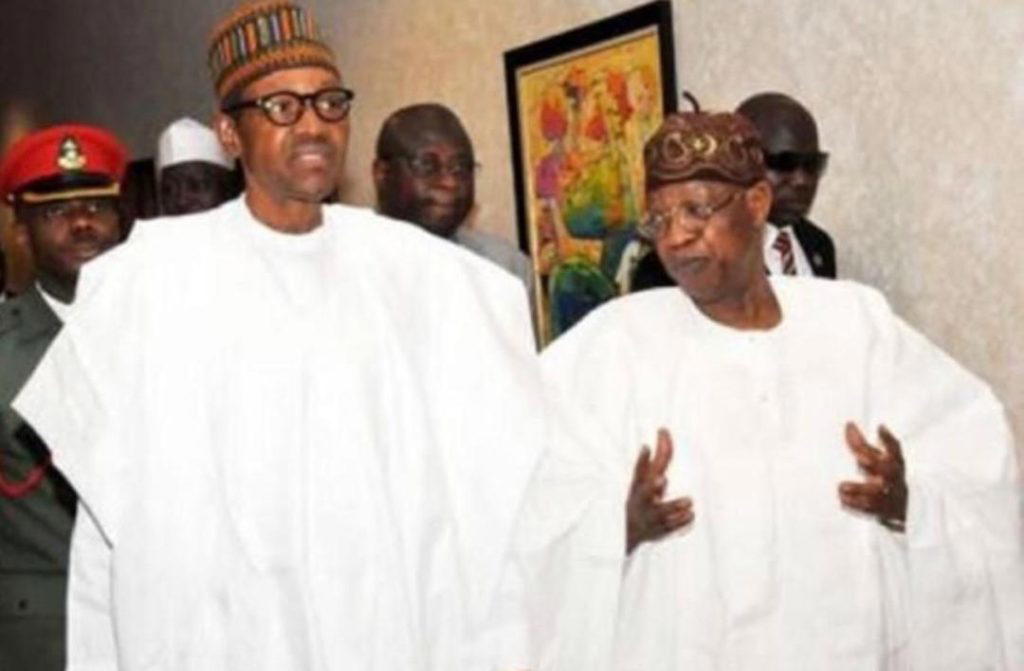
Abuja, Nigeria – In a poignant address marking the first anniversary of former President Muhammadu Buhari's passing, Alhaji Lai Mohammed, the immediate past Minister of Information and Culture, offered a deeply personal and illuminating account of his years serving under the late leader. Mohammed painted a vivid portrait of Buhari, describing him as a man defined by unwavering integrity, profound compassion, and an absolute trust in those who served alongside him.
Key Takeaways
- Lai Mohammed described late President Buhari as a leader of unwavering integrity, uncommon compassion, and absolute trust.
- Buhari's greatest legacy was his embodiment of values like honesty, humility, and patriotism, rather than just the offices he held.
- The former President demonstrated remarkable confidence in his aides, notably authorizing a sensitive media tour in Borno without hesitation.
- Contrary to public perception, Buhari possessed an engaging personality, a sense of humor, and deep empathy for his subordinates.
- His commitment to Nigeria's unity and security remained steadfast throughout his extensive public service career.
A Leader Defined by Values, Not Just Office
Speaking in Abuja, Mohammed emphasized that Buhari's enduring legacy transcended the numerous high offices he occupied. Instead, it was the immutable values he consistently embodied throughout his public life that truly set him apart. Mohammed lauded Buhari as an exceptional patriot, an incorruptible figure, and a humanist whose dedication to Nigeria remained steadfast from his early military career through his two-term democratic presidency.
Uncommon Trust and Steadfast Support
Mohammed recounted several instances that underscored Buhari's leadership, which was anchored on integrity, humility, honesty, and a rare confidence in his aides. He highlighted a particular moment in 2015 when he proposed taking local and international journalists on a military-guided tour of communities in Borno State recently liberated from Boko Haram insurgents. Despite initial concerns from the then Minister of Defence regarding the sensitive nature of the operation, Buhari, who was attending an international summit in South Africa, immediately authorized the mission without hesitation. This swift approval allowed journalists to travel aboard a Nigerian Air Force C-130 aircraft to Maiduguri and then proceed under heavy military escort to Bama, a town once declared by Boko Haram as its caliphate headquarters.
“I regarded that as one of the greatest demonstrations of confidence any leader could repose in a subordinate,” Mohammed stated, reflecting on the significance of that moment.
Beyond Public Perception: Empathy and Humor
Mohammed further revealed how Buhari handled a petition containing allegations against him. While the President ordered a discreet investigation in line with due process, he made it clear from the outset that he did not believe the accusations. The investigation ultimately cleared Mohammed of all charges. Additionally, during a Federal Executive Council meeting, when another cabinet member questioned the administration's publicity efforts, Buhari publicly defended Mohammed, confirming he had personally watched his international media engagements and was satisfied with the effective projection of the government's achievements abroad.
Dispelling the widespread perception of Buhari as an austere and distant leader, Mohammed painted a picture of a compassionate individual with an engaging personality and a remarkable sense of humor. He recalled Buhari's consistent concern for his welfare, often asking how he was coping with the pressures of his demanding role. On one occasion, Buhari publicly remarked, “I pity Lai Mohammed,” a comment that deeply resonated with the former minister as a testament to the late President's empathy.
Mohammed also shared lighter moments, such as when Buhari telephoned him while he was in Lagos, politely asking if he could “do me a favour” by representing him at an event, rather than issuing a direct presidential directive. He also reminisced about political strategy meetings before the 2015 general elections, where Buhari would playfully tease him about his routine Monday and Thursday fasting, often drawing laughter from everyone present.
An Unwavering Commitment to Nigeria
Reflecting on Buhari’s extensive public service, Mohammed noted that few Nigerians could match the breadth of his experience, having served in roles ranging from Military Governor and Federal Commissioner to Military Head of State, Chairman of the Petroleum Trust Fund, and ultimately a democratically elected two-term President. He underscored Buhari's unwavering belief in Nigeria’s unity, recalling his role during the Nigerian Civil War and his iconic 1984 declaration that Nigerians had no other country and must work together to save it. Mohammed also credited Buhari with a decisive role in suppressing the Maitatsine uprising in 1980 and maintaining an enduring commitment to safeguarding the lives and livelihoods of Nigerians. He even cited former Head of State General Yakubu Gowon's memoir, which revealed Buhari quietly provided financial assistance when Gowon struggled to pay his children's school fees after leaving office.
A Deepened Personal Bond
Mohammed confessed that while he had admired Buhari long before joining his administration, their relationship deepened significantly after 2015, continuing even after Buhari left office through regular visits to his residences. He fondly recalled Buhari writing the foreword to his 2012 book, Witness to History, and arriving first at its launch in Lagos, patiently waiting for over an hour before the program began. Describing his service under Buhari as one of the greatest privileges of his life, Mohammed concluded that the former President’s legacy of integrity, patriotism, humility, compassion, and selfless service would continue to inspire generations of Nigerians.
Why This Matters
Lai Mohammed's intimate revelations offer a crucial re-evaluation of former President Buhari's leadership and character, providing valuable insights into the man behind the public persona. These anecdotes highlight the importance of trust, integrity, and empathy in governance, offering a nuanced perspective that can inform future leadership and public discourse in Nigeria.