Key Takeaways
- Daura blames Buhari’s failures on sycophants who betrayed the president’s trust.
- He rejects the claim that Buhari’s tenure was Nigeria’s worst and calls for a broader historical comparison.
- The former DSS boss says no cabal ran the government and denies he was ever part of one.
- He argues that competence, not personal loyalty, should determine public appointments.
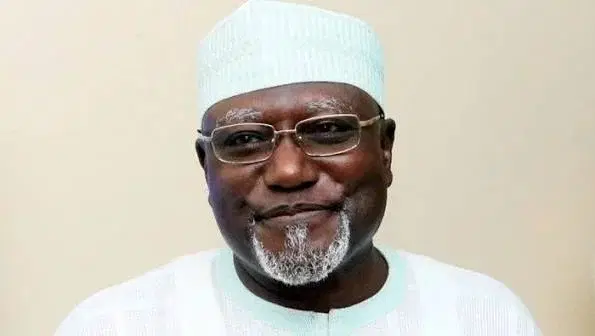
ABUJA — Former Department of State Services boss Lawal Daura says ex-President Muhammadu Buhari was let down by sycophantic aides who destroyed confidence in his government. Daura, now the vice-presidential candidate of the Allied Peoples Movement, spoke on Politics Today on Monday.
A Broken Inner Circle
Daura, who left the DSS in 2018, said he knew exactly what those around Buhari did. "I know the details of what they have done," he said, adding that the aides did not necessarily mislead the former president but betrayed the faith placed in them.
He dismissed talk of a ruling cabal and rejected any suggestion that he had belonged to one. "Even if there was a cabal, the intelligence chief of a country can never be part of a cabal," Daura said, explaining that his duty kept him close to the president for security reasons.
After 2018, Everything Broke Down
Daura insisted that governance started falling apart only after his exit. "Everything started to give way after 2018, since I left office," he said, describing himself as a loyal protector of Buhari and his administration while in office.
Defending Buhari’s Legacy
Responding to critics who describe Buhari’s eight-year rule as Nigeria’s worst, Daura challenged them to study history. "Yes, they can say it, but I also want them, the real students of history, to go back from 1995 to 2023, when he exited, and find out which were the worst years," he said.
Loyalty Is Not a Qualification
The former intelligence chief argues that the main lesson from Buhari’s presidency is that friendship must never override competence in appointments. "And even if you are to do that, you must also weigh the quality of that person and then maybe place him in an office that befits him or is proportionate to maybe the level of trust you have in that person."
He regretted that people were entrusted with responsibilities simply because they were trusted, even when their suitability was doubtful. In his words, an unfortunate situation developed because appointees were not properly assessed for demanding public roles.
Why This Matters
Daura’s account offers an insider perspective on Buhari’s government while exposing the costs of misplaced trust. It is a reminder that leaders who confuse closeness with expertise risk damaging the very institutions they are sworn to protect.