Key Takeaways
- Nigeria is actively participating in the 18th BRICS Leaders’ Summit to consolidate bilateral relations.
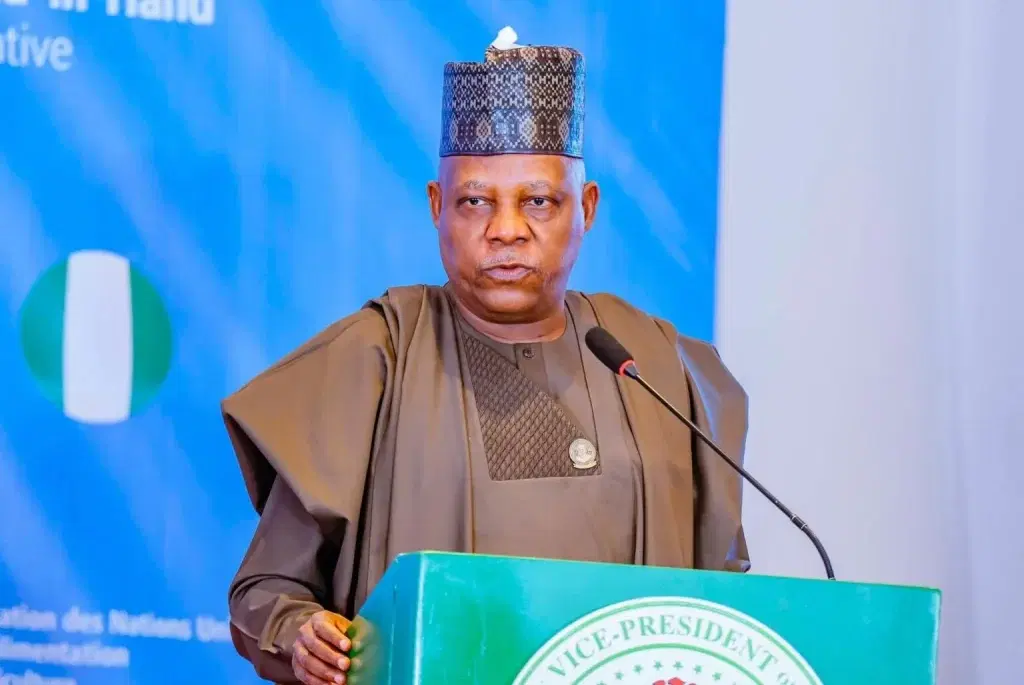
- Vice President Kashim Shettima is representing President Bola Tinubu at the summit in New Delhi, India.
- The engagement aims to strengthen partnerships in critical sectors like trade, investment, energy, agriculture, and technology.
- Nigeria's participation underscores its commitment to deepening South-South cooperation and attracting foreign investment.
- The country is poised to become a BRICS partner nation starting January 2025, signaling a strategic shift in its international economic diplomacy.
The Federal Government of Nigeria has unequivocally reaffirmed its dedication to fortifying bilateral relations with crucial international partners, leveraging the platform of the 18th BRICS Leaders’ Summit. The high-profile event, scheduled for September 12 and 13 in New Delhi, India, marks a significant diplomatic engagement for the West African nation.
Mr. Stanley Nkwocha, the Senior Special Assistant to the President on Media and Communications, conveyed this commitment in a statement issued from Abuja. He emphasized that Nigeria's presence at the summit is not merely symbolic but a strategic move designed to unlock new avenues for collaboration and mutual growth.
According to Nkwocha, this pivotal engagement will provide Nigeria with an invaluable opportunity to bolster existing partnerships and forge new ones across a diverse range of sectors. These include crucial areas such as trade, investment, energy, agriculture, solid minerals, technology, and innovation. The overarching goal, he explained, is to foster greater cooperation among countries of the Global South, thereby promoting a more equitable and multipolar global economic landscape.
Vice President Kashim Shettima is leading the Nigerian delegation, representing President Bola Tinubu at the summit, which is being held at the Bharat Mandapam in India. His presence underscores the importance Nigeria places on engaging with the BRICS bloc, an acronym for the group of major emerging economies: Brazil, Russia, India, China, and South Africa. This bloc has increasingly become a significant voice for developing nations on the global stage, advocating for reforms in international governance and finance.
During his stay in New Delhi, Vice President Shettima is slated to join leaders from BRICS member nations and partner countries in plenary and high-level sessions. These discussions are expected to delve into critical global issues, including strategies for sustainable economic growth, avenues for enhanced multilateral cooperation, and shared development priorities that resonate with the aspirations of the Global South.
Beyond the multilateral sessions, the presidential aide confirmed that Vice President Shettima will also engage in a series of bilateral meetings with leaders and senior officials from participating countries. These one-on-one discussions are anticipated to focus on identifying and exploring specific opportunities for deeper economic and diplomatic cooperation with Nigeria, aligning with President Tinubu's broader agenda of economic revitalization and diversification.
Nigeria's status as a BRICS partner country, effective January 2025, opens a new and significant channel for the nation to deepen its South-South cooperation. This strategic alignment allows Nigeria to engage directly with some of the world’s largest emerging economies on crucial matters such as trade facilitation, foreign direct investment, development finance, and the much-needed reform of global governance institutions. This move is consistent with President Tinubu’s administration's drive to strengthen Nigeria’s international economic partnerships, attract substantial investment, and expand market access for Nigerian products, particularly in the non-oil sectors like agriculture, energy, and solid minerals.
Vice President Shettima is expected to return to Nigeria shortly after concluding his participation in the summit, bringing back insights and potential agreements that could significantly impact the nation's economic trajectory.
Why This Matters
Nigeria's active engagement with the BRICS bloc and its impending status as a partner country signal a strategic pivot towards strengthening ties with emerging economies, crucial for diversifying its economic partnerships and attracting vital investment. This move is pivotal for advancing Nigeria's economic interests, fostering South-South cooperation, and enhancing its influence in shaping a more inclusive global economic order.