By Soni Daniel, Northern Region Editor
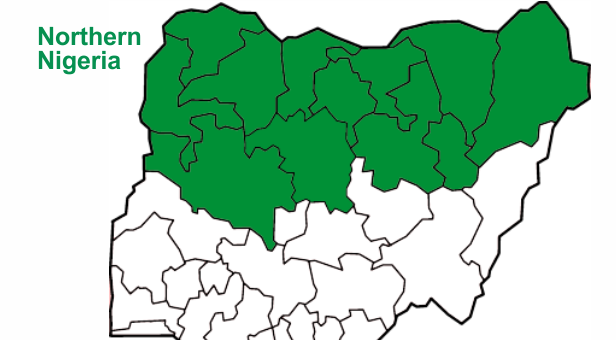
The 2027 general elections may be over 100 days away, but political campaigns across Northern Nigeria are yet to gather full momentum, with billboard disputes, high signage fees, internal party crises and government restrictions threatening to shape the early phase of electioneering
Although the INEC has approved the commencement of campaigns, findings by Saturday Vanguard show that political activities vary sharply across the region
While Kaduna, Nasarawa, Sokoto, Taraba, Katsina and parts of Adamawa and Bauchi are witnessing growing mobilisation, campaigns remain relatively subdued in states such as Kebbi, Benue, Kano and Borno, where parties are still grappling with internal issues or yet to formally launch their campaigns
In some states, the contest has already shifted to billboards, posters and public spaces, producing allegations of discrimination against opposition parties
The sharpest confrontation is in Niger State, where opposition parties have accused the ruling All Progressives Congress, APC, of using its incumbency to frustrate their campaigns
The African Democratic Congress, ADC, raised the alarm shortly after nominating its governorship candidate, Dr Mohammed Kpautagi, alleging that the ruling party was blocking opposition parties from mounting billboards in strategic locations while erecting its own campaign structures
Niger ADC chairman, Alhaji Hassan Musa, described the situation as a threat to multiparty democracy
“From all indications, the APC does not want opposition political parties to exist This is not democracy. It is unfortunate that opposition parties have become targets of the ruling party at all levels of political engagement. This is not a good omen for Nigeria’s democracy,” he said.
Musa alleged that his party had secured the necessary approvals to erect a billboard in Paiko, headquarters of Paikoro Local Government Area, but was prevented from doing so
“What we are witnessing in this state suggests possible connivance with regulatory authorities to restrict the activities of opposition parties, while granting the APC unfettered access This directly undermines Nigeria’s democratic process,” he added.
The PDP governorship candidate, Mohammed Mamman Nami, a former Chairman of the Federal Inland Revenue Service, FIRS, has also complained about the removal of his campaign materials
Nami alleged that Governor Mohammed Umaru Bago ordered the removal of his posters and banners following his criticism of the administration’s policies
“I know I am determined to do right for the state This is a state that is richly endowed with resources but mismanagement by successive administrations has not allowed the citizens to benefit from the dividends. That is what I’m coming to do. I have the discipline and I know I will do it,” Nami said.
The Nigeria Democratic Congress, NDC, governorship candidate, Yahaya Mohammed Adam, also alleged intimidation and destruction of his campaign materials
The party’s senatorial candidate, Muhammed Rabiu Sadiq, complained after his billboard was marked for removal in Bida Local Government Area The council chairman, Hon. Usman Mohammed Manko, was said to have ordered opposition parties to pull down their billboards.
But the APC in Niger State has also complained about billboard destruction, blaming some aggrieved members and supporters for vandalising its campaign materials
In Plateau State, the Jos Metropolitan Development Board, JMDB, has warned parties and candidates against pasting posters or mounting campaign materials on public infrastructure
The board said the restriction was in line with Executive Order No 003 of 2024 and covers public buildings, bridges, roads, utility poles, traffic structures, street furniture and trees.
“The posting or pasting of posters on public infrastructure is prohibited,” the board said
It added that political advertisements must receive prior approval, with only designated locations available for campaign materials Violators risk enforcement action and a ₦500,000 penalty.
Despite the restrictions, the PDP governorship candidate, Kefas Wungak Ropshik, has begun consultations and meetings with party supporters, including in Quanpan Local Government Area
In Kwara State, controversy has also erupted over campaign billboards belonging to PDP governorship candidate, Engr Suleiman Bolakale Kawu
The Kwara State Signage and Advertisement Agency, KWASAA, removed some of his billboards, saying they violated advertising regulations and environmental and public infrastructure rules
KWASAA General Manager, Toba Adeyeye, denied targeting the opposition
“We are not really partisan, but we will do our job, no matter the party involved, no matter the candidate involved The most important thing for us at KWASAA is Kwara. Kwara comes first, no matter the party, no matter the candidate,” he said.
Kawu’s camp, however, described the action as a “disturbing display of intolerance” and an abuse of administrative power designed to suppress opposition visibility
In Zamfara State, the APC has flagged off its campaign, while the PDP senatorial candidate for Zamfara Central and candidates of other parties have commenced various forms of mobilisation
However, campaign posters and billboards remain largely absent from Gusau streets
Kebbi State presents an even quieter picture No serious campaign has started, although parties are preparing to launch their activities. Posters of candidates are largely absent from the streets, apart from billboards of the governor erected before the campaign period.
In Adamawa, however, candidates have commenced serious mobilisation Campaigners have remained largely peaceful, apparently conscious of the violence and destruction that characterised the previous election.
The parties and candidates recently signed a peace accord, pledging to conduct their campaigns peacefully before, during and after the election
An executive order banning the pasting of election posters and banners has, however, drastically reduced campaign materials in the state, apart from posters and billboards of President Bola Tinubu and some APC candidates
Nasarawa is among the states where campaign activities have taken off strongly APC, PDP and SDP candidates have launched programmes and engaged supporters.
APC candidate, Senator Wadada, unveiled his HEART agenda and said he was the candidate to beat, while PDP’s David Emmanuel Ombugadu, contesting for the third time, has aligned with the FCT Minister’s Rainbow Coalition
Former Inspector-General of Police, Muhammed Abubakar Adamu, is the SDP candidate and has attracted former APC supporters
An interesting feature of the Nasarawa campaign is that the major parties have adopted President Bola Tinubu as their presidential candidate
In Benue, however, political activities are yet to gain significant momentum While some National Assembly candidates have begun consultations with political leaders, stakeholders and constituents, most parties are yet to officially flag off campaigns.
Yobe State is witnessing increasing political visibility, with colourful posters and billboards appearing in Damaturu
Candidates are also meeting traditional rulers, community leaders and other stakeholders However, large rallies remain limited.
In Kogi, campaigns are gradually picking up, with support groups holding town hall meetings and unveiling posters and banners, particularly for APC figures
High signage charges may, however, discourage a full-blown billboard contest Approved fees reportedly include ₦150 million for presidential candidates, ₦50 million for senators, ₦30 million for House of Representatives candidates and ₦5 million for State House of Assembly candidates.
Bauchi is also witnessing increasing mobilisation, with the APC and APM holding rallies, ward visits, stakeholder meetings and door-to-door campaigns
Security agencies have urged parties and supporters to avoid violence, hate speech and other electoral offences
Sokoto is becoming one of the more visible political battlegrounds, with APC, ADC and NDC posters and billboards appearing across major streets
APC has the strongest physical presence, with images of President Tinubu and Governor Ahmed Aliyu prominent at strategic locations, government buildings and flyovers
The ADC is also strengthening its grassroots machinery behind former Deputy Governor Manir Muhammad Dan’iya, while the NDC has begun political engagements around its presidential candidate, Peter Obi, and running mate, Rabiu Musa Kwankwaso
There is, however, no indication that opposition posters are being systematically removed in Sokoto
Taraba is also recording increasing political activity Billboards and posters are appearing across Jalingo, while candidates are conducting ward-to-ward tours and consultations. Governorship aspirants are attracting endorsements from community, youth and socio-political groups.
In Katsina, parties and support groups are concentrating heavily on grassroots mobilisation
Governor Dikko Umar Radda has pledged a door-to-door campaign in support of President Tinubu and other APC candidates The PBAT Door to Door Movement has deployed campaign vehicles to coordinators across the state’s 34 local government areas.
Support organisations have also opened offices in Katsina, while former PDP members from the 34 local government areas have joined the APC and begun integration into its campaign structure
Kaduna stands out among the states where campaigns are already in full swing
Campaigns for the presidential and National Assembly elections commenced following INEC’s August 19 declaration, while governorship campaigns started September 19
Eighteen parties are contesting, including incumbent Governor Uba Sani of APC, Isah Ashiru of ADC and Usman Bawa of PDP
The state is witnessing intense poster competition, with the APC dominating major locations with large billboards while ADC, PDP and NDC candidates rely heavily on walls, bridges and party offices
PDP candidate Shehu Bawa has alleged that some billboard owners in Kaduna North rejected opposition posters after collecting payment, asking prospective advertisers to disclose their party affiliation
In Kano, the campaign atmosphere remains subdued despite the proximity of the elections
The APC has commenced mobilisation, but full-scale campaigns have yet to begin, largely because major parties are dealing with internal disputes, candidate replacements and court cases
The NDC is facing a leadership dispute involving former Governor Rabiu Musa Kwankwaso and members of the party’s North-West leadership over candidate changes and the emergence of Kwankwaso’s son as deputy governorship candidate
The ADC is also facing a legal battle over its governorship ticket between Sheikh Ibrahim Khalil and Ibrahim Ali-Amin, popularly known as Ibrahim Little
Although INEC recognises Ibrahim Little as the candidate, Khalil’s camp has challenged the process in court
The PDP has also replaced its governorship candidate, Muhammad Dalha, with Muhammad Sani Abacha
The APC, meanwhile, has begun grassroots mobilisation, vehicle donations and the inauguration of campaign councils under the slogan, “APC SAK”
Yet, the poster and billboard war usually associated with Kano elections is still missing
In Borno, most opposition parties, including ADC, Accord, PDP and NDC, are yet to officially commence their campaigns
The APC flagged off its 2027 campaign on September 27 at the Government House, Maiduguri, with Governor Babagana Umara Zulum mobilising support for President Tinubu and APC candidates
Some opposition candidates in Southern Borno, including Biu, Bayo, Kwaya Kusar, Shani and Askira-Uba, have nevertheless started “Thank You Visits” to religious leaders, traditional rulers and stakeholders
Across the North, therefore, the 2027 campaign is unfolding unevenly In some states, billboards and posters have become the first battleground; in others, parties are still resolving internal disputes, consulting stakeholders or building grassroots structures.
With the January 2027 elections drawing closer, the subdued campaign environment is expected to give way to a more intense contest, raising fresh questions about equal access to public space, campaign regulation, internal party cohesion and the ability of opposition parties to compete on a level playing field
Demola Akinyemi, Peter Duru, Femi Bolaji, Boluwaji Obahope, Ndahi Marama, Golok Nanmwa, Maryam Abdulaziz Usman, Christopher Ameh, Fauziyya Lawal, Idris Salisu, Edwin Phillip, Usman Aliyu, Musa Ubandawaki, Hadiza Usman, Ben Ngwakwe, Clare Nnabuike & Mohammed Yusuf contributed to this report