Key Takeaways
- Benue State challenges Peter Obi's camp to identify and provide evidence against an aide accused of blocking Obi's visit to Yelewata community.
- Governor Hyacinth Alia's office asserts initial ignorance of the incident, only learning through circulating images on social media.
- The state government pledges full cooperation with police investigations to hold any responsible party accountable for the alleged obstruction.
- CPS Tersoo Kula addressed Benue's insecurity, noting it's not unique but acknowledging ongoing efforts to achieve "relative peace."
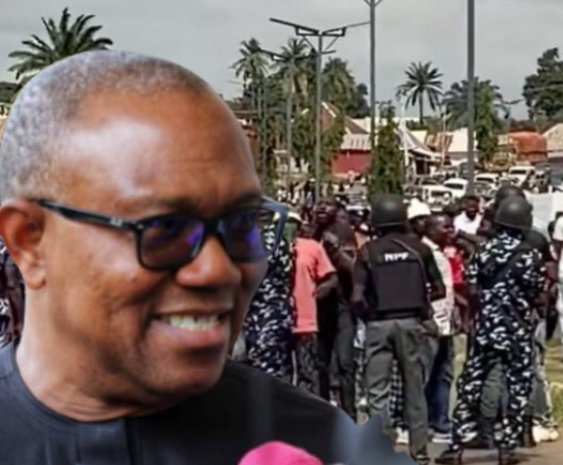
The Benue State Government has issued a direct challenge to the Nigeria Democratic Congress (NDC) and its presidential candidate, Peter Obi, demanding concrete evidence and the identity of an aide allegedly responsible for obstructing Obi's visit to the Yelewata community. Tersoo Kula, Chief Press Secretary to Governor Hyacinth Alia, insisted that the state government was blindsided by the incident, only becoming aware after images began circulating online.
Speaking on Arise TV's 'The Morning Show' on Wednesday, Kula firmly stated that the allegations against the governor were premature and unfounded. "The incident was completely unknown to the government until we started seeing pictures of what was happening. But before you say, Jack, they addressed the press and accused the governor of blocking his way. Now, the governor has become an accused person," Kula recounted, expressing frustration over the swift attribution of blame.
Kula reiterated his challenge to Obi's camp: "I challenged them that they should name that aide. They mentioned a particular aide, and we said they should go ahead and mention him. If there's any evidence, the police commissioner should ensure that the person who directed this is arrested and brought to book. These are easy assignments. They have the ability to do it." He emphasized the state government's readiness to cooperate fully with law enforcement, asserting that any individual found culpable would face justice.
The demand for specific names and verifiable proof underscores the Benue State government's position that the accusations lack substantiation. In Nigeria's often charged political landscape, allegations of obstruction or sabotage against political figures are serious and can significantly impact public perception and trust. Such incidents often trigger calls for thorough investigations to ascertain the truth and prevent the spread of misinformation, which can destabilize the political environment.
This public exchange highlights the critical role of evidence in political discourse, particularly when high-profile individuals are involved. Without concrete proof, accusations can devolve into political mudslinging, detracting from substantive issues and eroding public confidence in political processes. The Benue government's stance suggests a desire to move beyond mere allegations and establish facts through official channels, ensuring accountability rather than allowing unsubstantiated claims to fester.
Addressing the broader issue of insecurity in Benue State, Kula acknowledged the challenges but contextualized them within a national perspective. "What is happening in Benue State is somehow difficult to understand. What is happening to Benue State in respect to insecurity is happening to other states. It's not peculiar to Benue," he explained. Despite this, he stressed that the government is not complacent. "But there is no excuse saying that because it's happening to other states, we should be comfortable. We are not comfortable. The reverend father has said to you earlier that he is not comfortable and he is not sleeping in ensuring that the insecurity is reduced to the barest minimum. We now have what we can describe as relative peace in the state."
Why This Matters
This incident highlights the volatile nature of political discourse and the critical need for verifiable evidence in public accusations, especially concerning high-profile figures. It underscores the importance of transparent governance and accountability in addressing alleged obstructions, ensuring that justice prevails and public trust is maintained amidst political rivalries.