Key Takeaways
- Kenneth Okonkwo attributes Yusuf Datti Baba-Ahmed's recent criticisms of Peter Obi to a 'post-political identity crisis'.
- Baba-Ahmed had stated that no leading 2027 presidential candidate, including Obi, possesses the capacity to improve Nigeria.
- Okonkwo suggests Baba-Ahmed's disillusionment stems from the perceived 'incompetence and incapacity' of Peter Obi to manage the Labour Party after the 2023 elections.
- The spokesperson highlighted the high hopes and unique volunteerism of the 2023 'Obidient' movement, which he claims ended in 'political trauma'.
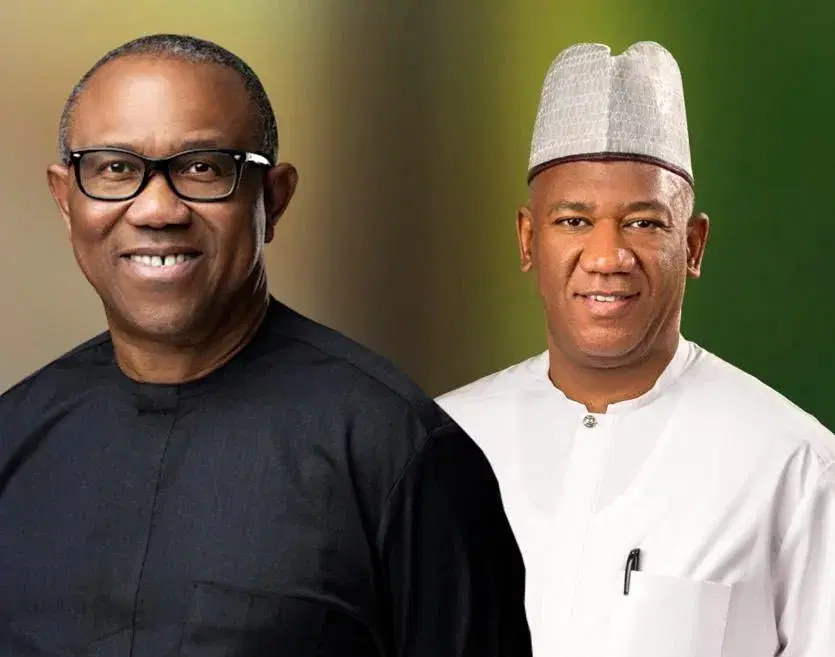
The political landscape continues to simmer with internal critiques as Kenneth Okonkwo, a prominent spokesperson for the African Democratic Congress (ADC) presidential candidate, Atiku Abubakar, has offered a sharp assessment of Yusuf Datti Baba-Ahmed. Okonkwo suggested that Baba-Ahmed, who served as Peter Obi's running mate in the 2023 presidential election, may be grappling with a 'post-political identity crisis' following their shared electoral experience.
Okonkwo's remarks, made during an interview on Arise TV's Daybreak, were a direct response to Baba-Ahmed's recent controversial assertion. Baba-Ahmed had publicly declared that none of the leading contenders for the 2027 presidential election, including his former principal Peter Obi, possesses the necessary capacity to genuinely improve Nigeria's fortunes. This statement has ignited fresh debate within opposition circles, particularly concerning the future of the 'Obidient' movement.
According to Okonkwo, Baba-Ahmed's experience alongside Obi and the subsequent perceived 'collapse' of the political structure they championed in 2023 might have profoundly influenced his current perspective. "I understand why he made his comment about Peter Obi, because we were in the same trenches together, and I can tell you that he may be suffering from what I call post-political identity crisis," Okonkwo stated, emphasizing a shared journey that ended in disillusionment.
Okonkwo elaborated on the profound expectations that fueled the 2023 campaign, describing it as a movement that promised a new political direction for Nigeria. Many participants, he noted, entered with exceptionally high hopes for transformative change. "After working with Peter Obi, you run the risk of suffering that, because we all came in in 2023 with high hopes, and we thought that a new Nigeria is birthed," he explained, painting a picture of shattered aspirations.
He further highlighted the unusual nature of the support Obi garnered during the 2023 election cycle. Okonkwo observed that, for the first time in his political career, he witnessed individuals joining a political association primarily for what they could contribute rather than what they stood to gain. "For the first time in my life, I saw people coming into an association for what they can give, and nobody was talking about what he can take, what he can receive," he recounted, underscoring the movement's unique, volunteer-driven ethos.
However, this initial enthusiasm, according to Okonkwo, eventually gave way to widespread disillusionment among some members. He attributed this decline to what he described as the "incompetence and incapacity" of Peter Obi to effectively manage the affairs of the Labour Party. "So, if such an association ends the way the Labour Party ended, you will see everybody coming out with political trauma, because that spoke of incompetence and incapacity of the political leader then called Peter Obi to manage the affairs," Okonkwo asserted, placing the blame squarely on Obi's leadership.
Okonkwo stressed that while supporters had readily provided resources and energy for the political project, their primary expectation was strong leadership in return. "When everything is provided for you, the people are willing to do something for you. They were willing to provide resources. They were only asking for one thing, and that's leadership. And you could not provide it," he contended, suggesting a failure to meet a fundamental demand.
Further buttressing his argument, Okonkwo referenced Baba-Ahmed's own previous comments, where he reportedly stated he could no longer help Obi after the Labour Party experience. Okonkwo interpreted this as clear evidence that the former vice-presidential candidate had lost confidence in Obi's leadership. "That was why in his (Baba-Ahmed) own words, he said after Labour Party, he couldn't do anything again for Peter Obi. In other words, after what happened in Labour Party, I lost confidence in him. I was there with him," Okonkwo added, highlighting the personal impact of the perceived political missteps.
Baba-Ahmed's recent critique of 2027 presidential hopefuls, including Obi, stems from his belief that many have been part of the entrenched political establishment responsible for Nigeria's current challenges. This perspective, when viewed through Okonkwo's lens, suggests a deep-seated frustration and a re-evaluation of past alliances, indicative of the complex and often volatile nature of political partnerships in Nigeria.
Why This Matters
These public exchanges between former allies underscore the deep fissures within Nigeria's opposition, potentially impacting future political realignments and the viability of a united front against the ruling party. Such internal criticisms can erode public trust and momentum, making it harder for opposition figures to present a cohesive and compelling alternative to the electorate.