*The Killings and Disasters
*A State Rich in Minerals but Rattled by Disasters and Insecurity
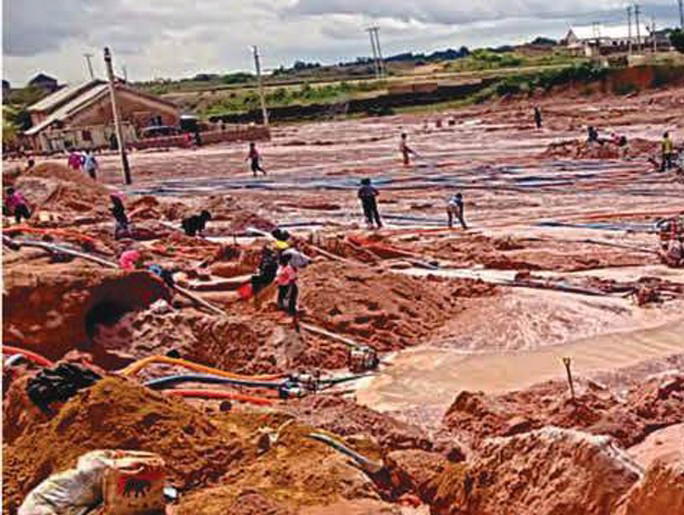
JOS — Plateau State is richly endowed with mineral resources, with mining sites scattered across rural communities where generations have depended on the industry for their livelihoods
Mining activities in the state are believed to have commenced in 1902, making Plateau one of Nigeria’s historic mining frontiers because of its vast deposits of tin and columbite
But more than a century after mining began, the mineral wealth that promised prosperity is increasingly leaving behind a darker legacy: Abandoned pits, environmental degradation, illegal mining, insecurity and recurring deaths
For miners operating in poorly regulated sites, danger can come from beneath their feet It can also come from armed men.
Mining, once regarded as a pathway to wealth and survival, is increasingly becoming a deadly gamble, with fear and agony replacing the promise of income
The latest tragedy occurred on Wednesday evening, August 12, 2026, when seven miners were killed after a mining pit collapsed in Kassa community, Barkin Ladi Local Government Area
The victims were mining at about 7 pm. when the earth caved in. Residents rushed to the site, but the seven were eventually found dead.
For survivors, the tragedy unfolded with terrifying suddenness
Nehemiah Bot, one of the survivors, said he was outside and close to the pit when the ground collapsed
“I was outside, close to the collapsed pit, when we suddenly heard a sound and the ground caved in,” he said
Bot said he and other miners immediately raised the alarm after realising that some of their colleagues were trapped
“We raised an alarm immediately because we knew that people were inside the pit,” he said
Residents and other miners joined the rescue operation, using available tools to remove soil and debris
Another survivor, Francis Haruna, said he and others were outside when they suddenly heard the earth collapsing
“We were outside, close to the pit, when we suddenly heard the sound We immediately raised an alarm and called for help,” he said.
Haruna said rescuers worked amid panic as relatives gathered, hoping for survivors But the effort ended in grief.
For artisanal miner Peter Jerry Fulus, however, the risks remain inseparable from survival Fulus, who said he had spent 10 years mining, told Vanguard that miners know the dangers but are compelled to continue because mining remains one of the few available sources of income.
“We are aware of the dangers, but we have to feed and survive,” he said
Fulus said mining remained profitable and that the prospect of finding valuable minerals continued to attract youths
Another miner, Joseph Nyam, said walking away from mining could mean losing the income needed to feed families, pay rent and support children
“We understand the risk involved, but we believe that God would continue to protect us,” he said
The Killings and Disasters
The Kassa tragedy is only the latest in a succession of mining-related deaths in Plateau The incidents show that miners are caught between unstable pits, explosions, illegal operations and armed attackers.
On August 12, 2026, seven miners were killed when a mining pit collapsed at about 7 pm. in Kassa, Barkin Ladi.
The deaths came just six weeks after three people were killed by attackers at the Nyango/Gyere mining site on June 30, 2026 Before then, five youths were killed when gunmen attacked a mining site in Gero Village, Gyel District, on June 16, 2026.
Earlier, on January 22, 2026, seven miners were shot and killed at an illegal mining site in Kuru, Jos South, leaving their families in grief
Before that incident, no fewer than 12 miners were killed by suspected militants at Ratoso Fan in Barkin Ladi, while four people died after a mining site collapsed in Dura
In November 2024, 13 young people were killed when an artisanal mining site collapsed on them in Bassa
The list is long, and so are the tears left behind by each tragedy
A State Rich in Minerals but Rattled by Disasters and Insecurity
Plateau’s mineral wealth extends far beyond tin and columbite Other deposits include tantalite, wolfram, kaolin, granite, marble, gypsum, quartz, barite, lead, zinc, iron ore, coal, clay, pyrochlore, monazite and fluorite.
The state also has emerald, tourmaline, topaz, amethyst and zircon
Across Bassa, Jos South, Barkin Ladi, Riyom, Bokkos, Mangu and Wase Local Government Areas, artisanal and small-scale mining provides income for thousands, particularly youths, in communities where formal employment is limited
However, the informal nature of many operations has created a dangerous cycle As miners dig deeper, pits become unstable, safety regulations are ignored and government agencies struggle to monitor scattered sites.
The Rise of Illegal Night Mining
Apart from attacks by militants and poorly constructed mining sites, illegal night mining has worsened the crisis
Miners reportedly enter abandoned ponds and old mining areas under the cover of darkness to avoid government officials and enforcement teams
The practice has turned what was once primarily an environmental and regulatory problem into a security challenge Isolated sites, mineral deposits, cash transactions and weak security make some locations attractive to criminal elements and armed groups.
Kassa Mining in a Troubled Community
The latest pit collapse has brought mining and insecurity into sharp focus
Kassa and surrounding communities in Barkin Ladi have recorded security incidents in recent months
In April 2026, resident Gyang Nuhu Choji was reportedly killed by armed men in the general Kassa area The incident triggered anger among residents, with protesters later attacking a military checkpoint at Rapung Kassa.
The community has therefore been dealing with insecurity while also hosting mining activities
The latest disaster has added another danger, raising questions about whether mining can continue under conditions that protect both miners and host communities
Dr Kehinde Ogunmola, a lecturer in the Department of Geology, University of Jos, told Vanguard that many mine collapses in Plateau could be traced to rudimentary tools and disregard for safety standards
He said loose, sandy or weathered soil could suddenly collapse when proper precautions were not taken
“Many mining sites might have loose, sandy, or weathered soil, which is prone to sudden collapse,” he said
Ogunmola identified torrential rainfall as another factor, saying it softens soil around mining pits and can trigger collapses
He also identified unprofessional mine construction, including failure to support underground roofs and pillars, as a major cause
He said some illegal miners engage in retreat mining, removing support pillars during excavation and thereby weakening the mine
Mining in waterlogged or geologically fragile areas without engineering assessments further increases the danger Night mining compounds the risks through poor visibility, fatigue and little or no professional supervision.
The Danger Left Behind
The danger does not end when miners leave
Plateau’s long mining history has left thousands of abandoned pits and ponds across old mining areas Many have filled with stagnant water and are located close to homes, farms, roads and schools.
Geologist Jude Ajang said abandoned mining ponds were a major threat, particularly to children
“Bodies are often recovered days later after desperate searches by families and neighbours,” he said
Ajang added that abandoned ponds also contribute to environmental degradation and may overflow during the rainy season, causing flooding
Illegal Mining Also Affecting Education
A secondary school teacher in Barkin Ladi told Vanguard that the lure of quick money was contributing to school dropouts in mining communities
Children who should be in classrooms are increasingly exposed to mining and its dangers
The concern echoes Governor Caleb Mutfwang’s earlier findings that research by his administration showed distressingly high school dropout rates in mining communities, particularly in Bassa, Riyom, Jos South and Barkin Ladi
Mutfwang said some classrooms were virtually empty and that cases had been uncovered in which parents in Bassa were sending children into child labour
Mutfwang’s Three-Pronged Concern
For Mutfwang, illegal mining is no longer merely an issue of minerals and revenue He has linked it to three dangerous trends: the destruction of education, insecurity and environmental degradation.
The lure of immediate income, he said, is drawing young people away from school and encouraging child labour
When he signed Executive Order 001 in February 2025, temporarily suspending mining activities across Plateau, he cited banditry, kidnapping, drug trafficking and illegal possession of firearms among the problems associated with unregulated mining and the influx of unregulated operators
His position is that mining cannot continue as business as usual Legitimate mining should be encouraged, but illegal operations must be dismantled and safety standards enforced.
Government’s Attempt to Reset the Sector
In February 2025, the Plateau Government suspended mining across the 17 local government areas through Executive Order 001 as part of efforts to sanitise the sector and address illegal mining, environmental degradation, child labour and security concerns
The government subsequently set up a technical committee to examine the sector and recommend regulatory measures to guide the industry
In May 2025, the task force announced that 159 mining companies and operators had been screened and cleared to resume operations in mining, exploration and buying centres, among others
However, enforcing these measures has remained difficult, making it possible for night mining to continue and contribute to further tragedies
A Sector Caught Between Wealth and Death
The Kassa tragedy has reopened the question of how Plateau can exploit its vast mineral wealth without sacrificing the lives and future of its people
Plateau’s Commissioner for Information and Communication, Joyce Ramnap, told Vanguard that the Mutfwang administration remained focused on sanitising, reforming, regulating and cleaning up the mining sector
She said the government was particularly concerned about illegal and unregulated artisanal mining because of its links to insecurity, environmental degradation, child labour, school dropouts, drug abuse and other social vices
She said the administration remained committed to security, economic growth, infrastructure and grassroots development despite the atrocities being orchestrated by forces working against the state and its people
For miners like Fulus and Nyam, however, the dilemma remains stark Mining is dangerous, but for many, walking away from it is not an easy option.
Until safer mining practices, stronger regulation and improved security become realities, Plateau’s mineral wealth risks continuing to come at a devastating human cost