Key Takeaways
- Senator Ali Ndume supports Vice President Kashim Shettima's assertion that internal divisions within the APC are a greater threat than external opposition.
- Both leaders highlighted the dangers of a political culture focused on personalities rather than substantive policy debates.
- Shettima emphasized the critical importance of unity within the APC for future electoral success.
- A warning was issued against undermining APC governors while campaigning for the presidential ticket.
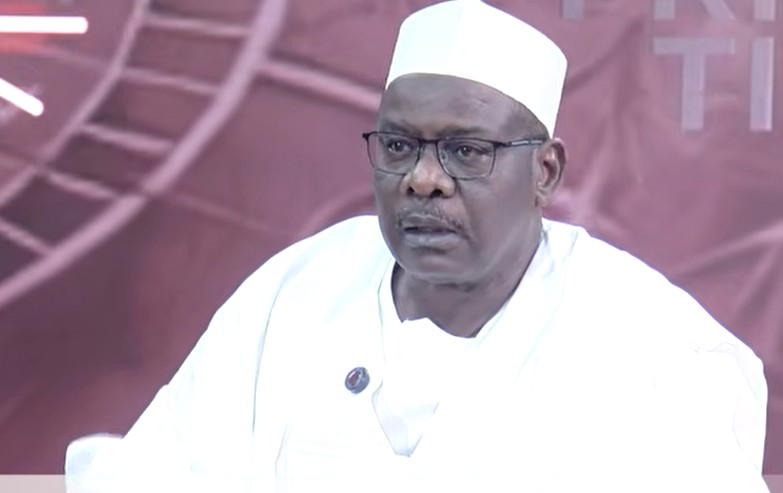
In a candid assessment of Nigeria's political landscape, Senator Ali Ndume, representing Borno South, has thrown his weight behind Vice President Kashim Shettima's recent warning regarding the internal fissures plaguing the All Progressives Congress (APC). Ndume unequivocally stated that the ruling party's most formidable challenges stem from within its own ranks, rather than from the opposition.
While acknowledging the resilience and vocal nature of opposition parties ahead of the 2027 general elections, Senator Ndume argued that the internal struggle for power and an undue focus on individual personalities, rather than concrete ideas and policy debates, present a far more troubling scenario for the APC. "I think the Vice President was just blunt. We have more problems within than without because, seeing that the opposition, quite alright, they are both resilient, tough and talking big, but it's not the major problem," the senator asserted, underscoring the gravity of the internal strife.
Ndume further elaborated on the commonality among politicians across party lines, suggesting that their differences are often superficial, driven primarily by political platforms and the relentless pursuit of power. He lamented the prevailing trend: "That's why they talk about personality instead of ideas, instead of events or debates on what to do and how to do it, and that's dangerous." The lawmaker accused politicians of taking the Nigerian populace for granted, advocating for a renewed focus on policy discussions and practical solutions to the nation's myriad challenges.
These remarks from Senator Ndume closely follow Vice President Shettima's potent warning delivered recently in Abuja. Speaking at the unveiling of the campaign head office for Arewa for Asiwaju (A4A), a northern coalition supporting the Tinubu-Shettima ticket, the Vice President did not mince words. "Honestly, I am not afraid of the Peoples Democratic Party (PDP). I am not afraid of a diminished Peter Obi. But I am more afraid of internal contradictions within our household," Shettima declared, highlighting the existential threat posed by disunity.
The Vice President stressed that unity within the ruling party is paramount for its continued success. "If we unite as a people, as a family, we will conquer," he affirmed, urging party members to set aside differences for the collective good. Shettima also issued a stern caution to northern political leaders against the contradictory practice of championing President Tinubu's presidential campaign while simultaneously undermining APC governors contesting at the state level. He warned, "There is no point in championing the cause of the presidential election and then undermining the governor in the gubernatorial election. Honestly, it will not go down well with the system."
In a rallying call, Shettima implored party members to extend their support across the board, from governors to National Assembly members and, ultimately, President Bola Ahmed Tinubu, ahead of the next electoral cycle. "Let's rally round our governors. Let's rally round our members of the National Assembly. Let's rally round President Bola Ahmed Tinubu and see to the victory in the next round of elections," the Vice President concluded.
The Perils of Factionalism in Nigerian Politics
The concerns raised by both Senator Ndume and Vice President Shettima are not isolated incidents but reflect a recurring challenge within Nigeria's political landscape. Major political parties, often described as broad coalitions of diverse interests rather than ideologically rigid structures, frequently grapple with internal power struggles and factionalism. Such divisions can significantly impede governance, derail policy implementation, and erode public trust, as energy is diverted from national development to internal party squabbles. For a ruling party like the APC, managing these 'internal contradictions' becomes crucial, especially as it seeks to consolidate its hold on power and prepare for future electoral contests.
Why This Matters
The candid admissions from Senator Ndume and Vice President Shettima underscore the critical importance of internal cohesion for any political party, particularly one in power. Unresolved internal conflicts and a focus on personalities over policy can weaken a party's ability to govern effectively, fulfill its promises, and ultimately, secure future electoral victories, posing a significant threat to democratic stability and national progress.