Key Takeaways
- Amazon's Prime Air drone delivery service plans to expand to nearly 500 U.S. cities and towns by the end of 2026.
- Eligible Amazon orders could be delivered in as fast as 30 minutes, though current typical delivery times are closer to 60 minutes.
- Prime Air currently operates in 11 U.S. locations, with Chicago, Syracuse, Cleveland, Atlanta, and Boise next on the launch list.
- Drones can carry packages up to 5 pounds, covering over 60% of frequently purchased items like electronics and groceries.
- Delivery costs vary: Prime members pay no fee for orders over $50, $2.99 for smaller orders; non-Prime customers pay $4.99.
- Amazon addresses safety with obstacle detection, FAA certification, and privacy by using onboard cameras solely for navigation.
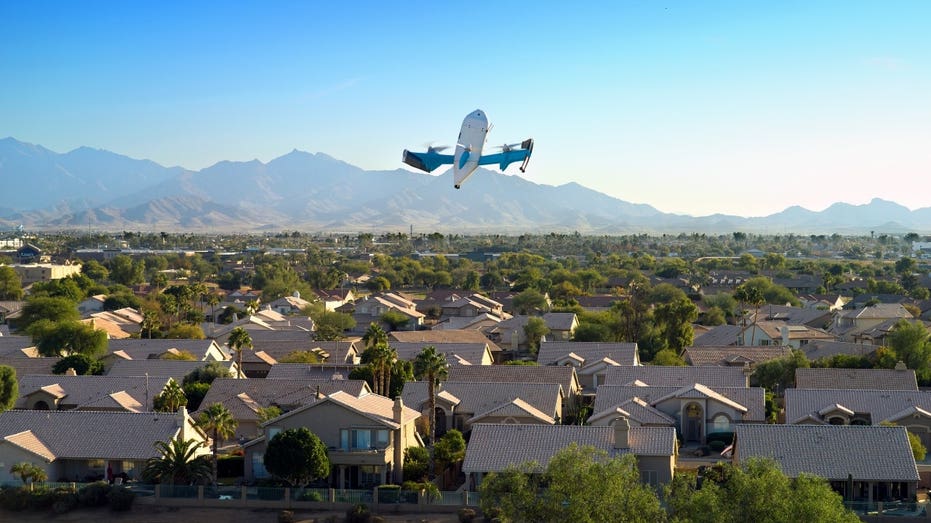
Amazon is rapidly accelerating its vision of near-instant gratification, announcing a massive expansion for its Prime Air drone delivery service. The e-commerce giant aims to bring drone delivery to nearly 500 U.S. cities and towns by the end of 2026, a significant leap from its current limited operations. For many shoppers, this could mean receiving eligible Amazon orders dropped at their homes in as little as 30 minutes, fundamentally altering expectations for delivery speed.
The Sky's the Limit: Prime Air's Ambitious Expansion
This planned expansion represents a dramatic increase from Amazon's current footprint, which includes 11 U.S. locations across 10 metro areas. While the company has already delivered hundreds of thousands of packages this year, reaching hundreds of new communities signifies a pivotal moment for drone logistics. It's important to note that the '500-city' figure refers to communities served, not individual drone hubs. Each Prime Air site can cover approximately 175 square miles, allowing a single launch location to cater to several nearby cities and towns.
Currently, Prime Air serves metro areas including Phoenix, Tampa, Kansas City, Baton Rouge, Detroit, Omaha, Houston, Dallas, San Antonio, and Waco. Looking ahead, Amazon has identified Chicago, Syracuse, Cleveland, Atlanta, and Boise as the next markets for launch, with more communities expected to follow later this year.
How Prime Air Works: Speed, Eligibility, and Cost
While Amazon advertises delivery in 'as fast as 30 minutes,' the company states that most drone orders currently arrive around 60 minutes after checkout. This still offers a substantial advantage for urgent needs, such as a forgotten charger or medicine. The availability of drone delivery is determined by your specific ZIP code and address, appearing as an option during the shopping or checkout process if your home qualifies.
Prime Air drones are designed to carry packages up to 5 pounds, roughly the size of a large shoebox. This capacity makes over 60% of Amazon's most frequently purchased items eligible for drone delivery, including popular electronics like iPhones, Galaxy phones, AirPods, and Ring doorbells, as well as groceries and household products. The exact selection, of course, depends on local inventory and what can be safely loaded onto the drone.
The cost of drone delivery varies based on customer status and order size. Prime members enjoy free drone delivery for eligible orders totaling $50 or more, while smaller eligible orders incur a $2.99 fee. Non-Prime customers will pay $4.99 for drone delivery. This pricing strategy could make drone delivery an attractive option for quick, small purchases, potentially shifting consumer expectations for delivery speed.
Navigating the Skies: Safety, Privacy, and Community Impact
Safety is paramount for drone operations. For a customer's first order, they select a designated delivery spot on their property. Upon arrival, the drone autonomously scans the area for people, pets, vehicles, and other obstacles before safely releasing the package. Factors like dense trees, complex landscaping, or pools could affect a property's eligibility for drone delivery, requiring Amazon to ensure sufficient clear space for safe operations.
Prime Air operates under the federal framework of FAA Part 135 certification, which permits commercial drone package delivery beyond visual line of sight. The drones are equipped with advanced 'sense-and-avoid' technology, continuously scanning the airspace and making real-time decisions to prevent collisions. Regarding privacy, Amazon states that Prime Air drones use onboard cameras and sensors solely for navigation, not for tracking individuals or recording movements, with no human monitoring live camera feeds.
Noise, however, remains a potential concern for communities. Amazon asserts that the drone's sound during drop-off is less than an idling delivery truck and comparable to a window fan on low at cruising altitude. Nevertheless, community complaints about drone noise have arisen with previous delivery programs, and local reactions could significantly influence Prime Air's smooth integration into new neighborhoods.
A Decade in the Making: Evolution and Competition
The concept of 30-minute drone delivery was first unveiled by Jeff Bezos in 2013. Over the past decade, Amazon's engineers have refined the aircraft design and navigated complex aviation regulations and local concerns. Amazon CEO Andy Jassy recently told shareholders that Prime Air aims to reach communities with approximately 30 million customers by year-end and plans to deliver half a billion packages by the end of the decade. Despite this ambition, drones are expected to handle only a small fraction of Amazon's total deliveries, given their single, lightweight payload capacity compared to vans and trucks.
Amazon is not alone in this race. Walmart, in partnership with DroneUp, is also expanding its drone delivery services to over 270 stores by 2027. Similarly, Alphabet's Wing has secured its own FAA Part 135 certification. The competition has moved beyond merely proving the feasibility of drone delivery; the focus is now on demonstrating sustained customer adoption and community acceptance of increased aerial traffic.
Why This Matters
The widespread expansion of Amazon Prime Air signifies a pivotal shift in consumer expectations and the future of last-mile logistics. As 30-to-60-minute delivery becomes a tangible reality for millions, it will redefine convenience, potentially making traditional same-day delivery feel slow and prompting a reevaluation of urban delivery infrastructure and community integration for autonomous aerial vehicles.