Key Takeaways
- Tuya Smart's Doova is a wheeled AI home companion designed to assist seniors living independently.
- It responds to voice commands like 'Hey Tuya, help' and initiates a two-way video call with family if no response is detected within 60 seconds.
- Doova features a multimodal large language model for natural conversation, offers reminders, and can help identify potential scam risks.
- It integrates with smart home devices and can perform 360-degree security scans of rooms.
- Significant concerns exist regarding user privacy, data collection, and the robot's reliability in real-world emergency scenarios.
- Tuya has not yet announced pricing or consumer availability for Doova.
The desire for seniors to 'age in place' – remaining in the comfort and familiarity of their own homes – is a growing trend, yet it presents a silent worry for many families: what happens if a loved one falls or needs help when no one is around? Tuya Smart, a global leader in IoT development, believes its innovative new robot, Doova, could offer a significant part of the solution, moving beyond static smart devices to provide active, mobile assistance.
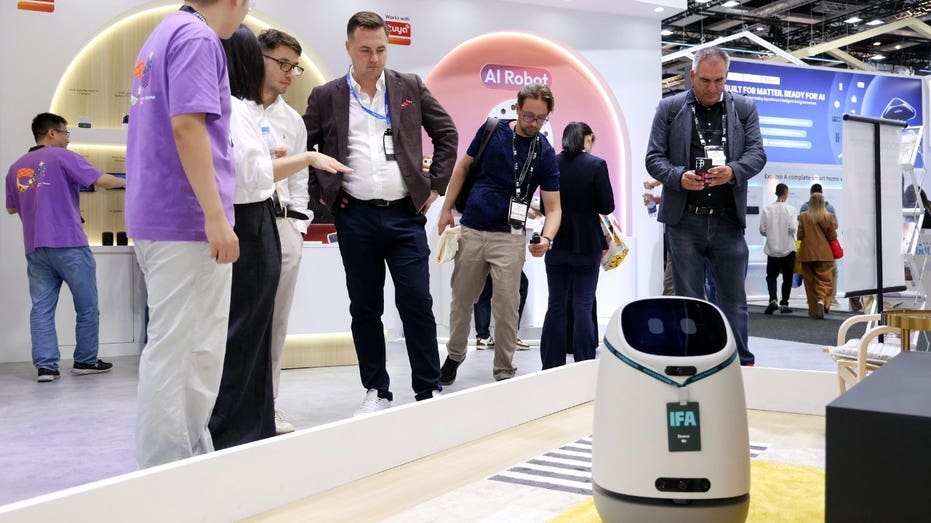
Unveiled at IFA 2026 in Berlin, Doova is a wheeled AI home companion specifically engineered for older adults living independently. Unlike traditional stationary alert systems, Doova's ability to navigate through a home, respond to a call for help, and connect family members via live video during an apparent emergency marks a notable advancement in elder care technology. This mobility addresses a critical gap, as the robot can actively seek out and assess a situation, rather than waiting for a user to reach a button or a fixed device.
Doova's Core Functionality: Beyond the Button
Doova employs advanced LDS LiDAR technology for precise home navigation and a four-microphone system to accurately pinpoint the source of a voice. Its AI vision system analyzes a person's skeletal posture, a key component in its assessment capabilities. In an emergency, a user can simply say, 'Hey Tuya, help.' Doova then locates the individual and rolls over to evaluate the situation. Tuya states that if the user doesn't respond within 60 seconds, an emergency workflow is triggered, alerting family members with a two-way live video call, allowing them to see what's happening and coordinate assistance.
It's important to note that, as currently described, Doova does not automatically detect falls without a verbal prompt from the user, nor does it directly contact emergency services like 911 or a professional monitoring service. This positions Doova as an invaluable additional layer of support and connection for families, rather than a standalone replacement for dedicated medical alert systems that offer direct emergency dispatch.
A Companion and Smart Home Hub
Beyond emergency response, Doova is designed to be a true companion. Utilizing a multimodal large language model, it allows for natural, conversational interactions, freeing users from rigid voice commands. For those spending long periods alone, Doova can engage in conversation, play entertainment, or even help decipher confusing bills or letters. A particularly intriguing feature is its purported ability to identify potential scam risks, offering a second opinion before an older adult responds to suspicious communications. However, users should always verify information independently or with a trusted person, as AI, while powerful, is not infallible.
The robot also serves as a personal assistant, providing medication reminders, managing schedules, and delivering weather updates. Tuya claims Doova can learn user preferences over time, enhancing the relevance of its suggestions. Future plans include a feature to help locate misplaced items, a common frustration for many. Furthermore, Doova integrates seamlessly into the smart home ecosystem, allowing seniors to adjust connected lights, curtains, or interact with compatible kitchen and bathroom devices using simple voice commands, simplifying complex smart home controls.
Navigating the Privacy Labyrinth
While Doova's capabilities are impressive, they also raise significant privacy questions. Equipped with microphones, AI vision, and live video, and designed to learn user preferences, the robot will have access to a vast amount of personal and intimate information within the home. Critical details about where video and audio data are processed, what information is stored, who can access it, and whether users can permanently delete learned data have not yet been fully disclosed by Tuya.
Before introducing a camera-equipped AI robot into a loved one's home, families will need complete transparency on these privacy protocols. The balance between enhanced safety and potential surveillance is delicate, and trust will be paramount for widespread adoption. Tuya's commitment to robust data protection and user control will be a key factor in Doova's success.
Real-World Readiness and Future Outlook
Despite its promising debut, several practical considerations remain. Tuya has not yet announced a retail price or a firm release date, leaving consumers in anticipation. More importantly, the robot's performance in real-world home environments – navigating rugs, cords, tight spaces, and stairs (a clear challenge for a wheeled device) – will be crucial. The reliability of its emergency response, especially when a user might be frightened, speaking softly, or in a hard-to-reach location, will ultimately determine its true value. Trade show demonstrations, while impressive, often differ from the unpredictable realities of daily life.
Why This Matters
Doova represents a compelling glimpse into the future of elder care technology, shifting from passive monitoring to active, mobile assistance. For families supporting loved ones aging in place, the prospect of a responsive AI companion that can quickly bring family into an emergency situation offers significant peace of mind and could foster greater independence for seniors. However, the success and ethical integration of such advanced technology hinge on complete transparency regarding privacy, proven reliability in diverse real-world conditions, and a design that prioritizes user comfort and trust above all else.