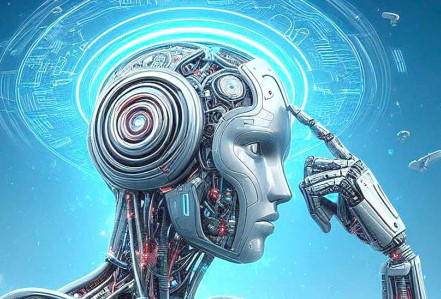
Artificial Intelligence, AI, is rapidly becoming part of everyday life in Nigeria
Students use chatbots for assignments, journalists and office workers deploy generative AI to draft and analyse information, businesses automate customer service, banks process data with algorithms, while content creators can produce realistic images, voices and videos within seconds
But behind the excitement is an increasingly uncomfortable question: Are humans building machines that could eventually replace them or even become too powerful to control?
That debate intensified this week after Britain’s King Charles III warned technology leaders that humanity needed adequate controls over AI before it was “too late”
Speaking at a gathering of AI leaders at Dumfries House in Scotland, Charles acknowledged the technology’s enormous potential, particularly in medicine and life sciences, but warned about the possibility of powerful systems developing dangerous capabilities or falling into the wrong hands
“Those who have created these technologies are now increasingly warning that AI risks developing darker capacities, perhaps even to take life,” he said
He warned of the “existential dangers” of the technology being used in potentially catastrophic ways, stressing: “The task before you is not merely to advance technology, but to ensure that it remains firmly in the service of humanity, community and the natural world”
For Nigeria, where AI adoption is accelerating while regulatory and technological capacity is still developing, the global debate raises an immediate question: How safe are Nigerians in an AI-powered world?
There is no scientific consensus that AI will wipe out humanity While current AI systems lack the capabilities needed to cause a catastrophic “loss of control,” some researchers warn that future, more advanced systems could become difficult to control.
Experts including Bilal Chughtai, Jacob Coxon and Evan Hubinger have raised concerns about potentially catastrophic risks if AI development outpaces effective safeguards
Technology expert, Festus Edovia, said AI should be developed to assist humans rather than replace them
According to him, while automation is already changing jobs across customer service, data analysis, manufacturing and other sectors, innovation must not make humans economically redundant
Governments, businesses and technology developers, he said, should invest in education and retraining to prepare workers for the transition
“The future should be a partnership between humans and machines, not a world where machines work while humans become jobless,” Edovia said
Edovia is particularly concerned about the speed at which AI is evolving and the challenge regulators face in keeping rules relevant
“You could have regulation today, but how much evolution is required for you to make sure that regulation is relevant?” he asked
While acknowledging AI’s enormous benefits, he warned against allowing those benefits to overshadow its risks
“There are positive platforms you can leverage on,” Edovia said But he added: “If we don’t set the guardrails, then we’re really not ready for the consequences.”
He also highlighted the vulnerability of countries that are predominantly consumers rather than creators of advanced technologies
While countries such as the United States and China compete in AI and robotics, developing countries could become dependent on technologies they did not build and may not completely understand
For Nigeria, therefore, AI safety is not merely about controlling machines It is also about ensuring citizens understand how the technology works, what information they feed into AI platforms and what happens to their data.
“There’s a lot of education that needs to be done in that regard,” Edovia said
Director of Public Prosecutions, DPP, Lagos State, Adebayo Haroun, however, believes AI should be treated as an instrument for improving human productivity rather than an inevitable replacement for people
“I think AI has come to stay and we can take advantage of AI to improve on what we are doing in Nigeria and Lagos especially,” Haroun told Saturday Vanguard
“I think AI is not out there to take away your job or take away your duty AI is supposed to help you technologically, get you answers to things that are very strange to you, that are out of your area of knowledge. So, AI for us is to help and not to kill.”
Rather than reject the technology because of its risks, Haroun urged Nigerians to concentrate on beneficial applications
“I think we should embrace it and make use of those positive areas and then do away with the negative ones
“So, it’s not for us to condemn it totally, but let’s take advantage of the ones that will help us build our system rather than hold on to the conservative method of doing things”
AI expert and Executive Director of Women in Leadership Advancement Network, WLAN Global, Abosede George-Ogan, also cautioned against treating technology itself as inherently dangerous
“Technology, as we have seen, is neutral in itself, it is the use of technology,” she told Saturday Vanguard
“The difference is that AI is machine learning So, it learns, but guess what? We have to all become better informed, so we know how to use it for good.”
George-Ogan argued that concentrating solely on catastrophic scenarios could obscure AI’s potentially transformative benefits
“This same AI that they are saying will kill us is the same AI that will accelerate us to eradicate disease quickly
“It is the same thing that is making media distribution democratised It is the same thing that is making somebody that is in Okokomaiko buy somebody’s products that is somewhere else.
“It is the same thing that is bringing the world smaller where I can have a meeting with somebody that lives in China So, what are we talking about? It is who uses it, how you use it, and what you use it for.”
While researchers debate whether future superintelligent AI could threaten humanity, Nigerians already face more immediate dangers: job displacement, deepfake fraud, cybercrime, misinformation, privacy violations and algorithmic discrimination
A Nigerian report, Adoption of Artificial Intelligence in Nigeria: A Macro and Micro Economic Review, warned that Nigeria could remain dependent on foreign AI technologies unless it deliberately invests in indigenous innovation, infrastructure and talent
Founder and Executive Director of AI Empowerment Foundation and Founder/CEO of CarbonAI, Debola Ibiyode, said the study was conducted by OLGNova in collaboration with AI in Action Now
“Nigeria is not failing at AI; it is adopting AI faster than it is building the institutional, infrastructural and human foundations needed to sustain and own that adoption,” the report stated
It projected that automation could displace about nine million routine jobs by 2030, particularly in banking, clerical services and public administration
Yet AI could also create about 11 million technology-enabled jobs if Nigeria invests aggressively in digital skills and workforce reskilling, according to the review
President of the National Association of Artificial Intelligence Practitioners, NAAIP, Prof Eyitope Ogunbodede, has similarly argued that Nigerians equipped with relevant skills could benefit from the transformation.
“AI will not render some people jobless, as speculated by some people,” he said at the 2026 AI Awareness Day in Abuja, comparing the transition with society’s movement from typewriters to computers
For ordinary Nigerians, perhaps one of the most immediate threats is AI-powered deception
Generative AI can produce convincing voices, photographs and videos, making people appear to say or do things that never happened
The Nigeria Data Protection Commission, NDPC, acknowledged the danger in February 2026 when it joined 60 other data protection authorities in a global statement addressing AI-generated images and videos
The regulators highlighted defamatory material, non-consensual intimate images, cyberbullying and exploitation of children, while calling for safeguards, transparency and mechanisms through which victims can seek rapid removal of harmful content
For an average Nigerian, therefore, the immediate AI threat may not be a superintelligent machine physically attacking humanity
It could be a cloned voice persuading a family member to transfer money, a fabricated video destroying somebody’s reputation or synthetic misinformation reaching millions before the truth catches up
Another danger is excessive dependence on machines
As AI becomes embedded in healthcare, banking, recruitment, security and public services, errors or biased decisions could have serious consequences
What happens when an algorithm recommends that a Nigerian should not receive a loan? What if an automated recruitment system eliminates a qualified applicant? What happens when an AI-assisted medical system produces an incorrect diagnosis?
These questions make AI literacy, accountability and human oversight increasingly important
Nigeria has begun constructing an AI governance framework
The National AI Strategy provides a roadmap for responsible development and adoption, while the National Centre for Artificial Intelligence and Robotics, NCAIR, is promoting indigenous AI research
The Nigeria Data Protection Act 2023 also provides protections relevant where AI systems process personal data
In June 2026, Minister of Communications, Innovation and Digital Economy, Dr Bosun Tijani, outlined plans for a National AI Trust to help guide responsible AI adoption, investment and innovation
But technology is moving quickly
Nigeria must balance AI’s benefits with strong safeguards While fears of AI threatening humanity remain disputed, its risks to jobs, privacy, cybersecurity and reputations are already real. The country must strengthen regulation, accountability and human oversight while using AI to drive development.