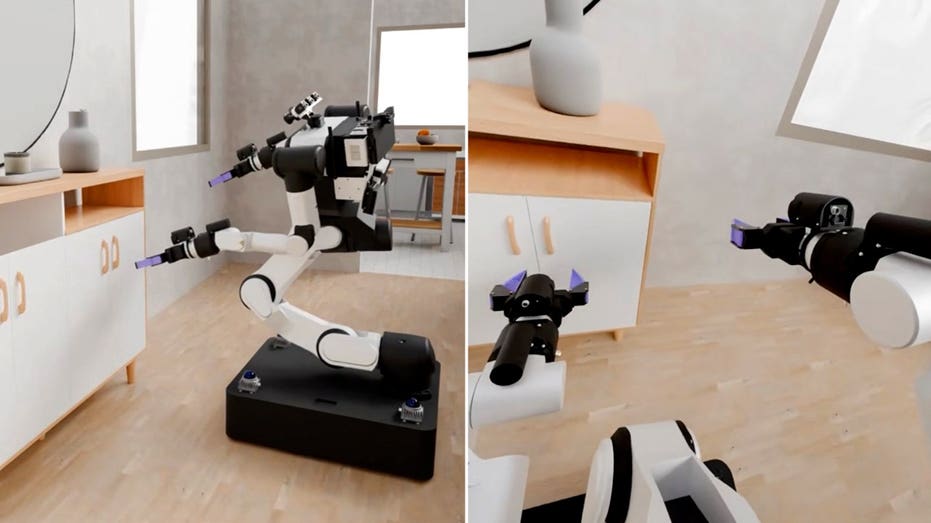
- SceneSmith uses AI to create detailed 3D indoor environments.
- Robots can practice tasks in virtual settings before real-world deployment.
- The system ensures realistic object interactions essential for effective robot training.
- Researchers reported high accuracy in simulating object stability and interaction.
Performing everyday tasks, such as placing a coffee mug in a cabinet, can be surprisingly intricate for robots. Unlike humans who instinctively navigate around obstacles and clutter, robots must methodically work through each step. This complexity explains why, despite their impressive demonstrations, many robots struggle with basic chores in domestic and industrial environments.
Researchers from the Artificial Intelligence Laboratory, in collaboration with the Toyota Research Institute, are tackling this challenge with a new approach. They have created SceneSmith, an advanced system that utilizes artificial intelligence to generate 3D indoor environments based on simple textual prompts. This innovative technology aims to enhance robot training by allowing them to practice various tasks within realistic virtual spaces, paving the way for improved performance in real-world scenarios.
The traditional training process for robots is labor-intensive and often involves physical setups that need constant adjustments. A single misstep, like a tipped chair or misplaced object, can affect subsequent training attempts. Conversely, virtual simulations provide a safer and more versatile alternative. However, previous simulation technologies fell short in replicating the nuanced clutter and detailed layouts found in typical home environments.
SceneSmith enables users to request complex scenes with specific items. For instance, a researcher might generate a garage complete with a car and workbench. Powered by advanced AI models, designers build each environment layer by layer, ensuring that even the smallest objects behave realistically when interacted with by robots. This careful attention to detail is crucial, as robots need to handle objects that respond accurately to touch and movement.
What sets SceneSmith apart is its remarkable capability to create virtual rooms where over 96% of objects remained stable during simulations. This accuracy is vital for realistic training; a robot cannot learn effectively from a scenario where items float or behave erratically. With more than 1,300 scenes created so far, including both common and unique settings, robots can now experience a diverse range of cluttered environments to better prepare them for real-world challenges.
SceneSmith also plays a significant role in evaluating robot behaviors. By generating multiple scenarios, engineers can test specific robot policies across different situations to discern where improvements are needed. This scalable evaluation process allows for a comprehensive understanding of a robot's performance, reducing the need for exhaustive manual assessments.
One salient conclusion from recent tests is that the realism of SceneSmith's environments enhances a robot's training experience. In comparative studies, over 90% of participants found SceneSmith’s generated environments to be more believable than those crafted with earlier technologies.
As SceneSmith continues to evolve, the hope is that it will bridge the gap between virtual training and real-world application, enabling robots to adapt seamlessly to unpredictable home conditions. Although this technology is still in its research phase, it holds the potential to revolutionize how household robots are prepared for tasks in dynamically arranged spaces.
Why This Matters
SceneSmith represents a significant advancement in robotics, emphasizing the intersection of AI and practical training. By providing robots with realistic environments to learn in, developers can mitigate the risks associated with real-world testing and enhance the reliability of home robots.