Key Takeaways
- Agricultural experts and economists express strong skepticism over the National Bureau of Statistics' (NBS) latest food inflation report, citing discrepancies with actual market prices.
- The NBS reported a 20.31% food inflation rate in July, attributing it partly to commodities like garri, crayfish, and fresh pepper.
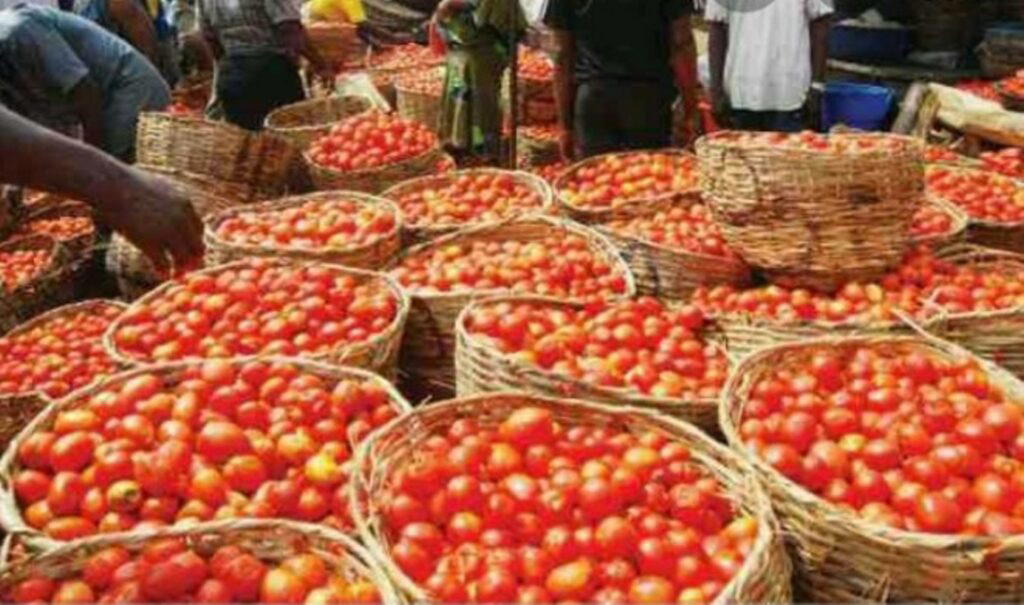
- Market tracking, however, revealed price drops for garri and tomatoes in July, contradicting the NBS's findings.
- Stakeholders highlight poor data collection, inadequate agricultural policies, insecurity, and infrastructure deficits as major contributors to food sector instability.
- Experts advocate for a shift towards commercial agriculture, increased agro-processing, and greater government investment in rural infrastructure and farmer support.
Stakeholders across Nigeria's agricultural sector and economic experts have voiced significant concerns regarding the latest food inflation report released by the National Bureau of Statistics (NBS). They describe the report as inconsistent with the prevailing conditions observed in farms and markets nationwide, raising questions about the accuracy of underlying data collection methods.
The NBS announced that Nigeria’s food inflation rate surged by 2.79 percentage points to 20.31 per cent in July, up from 17.52 per cent in June. This marks the fifth consecutive monthly increase since March. The Bureau attributed this rise to price changes in various commodities, including garri, crayfish, fresh pepper, onions, carrots, and rice, among others.
However, a weekly market track conducted by Vanguard AgroBiz at Lagos's Mile 12 food market in July presented a different picture. While some commodity prices remained unchanged, others experienced fluctuations. Notably, a bag of garri, which sold for N30,000 on July 18, saw its price drop to N25,000 by July 24. Similarly, tomato prices fell within the same period, with a basket from Jos reducing from N80,000 to N65,000. Traders attributed this decline to early harvest and increased supply from South West farms, introducing cheaper alternatives.
Mr. Afioluwa Mogaji, CEO and Founder of Farm Credit NG, strongly challenged the NBS report, particularly its inclusion of garri as a driver of inflation. 'I challenged Nigeria Statistics recently on television when they said inflation has gone up and they mentioned garri. Price of cassava has dropped by over 70 per cent. Whoever gave them that data is not a field person,' he asserted, insisting that garri should not be among the items inflating the figures. Mogaji also highlighted that while garri prices haven't fully mirrored the cassava price drop, this margin presents a significant opportunity for value chain actors to invest in processing facilities.
He further pointed out that Adamawa State, despite similar climatic conditions, has historically relied on tomato supplies from Cameroon, leading to artificial scarcity. Mogaji revealed a 2024 agreement with the Federal Ministry of Agriculture, capping the national price of a basket of tomatoes at N50,000 throughout 2025 – a feat he described as unprecedented in 26 years, achieved through government-private sector collaboration. He urged for greater knowledge-sharing and political advocacy within the agricultural sector.
Dr. Muda Yusuf, immediate past Director-General of the Lagos Chamber of Commerce and Industry (LCCI), acknowledged the upward trend in food inflation but linked it to broader public dissatisfaction with ongoing economic reforms. He emphasized that food security remains a critical gap between policy intent and citizens' lived experiences. Yusuf advocated for a paradigm shift from subsistence farming to a commercially integrated agricultural economy, stressing the need for increased investment in agro-processing to transform raw produce into value-added goods. 'Food inflation, as I have seen, is over 20 per cent. And if you talk to some people, it is even higher based on what they experience practically. Many things that used to be affordable are now becoming out of reach,' he stated, urging states to prioritize agricultural investment over vanity projects.
Representing farmers, Chief Tony Okafor, Deputy National President of the All Farmers Association of Nigeria (AFAN), underscored the severe impact of insecurity in farming communities, which restricts cultivation and disrupts produce movement. He also cited high logistics costs due to expensive diesel and petrol, poor road infrastructure, unpredictable weather patterns, and multiple taxation as significant burdens. Okafor called for sustained investment in rural road networks, improved security, provision of farm inputs, adequate training, consistent agricultural policy, and expanded irrigation infrastructure to mitigate these challenges.
Mr. Opeyemi Adeyanju, CEO of GBI Farms, lamented the persistent price fluctuation in the sector and called on the government to design policies that guarantee greater price stability for both farmers and consumers.
Why This Matters
The divergence between official food inflation statistics and market realities undermines public trust, complicates effective policymaking, and hinders targeted interventions in Nigeria's crucial agricultural sector. Addressing these discrepancies, alongside fundamental issues like insecurity, infrastructure deficits, and a lack of agro-processing, is essential for achieving genuine food security and economic stability for millions of Nigerians.