Key Takeaways
- The Nigeria Reset Movement (NRM) accuses Osun State Governor Ademola Adeleke of betraying his supporters.
- The accusation stems from Governor Adeleke's recent reaffirmation of support for President Bola Tinubu's 2027 presidential bid.
- NRM alleges Adeleke's current stance contradicts his previous warnings against federal electoral malpractice.
- The movement plans to intensify its accountability drive ahead of the 2027 elections, inviting public figures for debates.
- NRM emphasizes holding political leaders accountable and mobilizing citizens for political transformation.
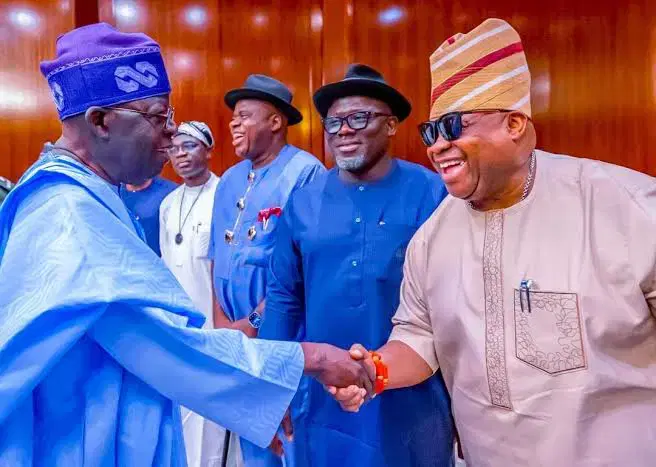
The Nigeria Reset Movement (NRM), a prominent non-governmental organization dedicated to fostering political accountability, has leveled serious accusations against Osun State Governor, Senator Ademola Adeleke. The group alleges that Governor Adeleke has betrayed the trust of his supporters by publicly reaffirming his backing for President Bola Ahmed Tinubu ahead of the crucial 2027 presidential election.
David Jones, the Public Relations Officer for the NRM, articulated these allegations in a statement issued from Awka, Anambra State, on Thursday. Jones highlighted a stark contrast between Governor Adeleke's current position and the stance he reportedly maintained for several months prior to the 2026 Osun governorship election.
According to Jones, Governor Adeleke had previously issued strong warnings against potential electoral malpractice by the Federal Government and actively mobilized public support to counter such possibilities. The NRM spokesman further alleged that numerous lives were lost during that election, criticizing the governor for failing to address these casualties in his victory speech after being declared the winner.
Jones unequivocally described Adeleke's endorsement of President Tinubu as a profound betrayal of the very people who steadfastly supported him during his gubernatorial campaign. He questioned the broader implications of the governor's apparent political realignment, especially given the significant ideological differences often observed between the ruling All Progressives Congress (APC) and the Peoples Democratic Party (PDP), to which Adeleke belongs.
This development, Jones argued, reflects a deeper, pervasive issue within Nigerian politics: a widespread problem of political expediency and a noticeable lack of accountability among the nation's political leadership. Such realignments, where politicians from opposing parties publicly endorse rivals, are not uncommon in Nigeria but frequently draw criticism for eroding voter trust and party loyalty.
The NRM's Mandate: A Modern 'Village Square'
As political campaigns for the 2027 elections begin to gather momentum, the NRM spokesman announced that the organization would intensify its activities. Jones reiterated that the NRM operates as a non-partisan platform, singularly focused on holding political leaders and institutions accountable to the Nigerian populace.
He explained that the NRM was established to provide a robust platform through which Nigerians could challenge actions by political and economic elites that are perceived to undermine the country's collective interests. Jones likened the organization's unique accountability model to the traditional African practice of summoning individuals before the village square to answer questions concerning their conduct.
“The village square in 21st century Nigeria is a call for people to come and debate their action or stance on an issue, not in front of a compromised press, but one on one against a member of NRM in full view of Nigerians,” Jones stated, emphasizing transparency and direct engagement.
The organization plans to invite prominent public figures and political actors to publicly defend their positions on critical national issues. Jones warned that any refusal to participate in these public debates would be left for Nigerians to interpret and judge, underscoring the NRM's commitment to citizen empowerment.
Jones urged all Nigerians to meticulously scrutinize the actions of their political leaders and to judiciously withhold their support from individuals who, in the organization's view, fail to account for their decisions. He affirmed that the NRM would continue its efforts to mobilize citizens around the crucial need for accountability, responsible leadership, and comprehensive political transformation ahead of the pivotal 2027 elections.
“The tide is turning in Nigeria, and NRM boldly announces itself as a new force to drive the transformation that our country craves,” he concluded, signaling the movement's ambition to reshape the political landscape.
Why This Matters
This accusation against Governor Adeleke highlights the persistent tension between political pragmatism and voter expectations in Nigeria, especially as the 2027 elections approach. The NRM's 'village square' initiative represents a growing demand for direct accountability from citizens, challenging the traditional political elite to be more transparent and responsive to the electorate's concerns.