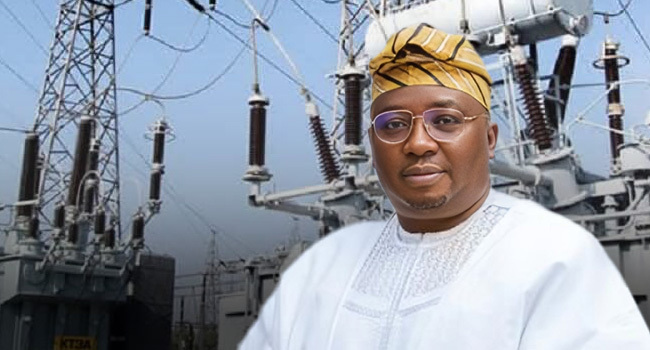
Federal Government Apologizes Amidst Widespread Blackouts
Nigerians grappling with persistent power outages have received an official apology from the Federal Government, accompanied by a promise of significant improvements in electricity supply across the nation in the coming days.
Minister Adelabu Addresses Nation on Power Crisis
Speaking at a recent press conference held to review his three-year tenure, Minister of Power, Adebayo Adelabu, acknowledged the severe hardship faced by citizens and businesses.
"I want to apologise to Nigerians, officially now, coming from me as the minister of power, for this temporary issue that is leading to hardship being experienced, especially during this dry season, where there is so much heat everywhere," Minister Adelabu stated.
He further elaborated on the extensive impact: "Businesses are being affected, schools have been affected, and industries have been affected. It is not our wish to find ourselves in this situation, but it is due to some factors that are actually beyond our control."
Unpacking the Causes of Nigeria's Power Deficit
The Minister attributed the current instability in power supply to a confluence of critical issues, primarily stemming from challenges within the gas supply chain to generation companies. Key factors highlighted include:
- Gas Supply Shortfalls: A significant deficit in the availability of gas to power generation companies (GenCos).
- Massive Debts: Substantial amounts of money owed to gas suppliers, leading to reduced supply.
- Ageing Infrastructure: Deteriorating power sector infrastructure that hampers efficient transmission and distribution.
- Pipeline Maintenance Issues: Disruptions caused by ongoing or necessary maintenance on gas pipelines.
- Liquidity Constraints: Financial limitations within the sector affecting operational capacity and investment.
- Global Geopolitical Tensions: A stark warning that the ongoing conflict in the Middle East could potentially exacerbate these existing problems.
These intertwined issues, as explained by Minister Adelabu, "collectively impact both the quantity and quality of gas delivered to power plants, leading to underutilisation of installed generation capacity, increased outages, and inefficiencies in power production."
A Strategic Shift: Charting a Path to Sustainable Power
To mitigate these persistent challenges and build a more resilient power sector, Minister Adelabu outlined a multi-faceted approach with a strong emphasis on diversifying Nigeria's energy mix:
- Scaling Up Renewable Energy: A push for robust expansion of off-grid and mini-grid renewable energy solutions. The Minister stressed that "Renewable energy offers a cost-effective and sustainable pathway to expand access without overburdening the national grid."
- Integrating Utility-Scale Renewables: Plans to incorporate utility-scale solar, hydro, and other renewable sources directly into the national grid. This aims to lessen dependence on gas-fired plants, reduce overall generation costs, enhance energy security, and support crucial climate objectives.
- Investment in Grid Infrastructure: A call for significant investments in advanced grid monitoring and control systems, alongside comprehensive system planning. This is vital to effectively manage the intermittency of renewable sources while maintaining the stability of the national grid.
Political Ambitions and the March 31st Deadline
Away from the immediate power sector challenges, Minister Adelabu also addressed questions regarding his political future. Widely speculated as a potential contender for the Oyo State governorship seat in the 2027 elections, Adelabu remained non-committal.
He noted President Bola Tinubu's March 31st deadline for federal appointees with political aspirations to resign, asserting that he still had several days before the cut-off. Reiterating his commitment to public service, he affirmed his desire to serve, whether at the national or subnational level.