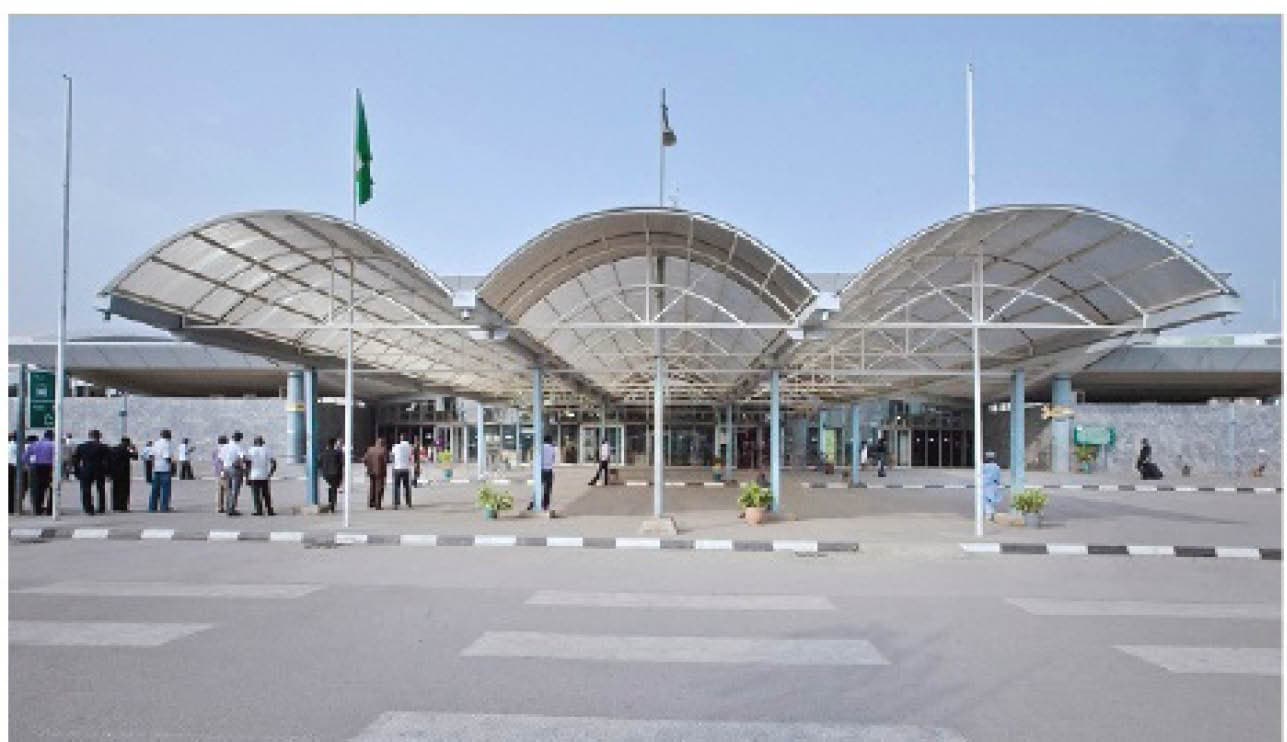
The construction of the second runway of the Nnamdi Azikiwe International Airport (NAIA), Abuja will resume soon following a fresh approval by President Bola Ahmed Tinubu, it has been revealed.
This is just as the Federal Government justified the investment of about $500m for the upgrade of the Murtala Muhammed International Airport (MMIA) terminal one in Lagos.
The Minister of Aviation and Aerospace Development, Festus Keyamo, SAN, spoke in Lagos at the maiden Nigeria Aircraft Acquisition and Investment Summit (NAAIS) where he declared that Nigeria is ready for aviation business.
The summit which attracted stakeholders in Nigeria’s and Africa’s aviation ecosystem was themed, “Unlocking Capital, Confidence & Capacity in Nigerian Aviation.”
Key revelation at the summit was Keyamo announcing approval for the contractor to return to site for the construction of the second runway, a project that has stalled for more than 10 years.
Daily Trust reports that the move to build a new runway for Abuja, the second busiest airport in Nigeria has encountered a chequered history over the delay in delivering the project which was said to have been conceptualised during the administration of late President Umar Yar’Adua in 2009.
Throughout the eight years of former President Muhammadu Buhari, the project saw budgetary provisions annually to the tune of N64bn but the project has been stalled since then.
Daily Trust reports that the second runway was initially estimated to gulp N67bn. It was later revised to N92bn.
But the project cost was increased to about N532bn by the contractor, the China Civil Engineering and Construction Corporation (CCECC). This was rejected by the federal government and the workers have since abandoned sites.
However, Keyamo speaking in Lagos yesterday disclosed that the contractor would now return to site following fresh approval by the President.
He said: “After Lagos, we are going to move somewhere else. Mr. President has approved that we go back to site, and the second runway in Abuja will be ready in no time.
“A second runway is expected to significantly improve operational efficiency, reduce congestion and provide critical backup during emergencies or maintenance closures on the existing runway.”
Keyamo explained that Nigeria’s ongoing investment in aviation infrastructure, particularly in Lagos, is part of a broader strategy to position the country as a leading aviation hub in Africa.
“With roughly half a billion dollars invested by the Nigerian government in the modernization of Lagos international airport infrastructure, Nigeria is making a clear statement that the gateway serving one of Africa’s most important aviation markets must match the scale of its responsibility,” he said.
Keyamo stressed that the modernization drive is part of a broader reform agenda under the Tinubu’s administration aimed at unlocking growth across the aviation value chain and restoring investor confidence.
Declaring Nigeria open for investment, he told global stakeholders: “Nigeria is ready. We have strengthened our compliance architecture. We have improved creditor assurance. We have demonstrated progress on revenue repatriation. We are supporting local MRO development. We are investing in digital and institutional reform. We are pursuing cargo modernisation.”
The Minister explained that reforms around the Cape Town Convention and its Aircraft Protocol have been central to improving access to aircraft financing and reducing risks for lessors and investors.
“These reforms matter because capital does not simply chase opportunity; it chases bankable certainty. And Nigeria has worked to restore that certainty,” he said.
On financial credibility, Keyamo highlighted progress in clearing trapped airline funds, noting recognition by the International Air Transport Association.
“IATA reported that Nigeria had cleared 98% of previously blocked airline funds by mid-2024… that action sent an important message to global airlines, financiers and investors: Nigeria understands that liquidity, convertibility and repatriation are foundational to market confidence,” he added.
The Director-General of the Nigeria Civil Aviation Authority, Capt. Chris Najomo said the Nigeria Aircraft Acquisition and Investment Summit represented a strategic effort to unlock financing and fleet expansion for Nigerian operators.
He said the aviation sector requires coordinated reforms, stating that “aircraft acquisition is capital-intensive, and without access to sustainable and affordable financing, fleet expansion and modernization may remain limited.”
The NCAA chief emphasized confidence-building as a central pillar, noting that “confidence drives investment. It influences the willingness of financiers, lessors, and global partners alike.”
He reaffirmed Nigeria’s commitment to the implementation of the Cape Town Convention, stressing that “we are resolute in abiding by the Cape Town Convention through a firm implementation of IDERA.”
The DG assured global investors that regulatory enforcement will remain firm, declaring that “NCAA is enforcing IDERA with fidelity, so aircraft financiers and lessors alike have nothing to worry about.”
He advised airlines to adopt disciplined fleet strategies, stating that “uncoordinated fleet expansion often leads to inefficiencies and increased operational challenges.”
Managing Director of the Nigerian Airspace Management Agency (NAMA), Engr. Farouk Umar, stated that aviation investment decisions ultimately depend on the reliability of air navigation systems and safety infrastructure.
He said capital inflows into aviation require certainty, stating that “no aviation system grows without capital. No capital comes without confidence. And no confidence exists without strong institutions.”
Umar explained that NAMA plays a foundational role in supporting aircraft acquisition and airline operations, noting that “we provide the operational backbone of the aviation ecosystem.”
He added that safety is not only regulatory but economic, stating that “safety is not a regulatory obligation alone. It is an economic enabler.”
The NAMA boss highlighted ongoing modernisation efforts, saying that Nigeria is “upgrading communication architecture, expanding navigation capabilities, and modernising surveillance systems across the airspace.”