Key Takeaways
- Osita Chidoka called Orji Uzor Kalu's 1999-2007 governorship a defining period for Abia.
- Chidoka says Abia's national prominence faded after Kalu left office.
- He sees Governor Alex Otti's administration as a renewed opportunity to rebuild Abia.
- Chidoka argued that strong leaders can build institutions that outlast them.
- He challenged Abia to turn its current moment of renewal into a permanent standard.
Former Minister of Aviation Osita Chidoka has credited former Abia State Governor Orji Uzor Kalu with giving the state a powerful voice in Nigeria's Fourth Republic, while warning that much of that momentum was lost in the years that followed his tenure.
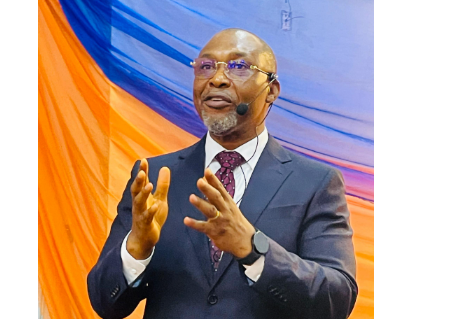
Speaking as guest speaker at the Abia State 35th anniversary celebration, Chidoka reflected on the state's political evolution and the role of leadership in shaping its development and national standing.
Kalu's Defining Role
Kalu governed Abia from 1999 to 2007, becoming one of the most visible governors in the country. Chidoka said Kalu understood the political realities facing Abia and the entire South East at the start of the Fourth Republic, when the region was searching for voice and relevance in the new democratic order.
"At the beginning of the Fourth Republic, the South East was searching for voice and relevance in the new democratic order. Orji Uzor Kalu understood that moment. Young, assertive and politically visible, he put Abia firmly in the national conversation. Abia punched above its weight," Chidoka said.
The former minister acknowledged that Kalu's assertive leadership gave Abia meaningful visibility at the federal level and helped place the state's concerns on the national agenda. Kalu, who now represents Abia North in the Senate, was also an influential voice on issues that extended beyond his state.
A Fading Legacy
Chidoka, however, painted a less flattering picture of the post-Kalu era. "Over time, that moment faded. Infrastructure deteriorated, the state's national standing diminished, and Aba increasingly seemed to succeed despite government rather than because of it," he said.
That decline, he argued, created another defining moment for Abia. He expressed confidence that current Governor Alex Otti appears to understand the opportunity to restore confidence in government, rebuild infrastructure, and recover Abia's sense of possibility.
Strong Leaders vs Strong Institutions
Chidoka also addressed the broader debate about leadership in Africa, saying strong institutions and strong leaders should not be treated as opposites. "We often say Africa needs strong institutions, not strong men. I agree that no society should depend indefinitely on one individual. But who creates strong institutions when the institutions themselves are weak?" he asked.
He added: "Before there were the Ten Commandments, there was Moses. My argument is that the real choice is not between strong leaders and strong institutions. At critical moments, societies need leaders with the capacity to build institutions that eventually become stronger than their founders."
Chidoka distinguished between a strongman and a strong leader. "The strongman makes himself indispensable. The strong leader builds a system that can eventually work without him," he said.
A Permanent Standard for Abia
The former minister ended by challenging Abia to ensure the current renewal under Otti does not remain tied to one administration. "Can the present Abia moment become the permanent Abia standard?" he asked.
For Chidoka, the answer will depend on whether today's leaders can build institutions that outlive their time in office and turn individual vision into lasting governance principles.
Why This Matters
Abia's next phase of development will be judged not only by infrastructure projects or political visibility, but by whether the state can build systems strong enough to survive any single administration. Chidoka's speech is a reminder that lasting progress requires more than a moment of strong leadership.