Key Takeaways
- The APP governorship candidate in Abia, Retired Major General Ijioma Nwokoro Ijioma, has threatened court action over an alleged N150 million signage fee for 2027 candidates.
- Ijioma says the Abia State House of Assembly never passed a law authorising the fee, and he questions why it jumped from N10 million in 2023 to N150 million for 2027.
- He demands an account of over N1 trillion in FAAC allocations, N178 billion in local government funds, and N100 billion in internally generated revenue.
- The state government has dismissed the claims as "blind and mischievous" and challenged the candidate to provide evidence.
Alleged Signage Fee Triggers Legal Threat
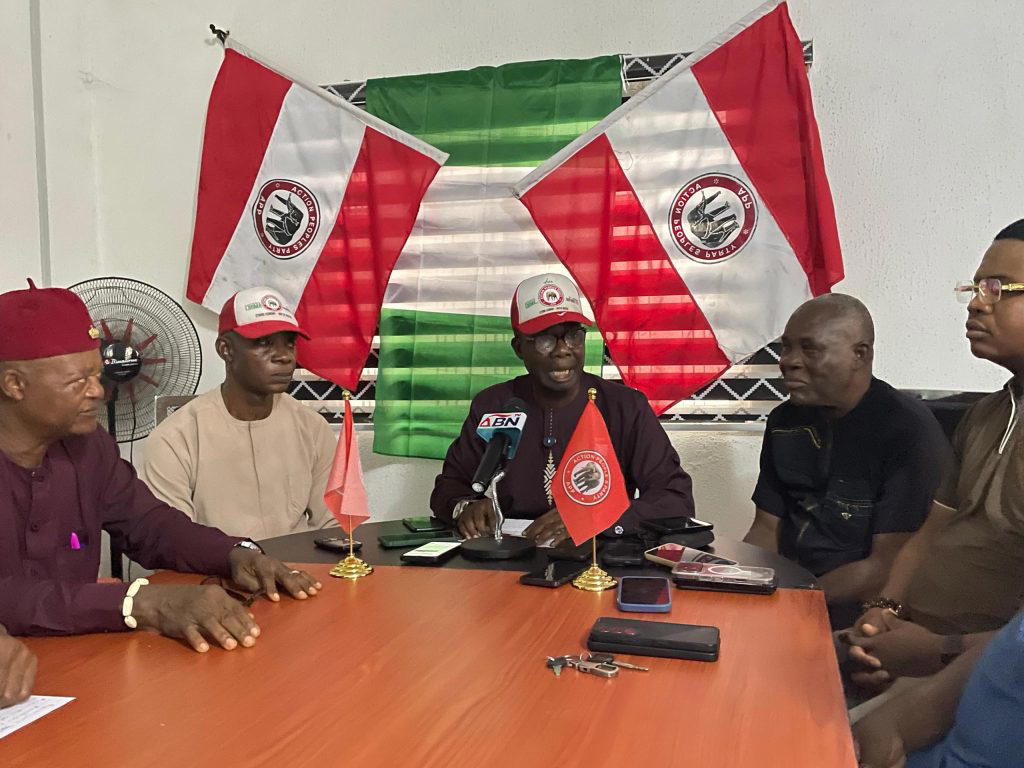
The Action Peoples Party (APP) governorship candidate in Abia State, Retired Major General Ijioma Nwokoro Ijioma, has challenged Governor Alex Otti over a reported N150 million signage fee for governorship candidates ahead of the 2027 election. Speaking at a press conference in Umuahia, he described the charge as excessive, illegal and dangerous to political inclusion.
Ijioma said the reported charges are N150 million for governorship candidates, N100 million for senatorial candidates, N50 million for House of Representatives candidates, and N20 million for State House of Assembly candidates. He insisted that the Abia State House of Assembly never passed any law approving the fees.
"I want to make it clear here and now that that very policy is condemnable. I condemn it in its totality and it will not stand," he said. "I have done my research concerning this signage. It wasn't an Act of Parliament. The Abia State House of Assembly never passed any law concerning this."
Questioning the Sudden Increase
The retired general also questioned the rationale for the fee hike, alleging that Governor Otti paid only N10 million for signage when he contested the 2023 governorship election. "How can somebody who paid a paltry N10 million for the same signage fee come and say it will be N150 million in 2027?" he asked.
He warned that no officeholder should use state power to limit political participation, adding, "Nobody that is a governor owns the state. You are holding the reins on behalf of the people."
Demand for FAAC and IGR Accountability
Beyond the signage fee, Ijioma demanded a detailed account of federal allocations and internally generated revenue since Otti took office in May 2023. He claimed Abia received more than N1 trillion in Federation Account Allocation Committee (FAAC) disbursements between May 2023 and June 2026, with some monthly earnings reaching N26 billion.
He further alleged that the 17 local government areas had received over N178 billion in direct allocations during the period, yet none had been given as much as N100 million by the governor. "From my computation, the 17 local governments, none of them has earned anything less than N350 million monthly," he said, questioning the absence of visible infrastructure at council headquarters.
Ijioma also claimed the state generated more than N100 billion from internally generated revenue and asked the government to explain how the funds were used. He questioned the contract award and procurement process for the 21 smart secondary schools announced by the administration.
Government Dismisses the Allegations
Responding, the Commissioner for Local Government and Chieftaincy Affairs, Prince Uzor Nwachukwu, described the claims as "blind and mischievous". He challenged Ijioma to provide evidence, saying local government councils under the present administration have outperformed all previous administrations in infrastructural and agricultural interventions.
"He that is alleging, is the burden of proof not on him? Let him show evidences of his obviously blind and mischievous claims," the commissioner said.
Nwachukwu insisted that the Otti administration had restored functionality to the local government system, with councils now implementing projects in their communities.
Why This Matters
As the 2027 election cycle gathers momentum, the clash over signage fees and financial accountability could shape Abia's political contest. The APP candidate's court threat and the government's defensive response have turned the focus on transparency and the cost of participation in the state's democracy.