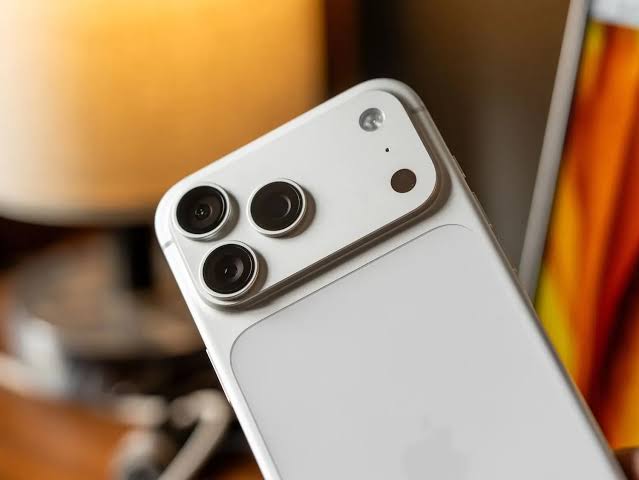
Apple’s new iPhone 18 Pro has arrived with upgrades aimed at photography enthusiasts, content creators and users looking for a high-end smartphone
The device features a new 48MP Fusion Main camera with variable aperture, giving users more control over lighting and depth of field Apple says the feature, which uses six laser-cut blades, allows the aperture to be adjusted automatically or manually through the Camera app. The phone also introduces new Pro controls for photography and video.
But Apple is not the only company competing for the premium smartphone market
Several Android manufacturers have released flagship phones with powerful cameras, high-end processors, large displays, advanced AI features, fast charging and sophisticated zoom systems
For people who want a high-end smartphone but do not necessarily want an iPhone, here are five Android phones to consider as alternatives to the new iPhone 18 Pro
The Samsung Galaxy S26 Ultra is one of the most obvious Android alternatives to the iPhone 18 Pro
Samsung has equipped the flagship with a 200MP main camera, a 50MP ultrawide camera, a 10MP 3x telephoto camera and a 50MP 5x telephoto camera
The phone also supports up to 100x digital zoom, giving it a major advantage for users who prioritise long-distance photography It can also record 8K video at 30 frames per second and 4K video at up to 120fps in Pro Video mode.
The Galaxy S26 Ultra also comes with a 69-inch Dynamic AMOLED 2X display with a 1–120Hz adaptive refresh rate and up to 2,600 nits of peak brightness.
Another major difference is Samsung’s built-in S Pen, which gives users additional options for writing, drawing, editing photographs and navigating the phone
For someone choosing between Apple’s new Pro model and an Android flagship, the Galaxy S26 Ultra stands out for its combination of camera versatility, zoom capabilities, large display and stylus support
Why consider it: 200MP camera, powerful zoom, S Pen, large 120Hz display and strong video capabilities
The Google Pixel 11 Pro is another strong alternative, particularly for people who place a high value on photography and artificial intelligence
Google’s latest Pro model is powered by the Tensor G6 processor, which also drives many of the phone’s camera and AI features
One of its headline camera features is 120x Super Zoom, while Google’s Instant Night Sight is designed to improve low-light photography The phone also includes Magic Capture, which can capture video and still images at the same time.
Google has also increased the processing power of its Tensor platform, with the company saying the Tensor G6’s TPU is 50% more powerful than its predecessor
The Pixel 11 Pro therefore appeals to users who want Google’s computational photography and AI features rather than relying only on camera hardware
Google has also emphasised improvements in low-light photography across the Pixel 11 series, with larger camera sensors designed to capture more light
The Xiaomi 17 Ultra is particularly interesting for smartphone photography enthusiasts
Its camera system includes a 50MP main camera with a large 1-inch sensor, a 50MP ultrawide camera and a 200MP telephoto camera developed with Leica
The telephoto camera covers an equivalent focal range of 75–100mm, while Xiaomi says the phone can reach up to 120x digital zoom
The Leica partnership is also central to the camera experience, with users able to choose between Leica photographic styles and access features such as Leica filters
The Xiaomi 17 Ultra also supports RAW photography, 8K video recording and 4K Dolby Vision recording at up to 120fps
Beyond the cameras, the phone has a 69-inch OLED display with a 1–120Hz refresh rate and a 6,000mAh battery. It supports 90W wired charging and 50W wireless charging.
For users whose priority is photography hardware, zoom and fast charging, the Xiaomi 17 Ultra is one of the most feature-packed alternatives to Apple’s flagship
The OPPO Find X9 Ultra is another Android flagship worth considering for users interested in smartphone photography
OPPO has positioned the Find X series around high-end imaging, while the company’s previous Find X9 Pro already introduced a 200MP Hasselblad telephoto camera
The Find X9 Ultra takes that camera-focused approach further and is among the Android phones positioned directly against premium camera phones such as Apple’s iPhone Pro series
Its appeal is particularly strong for consumers who want a smartphone capable of handling portraits, zoom photography and detailed images without having to carry a dedicated camera
For Nigerian buyers who frequently use their phones for social media content, travel photography and video, the Find X9 Ultra is another model worth putting on the shortlist
The vivo X300 Pro is another Android flagship aimed heavily at photography and video
The phone features a 200MP ZEISS APO telephoto camera, giving it an advantage for users who frequently photograph distant subjects
vivo also highlights 4K 120fps Dolby Vision video recording, while the device packs a 6,51 0mAh battery and supports 90W FlashCharge
The ZEISS partnership is particularly important because vivo has positioned its flagship phones as camera-focused devices, with an emphasis on portrait photography, telephoto images and video
This makes the X300 Pro a compelling alternative for users who want a premium Android phone with photography at the centre of the experience