Key Takeaways
- Constitutional lawyer Emmanuel Umohinyang urges Nigerians to re-elect President Bola Tinubu in 2027.
- He asserts that former Anambra State governor Peter Obi and former Vice President Atiku Abubakar are 'unelectable'.
- Umohinyang defends the removal of petrol subsidy, despite associated hardship, as crucial for Nigeria's fiscal stability.
- He acknowledges the Federal Government's failure to establish adequate cushioning measures for the economic policies.
- Obi's political consistency and ability to honor agreements are questioned by Umohinyang.
- Atiku's political record is criticized as undermining his suitability for the presidency.
- Umohinyang advocates for Tinubu to be given another term to complete ongoing economic reforms.
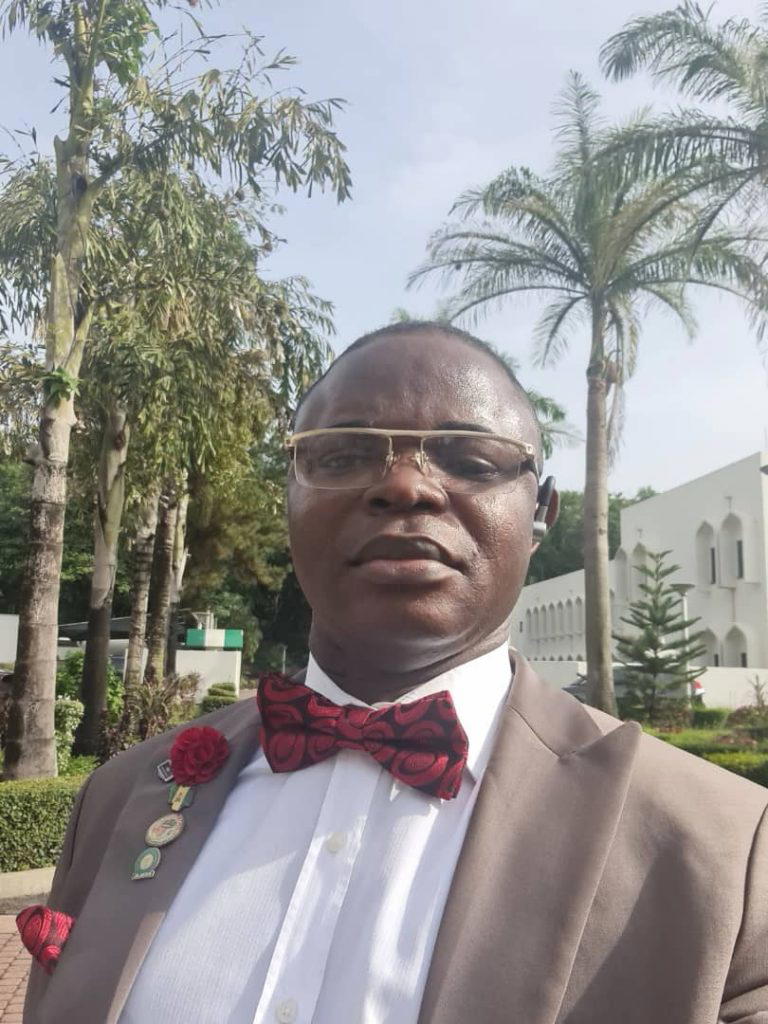
In a significant political commentary, prominent constitutional lawyer and human rights activist, Emmanuel Umohinyang, has thrown his weight behind President Bola Tinubu's bid for re-election in 2027. Speaking to newsmen in Lagos, Umohinyang unequivocally stated that leading opposition figures, Peter Obi of the Labour Party and Atiku Abubakar of the Peoples Democratic Party (PDP), are 'unelectable', urging Nigerians to resist calls for their candidacy.
The Subsidy Conundrum: A Necessary Fiscal Overhaul
Umohinyang also addressed one of the most contentious policy decisions of the current administration: the removal of the petrol subsidy. Despite widespread economic hardship and public outcry, he argued that the policy was an unavoidable necessity to tackle Nigeria's deep-seated fiscal challenges. He acknowledged the government's shortcomings in providing adequate measures to cushion the effects of both the subsidy removal and the floating of the naira, admitting that 'there was no adequate preparation on the side of government to deal with the emerging challenge that would come, which is excruciating poverty in the land'.
However, Umohinyang maintained that these decisions were imperative, citing the significant economic challenges inherited by the Tinubu administration, including a mounting national debt and the unsustainable financial burden of the subsidy regime. He highlighted the absence of adequate provisions for fuel subsidy in the 2023 budget and the government's reliance on borrowing to sustain the scheme, making its removal a critical first step. 'The very minute you come down from that podium, the hawks, the mafias will feast on you using the Nigeria Labour Congress, NLC, and the Trade Union Congress, TUC, to let you know that it is impractical,' he remarked, emphasizing the political courage required for such a move. He further questioned, 'Where was he going to start if he did not remove the subsidy? Where was he going to get the money?'
Critiquing the Opposition: Obi and Atiku's 2027 Hurdles
Turning his attention to the 2027 general elections, Umohinyang cast doubt on the electability of President Tinubu's main challengers.
Peter Obi's Consistency Under Scrutiny
Umohinyang specifically questioned Peter Obi's political consistency and his perceived inability to honor political agreements. 'This election represents the final hour for Obi and Atiku,' he declared, suggesting that Obi's age (approaching 70) might influence his current political posture. He challenged Obi's track record, stating, 'Obi is not a man who can keep to his word. Is it not the same Peter Obi who told his political godfather that he would never leave the All Progressives Grand Alliance, APGA? Where is he now? He left them for the Peoples Democratic Party, PDP. He went to Labour Party and joined the ADC. Now, he is at the NDC.' While acknowledging Obi's 'sonorous voice' and 'immaterial humility', Umohinyang concluded that Obi's 'inability to say and stand by what he says' makes him an 'unreliable, highly unstable' candidate, unfit for leadership.
Atiku Abubakar's 'Red Ink' Record
Similarly, Umohinyang was critical of former Vice President Atiku Abubakar's political history, arguing that his record undermines his suitability for the presidency. 'When you look at Atiku’s report card, it’s littered with red ink,' he asserted. He referenced former President Olusegun Obasanjo's alleged attestations regarding Atiku's performance, suggesting it 'gives you an insight into how bad he must have been as a student of the Obasanjo School of Politics. Atiku is not electable.'
Tinubu's Path to a Second Term: Building on Reforms
In contrast, Umohinyang passionately argued for President Tinubu to be granted another term to continue his economic reforms, despite the current hardships. He lauded Tinubu's resilience, noting he 'came into office in spite of the fact that the powers that be were not happy over his candidacy.' Umohinyang highlighted Tinubu's acknowledgment of the pain Nigerians are enduring, coupled with his appeal for collective sacrifice towards a better future. 'We are not there God forbid that I say he has done everything right, but I can see the structure. I can see the foundation he had created. I can see his area of view. I can reason with him in some of the things he’s trying to do. Nigeria has become the construction site,' he observed. He concluded by urging Nigerians to 'give this erudite Nigerian another opportunity in office to conclude the reform,' expressing optimism that 'God helping us, we will behold a Nigeria of our dreams in our lifetime.'
Why This Matters
Emmanuel Umohinyang's strong endorsement of President Tinubu and his pointed criticisms of opposition leaders Peter Obi and Atiku Abubakar underscore the intensifying political discourse surrounding Nigeria's economic reforms and the upcoming 2027 elections. His arguments highlight the complex interplay between necessary but painful economic decisions and the political viability of leaders, shaping public opinion and the narrative for the next electoral cycle.