By Ben Ngwakwe, Gombe
LAGOS — The Chairman of the Independent National Electoral Commission (INEC), Prof Joash Amupitan, has warned online publishers against sensational and unverified election reports, saying fake news and misinformation could erode public confidence in the electoral process and deepen voter apathy ahead of the 2027 general elections.
Amupitan gave the warning on Thursday in Lagos while speaking at the 10th Annual Conference of the Guild of Corporate Online Publishers (GOCOP), with the theme, “2027 Elections: Trust, Transparency and Shared Responsibilities”
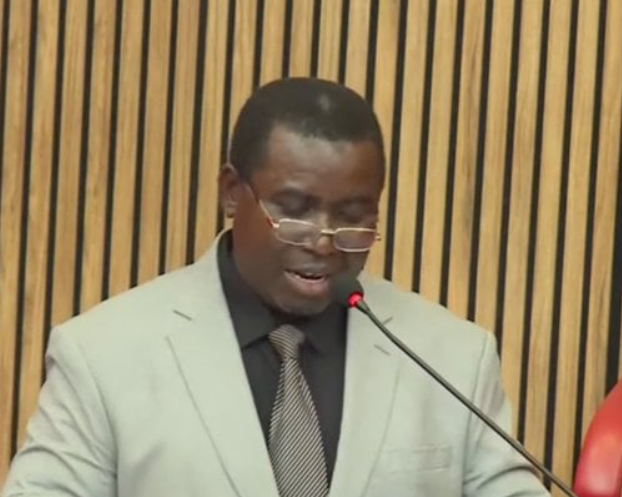
The INEC chairman, who was represented by the Lagos State Resident Electoral Commissioner, Prof Ayobami Salami, said the media had a critical role to play in protecting the integrity of the electoral process by ensuring that election-related information was verified before publication.
A statement issued by Amupitan’s Chief Press Secretary/Media Adviser, Adedayo Oketola, and made available to journalists on Thursday, quoted him as saying that inaccurate reports could have consequences beyond the immediate news cycle
He said unverified allegations of electoral fraud could cause lasting damage to public confidence, even when subsequently corrected or retracted
Amupitan said, “While INEC carries the legal mandate to conduct elections, the wider democratic health of Nigeria and indeed West Africa depends on the information infrastructure maintained by the media, particularly online publishers
“This is where the core concept of shared responsibility becomes operational We live in an era where the velocity of digital information frequently outpaces the verification of truth.
“Across our sub-region, election windows are increasingly targeted by coordinated information warfare, political violence narratives, synthetic media and AI-generated deepfakes designed to inflame ethnic divides or passions and undermine institutional legitimacy”
He warned that fake news, unverified leaks and sensationalised reports could undermine public trust, heighten tension and discourage citizens from participating in elections
“When an unverified claim regarding electoral fraud is published, the damage to public confidence is immediate and enduring; subsequent retractions or fact-checks rarely repair the injury,” he said
The INEC chairman urged online publishers to prioritise accuracy over the pressure to break stories ahead of competitors, particularly during election periods
He also cautioned against clickbait headlines and the publication of unverified election results, allegations of manipulation and purported result sheets
Amupitan urged media organisations to provide adequate context when reporting operational challenges during elections, rather than presenting isolated incidents as evidence of systemic failure
He said responsible election reporting required publishers to verify claims with INEC and other credible sources, particularly when reporting polling-unit results and allegations of electoral malpractice
INEC proposes partnership with GOCOP
Amupitan disclosed that the commission was proposing a three-point partnership with GOCOP to strengthen election-related information management
The proposed areas of collaboration, he said, included dedicated digital fact-verification mechanisms, stronger editorial self-regulation against the publication of unverified election results and altered result sheets, as well as a national voter-education partnership
He said the initiative was necessary because online publishers had become “primary storytellers and narrative custodians” of Nigeria’s democracy
Amupitan urged online media organisations to use their platforms to improve citizens’ understanding of the electoral process, including voter education and Permanent Voter Card collection, rather than contributing to distrust and voter disengagement
He said INEC was taking steps to strengthen its systems ahead of the 2027 elections, including the deployment of artificial intelligence for data auditing and cyber defence in partnership with technology companies, including Google and Microsoft
According to him, the commission had “embedded automated AI data-auditing tools and multi-layered firewalls” to protect its databases against cyber intrusions, distributed denial-of-service attacks and unauthorised data injection
He said the measures were intended to build confidence in the 2027 elections through verifiable processes
Voter register rises to 103m
The INEC chairman also disclosed that the national register had risen to about 103 million registered voters following the conclusion of the Continuous Voter Registration exercise
He added that nationwide collection of Permanent Voter Cards was scheduled to commence on Thursday
Amupitan reiterated the commission’s commitment to conducting transparent elections and said all stakeholders, including the media, had a shared responsibility to build public confidence in the electoral process
He said the INEC leadership was engaging Resident Electoral Commissioners, Administrative Secretaries, Heads of Department, Electoral Officers and Assistant Electoral Officers to identify operational gaps and implement corrective measures before Election Day
According to him, comprehensive training programmes were also underway for election personnel, focusing on electoral administration, technology handling, conflict mitigation and compliance with relevant electoral laws
The commission, he added, had commenced early procurement and distribution of non-sensitive electoral materials to its 36 state offices and the Federal Capital Territory
He said the early procurement would allow adequate time for batching, inventory auditing and distribution to the 774 Local Government Areas ahead of Election Day
Amupitan further disclosed that INEC had procured and commenced the distribution of new operational pick-up vehicles to its state offices and LGAs to address transportation challenges in difficult terrains, riverine communities and remote border settlements
He said the commission had also introduced a centralised Operational Activity Schedule to monitor material movement, storage security and vehicle deployment in real time across state command centres
Who has power to declare election results?
Meanwhile, the Lagos REC, Prof Ayobami Salami, clarified the constitutional responsibility for declaring election results.
Salami explained that the Constitution vested the authority to return an election result in the designated Returning Officer
He stressed that being an INEC official did not automatically confer the constitutional authority to return election results
According to him, even as a Resident Electoral Commissioner, he did not possess the constitutional power to announce or return an election result
He said Returning Officers were appointed by the commission and were constitutionally empowered to return the results of elections assigned to them
Agbakoba challenges presidential candidates on fuel subsidy
Earlier, the Conference Chairman, Dr Olisa Agbakoba, SAN, stressed the constitutional right of Nigerians to vote and urged INEC to ensure that the 2027 elections were free, fair and credible
Agbakoba, a former President of the Nigerian Bar Association, also urged presidential candidates to clearly state their positions on the future of fuel subsidy and explain what they would do differently if elected
He questioned the constitutional authority for declaring election results against the backdrop of the increasing circulation of opinion polls, election projections and unofficial results through traditional and digital media
The legal practitioner also questioned whether opinion polls and other electoral projections should be subjected to the same standards of verification and fact-checking expected of other election-related information
The conference brought together online publishers, editors, media professionals, election stakeholders, civil society organisations, academics and other stakeholders to discuss the role of trust, transparency and shared responsibility in strengthening Nigeria’s democratic process ahead of the 2027 elections