Key Takeaways
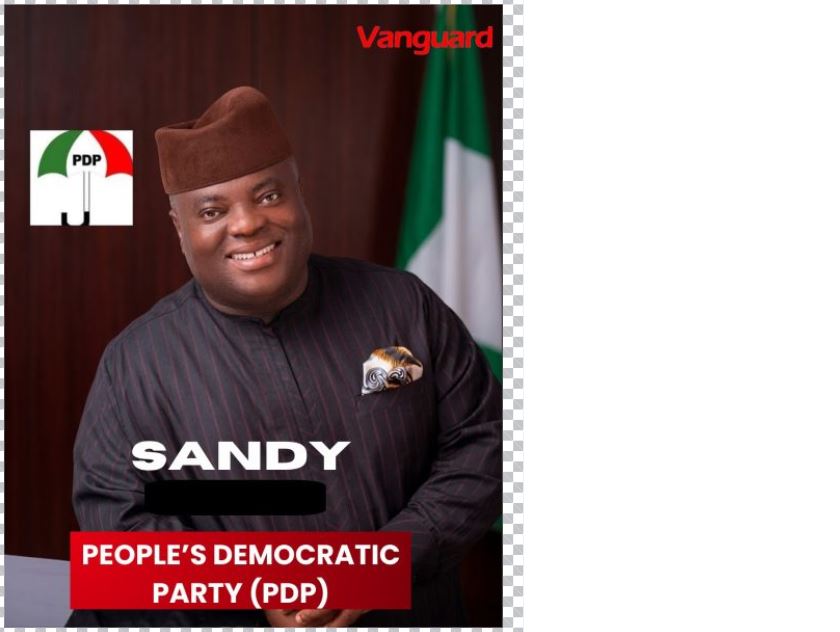
- Senator (Prof) Sandy Ojang Onor, a former academic and Cross River politician, has been adopted as the presidential candidate by a faction of the Peoples Democratic Party (PDP) for the 2027 elections.
- Onor's nomination reflects the deep internal divisions within the PDP, specifically the influence of the FCT Minister Nyesom Wike-aligned structure.
- His political profile is unique, combining a distinguished academic career as a Professor of History with extensive experience across local, state, and national politics.
- Onor advocates for 'grassroots politics,' emphasizing rural development, local government funding, and addressing issues like insecurity and youth unemployment.
- He has adopted a measured stance on some Tinubu administration policies, defending the fuel subsidy removal while criticizing its implementation, distinguishing himself from conventional opposition figures.
- A significant challenge for Onor is to consolidate the fractured PDP, gain national visibility beyond his regional base, and transform a factional nomination into a credible nationwide campaign.
The political landscape for Nigeria's 2027 presidential election is already taking shape, with the Peoples Democratic Party (PDP) navigating significant internal turbulence. At the heart of this unfolding drama is the emergence of Senator (Prof) Sandy Ojang Onor as a presidential candidate, a development that speaks volumes about the state of the opposition party and the man himself.
Onor, a distinguished Cross River politician, former senator, and a Professor of History, brings an unusual blend of scholarly depth and practical electoral experience to the political arena. He spent a considerable part of his professional life in academia before transitioning into local government and state politics, eventually serving in the National Assembly. Representing Cross River Central in the 9th Senate from 2019 to 2023, his journey culminated in May 2026 when he was adopted as the sole aspirant of a PDP faction led by Abdulrahman Mohammed, a structure closely aligned with the influential FCT Minister Nyesom Wike.
From Academia to National Politics
Born in Ikom, Cross River State, on February 14, 1966, Onor's academic foundation was laid at the University of Calabar, where he earned his first degree and later a PhD in History. He steadily rose through the university ranks, eventually becoming an Associate Professor and then a full Professor in 2019. His published works, which include studies on the Ejagham people, local governance, and Nigeria's civil war, underscore his deep understanding of history and its implications for contemporary governance and democracy.
Despite his profound academic engagement, Onor was not confined to the classroom. His political career began as the executive chairman of Etung Local Government Council, followed by various positions within the Cross River State administration before his election to the Senate. This multi-layered exposure to Nigeria's political system, from local communities to the national legislature, has provided him with a comprehensive understanding of the country's governance challenges.
The PDP's Internal Power Play
Onor's ascent to the presidential ticket is inextricably linked to the PDP's ongoing internal power struggles. For months, rival factions within the party have laid competing claims to leadership and the right to nominate candidates. While the Wike-aligned structure backed Onor, a rival faction associated with Tanimu Turaki moved to adopt former President Goodluck Jonathan as its preferred candidate. This internal strife created considerable uncertainty regarding which faction would ultimately control the party's machinery for 2027.
FCT Minister Nyesom Wike publicly rejected the Turaki faction's claim, asserting Onor as the recognized candidate of the structure he supported. This dispute was not merely about individual personalities but reflected a deeper struggle for control over the party's direction and its legitimate candidate nomination process. The Independent National Electoral Commission (INEC)'s subsequent publication of Onor and his running mate, Babangida Umar, among the presidential candidates, provided a tangible validation for the Onor camp, despite the lingering political arguments within the PDP.
Onor's Platform and Political Stance
Onor has sought to differentiate himself from conventional opposition politicians by championing 'grassroots politics.' He argues that rural Nigeria has been systematically neglected, linking rural poverty to insecurity, unemployment, and the vulnerability of young people to criminal recruitment. His platform calls for stronger local government funding and greater attention to communities outside Nigeria's political and economic centers, aiming to address the root causes of socio-economic instability.
Interestingly, Onor has adopted a nuanced approach to some policies of the current Tinubu administration. During his screening, he defended the removal of fuel subsidy as a 'courageous policy,' while critically assessing its implementation and accountability. This stance suggests a belief that opposition politics should not necessitate blanket condemnation of every government decision, aiming for a more constructive critique.
However, his rhetoric towards rival opposition figures has been less restrained. Onor has dismissed the camps of Atiku Abubakar, Peter Obi, and Rabiu Kwankwaso, portraying their alliances as driven by competing ambitions rather than a unified vision. He maintains that the PDP remains the principal opposition platform capable of challenging the ruling All Progressives Congress (APC), a strategic positioning that highlights his campaign's intent to leverage the PDP's established nationwide structure over individual prominence.
Why This Matters
Senator Sandy Onor faces the formidable task of transforming a factional party nomination into a credible national campaign. While he possesses a strong Cross River base, Senate experience, and a distinctive academic profile, he lacks the national visibility enjoyed by many of his potential rivals. The PDP, despite its historic national network, enters this contest after years of debilitating factional conflict, defections, and organizational uncertainty. Onor's ability to unite the fractured party, expand his appeal beyond his regional stronghold, and convince voters that the PDP can reclaim its former dominance will be the ultimate test of his leadership and the party's resilience in the lead-up to the 2027 elections.