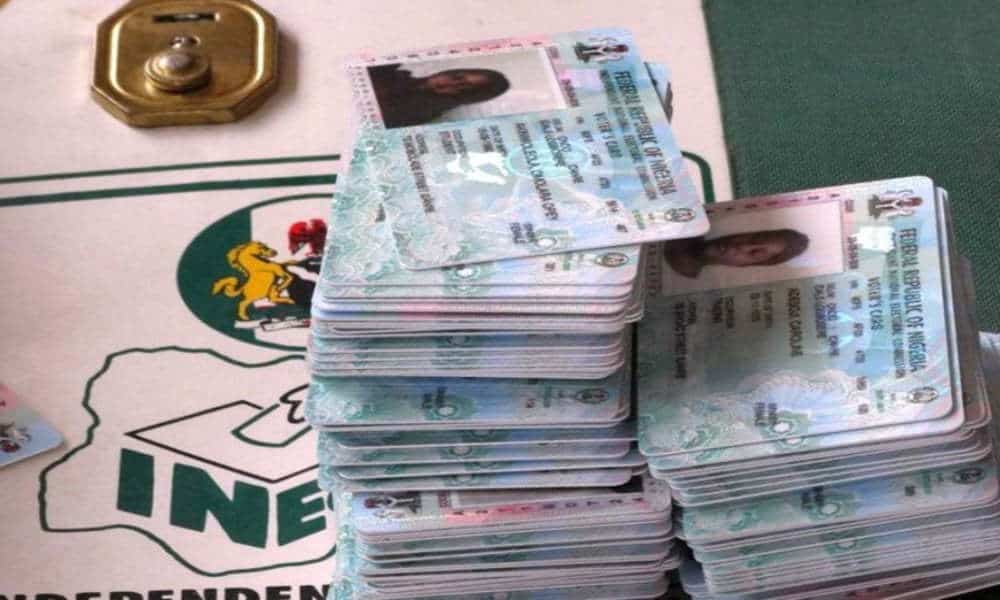
The Muslim Congress (TMC), Kwara State chapter, has urged Muslims to obtain their Permanent Voter Cards (PVCs) and participate actively in the 2027 elections
It said their votes should be used to elect responsible leaders capable of addressing the country’s security, economic and social challenges
The call was made at the 2026 Annual Lecture of the organisation in Ilọrin
Speakers at the event canvassed moral and spiritual reorientation, accountability, responsible leadership and continuous engagement between citizens and those in authority
Speaking, Ustadh Abdulhakeem Ishola Peleowo said the Renewed Hope Agenda of President Bola Tinubu focused on areas including food security, national security and infrastructural development, but argued that Islam offered a more comprehensive framework for addressing the challenges confronting the country
Peleowo, who quoted extensively from the Qur’an and Sunnah, said Islam provided practical solutions to societal problems, stressing that meaningful national transformation must begin with the individual
He said the absence of adequate moral and spiritual grounding among people occupying positions of authority was partly responsible for some of the challenges facing the country
The cleric cited the cases involving former Central Bank of Nigeria governor, Godwin Emefiele, and former chairman of the National Hajj Commission of Nigeria (NAHCON), Jalal Ahmad Arabi, which he said were associated with allegations of corruption
He said such are the examples of what could happen when people without sufficient moral grounding occupy positions of responsibility
Peleowo said Muslims must reject passivity and work consciously towards producing individuals whose character would eventually influence appointments, public institutions and wider social engagement
He cited the transformation of Umar ibn al-Khattab, the second rightly guided caliph, as an example of how an individual could rise from a past of obscurity and wrongdoing to become one of the most distinguished figures in Islamic history
He said the mosque should also play a greater role in reforming society, particularly through the purification of the soul and development of morally upright individuals
Peleowo expressed concern over the quality of the education system, saying it was now producing “half-baked” students compared with what obtained in the past
He also identified the media and judiciary as important institutions in rebuilding society, warning that Nigerians could not continue watching the situation deteriorate without taking deliberate steps to reverse it
He called for greater consciousness in establishing a sound society capable of producing responsible men and women, saying past Muslim leaders demonstrated selflessness and sacrifice in their service to the Ummah
Peleowo also advocated the return to Islamic economic principles, particularly on the issue of interest, which he said had contributed to economic difficulties and the constraints imposed on society
The Vice Chancellor of Al-Hikmah University, Prof Abdullateef Oladimeji, praised TMC for its programmes aimed at addressing issues affecting the society
Oladimeji said people occupying positions of authority needed a firm understanding of Islam, arguing that the problem was not merely about having Muslims in government but ensuring that those entrusted with responsibilities were properly grounded in the values of the religion
He recalled the Qur’anic description of Muslims as the best community raised for mankind, saying such a position came with the responsibility to be at the forefront of promoting good deeds and societal development
He, however, questioned whether Muslims occupying different positions in the country were living up to that responsibility
Oladimeji cited the spread of betting and gambling as an example, saying Muslims should not be surprised if some people involved in approving or facilitating such activities were themselves Muslims
In his sermon, the Grand Mufti of the Conference of Islamic Organisations (CIO), Sheikh Dhikrullah Shafi’i, described the annual lecture as an avenue for TMC to chart a way forward for the country
Shafi’i said the programme was being held simultaneously in nine states, adding that leadership remained the first point of call in addressing the challenges bedevilling Nigeria
He said if leaders were good, the country would also be better, stressing that both leaders and followers had responsibilities to one another
The scholar said the family unit must also be strengthened as part of efforts to rebuild the country, while urging Nigerians to draw lessons from the country’s founding generation
He noted that Nigeria attained independence through a unified front rather than tribalism, citing the roles played by Sir Abubakar Tafawa Balewa, Chief Obafemi Awolowo and Dr Nnamdi Azikiwe
According to him, despite their religious and ethnic differences, the three leaders were united by the vision of one Nigeria
He urged Muslims not to promote tribalism, saying religious scholars and organisations must also examine their roles in the divisions affecting the country
Shafi’i said Nigerians had experienced both military and civilian administrations, noting that the country had witnessed several coups, some successful and others unsuccessful, before the return to democratic rule
He said Nigeria was currently facing serious insecurity and called on the three tiers of government to commit the necessary resources towards tackling the problem, including addressing the welfare of citizens
The cleric also identified the economy as another major challenge, saying Nigerians needed stronger welfare measures to enable families to educate their children and provide healthcare
Speaking on accountability, responsibility and public trust, Shafi’i called for reforms that would address both governance processes and the character of individuals occupying public positions
He said politicians had increasingly exploited the economic difficulties of citizens during elections, stressing that the people possessed significant power through their votes
“Your vote is your power,” he said, while recalling reports of voters being offered as little as N2,500 during elections and claims by some people that they received N150,000 during the last election in Osun State
Shafi’i cited Umar ibn al-Khattab’s practice of making his stewardship open to public scrutiny as an example of accountability in leadership
The cleric urged Muslims and Christians to maintain continuous engagement with political leaders, saying citizens should not abandon their responsibility to demand accountability from those in authority
He said governments must also maintain constant dialogue with citizens, stressing that governance conducted in secrecy would not help build public trust
Shafi’i therefore urged Muslims to obtain their PVCs and participate in the 2027 electoral process, advising them to consider the qualities and competence of candidates rather than allowing tribal or sectional considerations to determine their choices
The event also featured contributions from representatives of public institutions, including the Public Complaints Commission (PCC), National Orientation Agency (NOA) and Federal Road Safety Corps (FRSC)
The event was attended by the Wali of TMC, Kwara State, Dr Suleiman Saka, Amir of OTM, Dr Abdulrazaq Omowumi and Alangua Adewole, Yusuf Yaqub among others