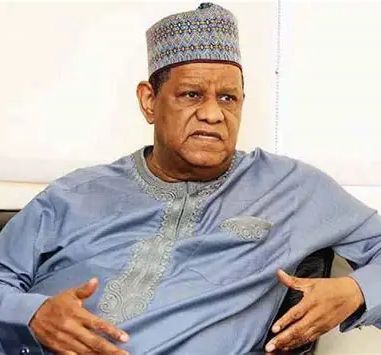
**Key Takeaways:**
- Mohammed Hayatu-Deen, a presidential aspirant, emphasizes the need for competent leadership to address Nigeria's challenges.
- He believes Nigeria's problems are largely economic and social in nature, requiring a leader with a deep understanding of the country's history.
- Hayatu-Deen highlights the prolonged decline in Nigeria's quality of life and compares it to the progress made by countries like Rwanda and Ghana.
- He aims to bring his experience and practical capacity to turn the country around, focusing on economic growth, security, and social welfare.
- The aspirant emphasizes the importance of nationalism, equality, and delivering the greatest good for the greatest number of people.
**A Vision for Nigeria's Revival**
Mohammed Hayatu-Deen, a leading presidential aspirant on the platform of the African Democratic Congress (ADC), has declared his unwavering commitment to the 2027 presidential primaries. In an exclusive interview, he emphasizes the urgent need for visionary leadership to reverse nearly two decades of economic decline, insecurity, and worsening hardship in Nigeria.
Hayatu-Deen, a seasoned professional, believes that Nigeria's problems are largely bread-and-butter issues, rooted in social and economic challenges. He argues that the country requires a leader with a deep understanding of its economic and social history, capable of providing practical solutions.
Reflecting on Nigeria's history, he notes that the country has faced major challenges before, but recovery was swift when leaders understood the problems and citizens held the government accountable. However, since 2007, Nigeria has experienced a prolonged decline in the quality of life, marked by rising inflation, unemployment, insecurity, and collapsing education and healthcare systems.
Comparing Nigeria's situation to countries like Rwanda and Ghana, which have made remarkable recoveries through focused leadership and deliberate policies, Hayatu-Deen believes Nigeria can achieve similar progress. He highlights the importance of disciplined governance, stating that many African countries are recording steady economic growth due to this approach.
His decision to contest is driven by a sense of duty and a belief in his ability to make a difference. Hayatu-Deen emphasizes his experience in solving complex problems and his understanding of how to build an effective and efficient government. He sees himself as a nationalist, committed to delivering the greatest good for all Nigerians, regardless of regional, ethnic, or religious differences.
Speaking about his values and principles, Hayatu-Deen differentiates himself from conventional politicians driven solely by ambition. He stresses the importance of loyalty, commitment, and a strong reputation, assuring that he will support the party's chosen candidate and work towards victory.
**Addressing Nigeria's Challenges**
Hayatu-Deen acknowledges the legal challenges facing the ADC but remains confident in the party's ability to overcome them. He believes in party supremacy, where leaders respect party structures and decisions, a culture he aims to revive.
On the topic of opposition cooperation, he emphasizes the need for building bridges and placing national interest above personal ambition. He believes that democracy offers choices, and Nigerians deserve credible alternatives to the ruling party. Power, he asserts, belongs to the people, and politicians must serve citizens rather than themselves.
Addressing the issue of zoning, Hayatu-Deen believes that leadership should focus on competence, vision, and service delivery rather than regional considerations. He advocates for choosing the best and brightest individuals capable of governing effectively, regardless of ethnicity or region.
When asked about financial pressures, Hayatu-Deen reveals that he has not been pressured for money and commends the ADC's leadership for resisting money politics. He believes that once leadership sets the right standards, others will follow.
As for his stance on stepping down, Hayatu-Deen remains firm, stating that he will not step down for anyone. However, he assures that he will fully support the party's final decision and work towards victory.
**Priorities and Vision for Nigeria's Future**
Hayatu-Deen identifies Nigeria's challenges as both structural and operational, with the first responsibility of leadership being to address the cost-of-living crisis, create jobs, and improve security.
He strongly believes that insecurity is tied to economic hardship, and thus, poverty, unemployment, lack of education, and social breakdown must be addressed. Hayatu-Deen proposes a national reorientation program to rebuild values and strengthen social responsibility, alongside economic reforms.
Furthermore, he emphasizes the need for heavy investment in education, healthcare, agriculture, infrastructure, and integrated rural development. Rural communities, he argues, must become economically viable through modern agriculture, agro-processing, irrigation, logistics, and industrial clusters.
In the long term, Hayatu-Deen advocates for long-term development planning, defining Nigeria's vision for the next 20 to 25 years and working systematically towards it. He cites examples of countries like Botswana, Malaysia, Singapore, and Dubai, which achieved remarkable progress through consistency, planning, and disciplined leadership.
**Why This Matters**
Mohammed Hayatu-Deen's vision for Nigeria's future highlights the importance of competent and visionary leadership in addressing the country's pressing challenges. His emphasis on economic growth, security, and social welfare resonates with the aspirations of many Nigerians. As the country gears up for the 2027 presidential elections, Hayatu-Deen's aspirations and ideas offer a fresh perspective on Nigeria's path to revival and progress.