Key Takeaways
- Former Vice-President Atiku Abubakar pledges to reintegrate Niger, Mali, and Burkina Faso into the Economic Community of West African States (ECOWAS) if elected president in 2027.
- He proposes deploying the Economic Community of West African States Monitoring Group (ECOMOG) to strengthen regional security and combat terrorism.
- Atiku criticized President Bola Tinubu's administration for its approach to the Sahelian countries and the immediate removal of the petrol subsidy.
- He committed to addressing Nigeria's pervasive insecurity within one year by increasing security personnel, providing equipment, and creating youth employment.
- This marks Atiku's sixth bid for the Nigerian presidency, setting the stage for a potential rematch with incumbent Bola Tinubu.
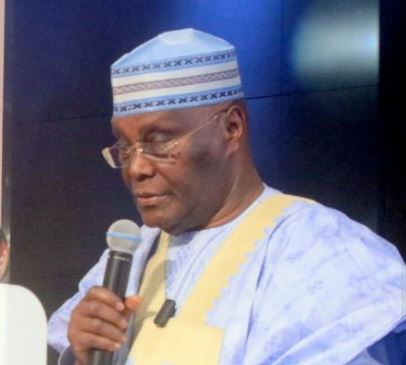
Former Vice-President Atiku Abubakar has laid out a comprehensive policy blueprint for his potential 2027 presidential bid, focusing on regional stability, national security, and economic reform. Speaking in an interview with the BBC Hausa Service, Atiku articulated a vision that sharply contrasts with some of the current administration's policies, particularly concerning West African diplomatic relations and economic management.
Atiku's Regional Reintegration Plan
A cornerstone of Atiku's proposed foreign policy is the immediate reintegration of Niger Republic, Mali, and Burkina Faso into ECOWAS. These three Sahelian nations controversially withdrew from the regional bloc after military coups brought juntas to power, leading to sanctions and threats of military intervention from ECOWAS, then chaired by President Tinubu. Atiku firmly believes that isolating these countries was a misguided approach, arguing that Nigeria and other ECOWAS member states adopted the wrong strategy.
'I will get the ECOWAS leaders to sit down and deliberate, and we will use ECOMOG troops to ensure peace,' Atiku stated, emphasizing a diplomatic and security-focused resolution. He attributed the deterioration in relations partly to the stance taken by President Tinubu, particularly following the 2023 coup in Niger. 'I don't see why Nigeria should say it will not engage with Niger because there was a coup. Niger and Nigeria are one people. Just because the military took over power does not mean Niger should be expelled from ECOWAS. I will ensure that there is understanding and that Niger, Burkina Faso and Mali return to ECOWAS.'
The Role of ECOMOG
Atiku's mention of deploying ECOMOG troops harks back to the regional force's historical role in maintaining peace and stability in West Africa, notably during conflicts in Liberia and Sierra Leone. His proposal suggests a proactive, collective security approach to address the escalating terrorism and instability plaguing the Sahel region, which directly impacts Nigeria's northern borders.
Tackling Nigeria's Security Crisis
Domestically, Atiku pledged to tackle Nigeria's worsening security situation within one year if elected. The nation continues to grapple with multifaceted threats, including insurgency in the North-East, banditry and kidnapping in the North-West, and other forms of violent crime across the country. His administration, he said, would focus on a three-pronged strategy: increasing the number of security personnel, providing them with adequate equipment, and creating employment opportunities for young Nigerians.
'What I will do is increase the number of security personnel and provide equipment, while giving young people jobs. We believe that within one year, God willing, we will address these problems,' he asserted. Atiku underscored that stronger regional cooperation among West African countries would be critical to effectively addressing these complex security challenges, highlighting the interconnectedness of regional and national stability.
Economic Policy Stance: The Subsidy Debate
The former Vice-President also took aim at the Tinubu administration's removal of the petrol subsidy, a policy implemented shortly after the President's inauguration in May 2023. Atiku argued that this decision had significantly contributed to the economic hardship faced by Nigerians, leading to soaring transportation and living costs.
'People are suffering; there is poverty and unemployment. The removal of the fuel subsidy is the major cause of this. I have never seen Nigerians suffer as much as they are suffering at this time,' he lamented. While acknowledging that subsidy reform might be necessary, Atiku insisted it should be implemented gradually and only after measures had been put in place to cushion its impact on vulnerable citizens. He clarified that his ultimate position on subsidy would depend on the prevailing economic conditions upon assuming office.
Atiku's Enduring Presidential Ambition
At 79, Atiku Abubakar is embarking on his sixth quest for the Nigerian presidency, having previously contested in 2007, 2019, and 2023, and unsuccessfully sought his party's ticket in 2011 and 2015. A prominent figure in Nigerian politics since the return to democratic rule in 1999, he served as Vice-President under Olusegun Obasanjo from 1999 to 2007. As the 2027 election cycle approaches, Atiku is widely expected to face incumbent President Bola Tinubu in what could be another fiercely contested race for the nation's highest office.
Why This Matters
Atiku Abubakar's early articulation of his policy positions signals the commencement of political maneuvering for the 2027 presidential election, offering a clear alternative narrative on critical issues like regional diplomacy, national security, and economic policy. His proposals, particularly on ECOWAS reintegration and the strategic deployment of ECOMOG, could reshape Nigeria's role in West African affairs, while his economic criticisms resonate with many Nigerians grappling with current hardships, setting the stage for a robust national debate on the country's future direction.