Key Takeaways
- Atlas Energy Solutions and Kodiak are expanding their driverless truck fleet from 28 to 100 by mid-2027.
- The autonomous trucks currently haul sand on private industrial roads in Texas and New Mexico.
- Plans are underway for these driverless trucks to begin operating on public roads by early 2027, pending operational milestones.
- Kodiak's autonomous system includes advanced sensors, continuous monitoring, and fallback maneuvers for safety.
- An independent safety evaluation by Nauto awarded Kodiak's system a score of 98 out of 100, tying for the highest among over 1,000 commercial fleets.
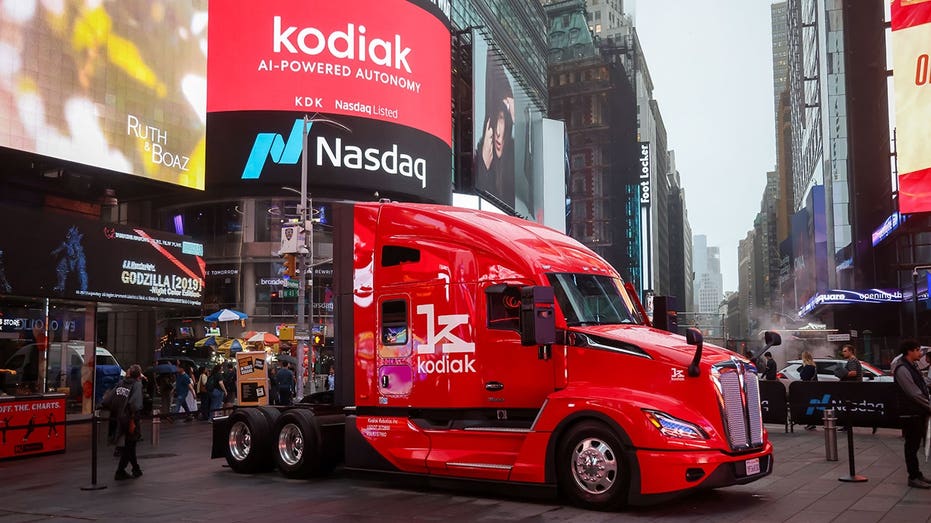
The future of freight transportation is rapidly accelerating, with Atlas Energy Solutions and Kodiak leading a significant expansion of their driverless truck fleet. The partnership aims to grow its autonomous big-rig operation from 28 trucks to an impressive 100 by mid-2027, signaling a major stride toward fully autonomous commercial logistics. This ambitious plan includes a pivotal move onto public roads, with operations anticipated to commence as early as 2027, contingent upon achieving critical operational milestones.
Currently, these Kodiak-powered trucks are actively hauling sand to oil and gas well sites across the Permian Basin in Texas and New Mexico, operating entirely without a human driver in the cab. This expansion provides a crucial glimpse into how driverless trucking is poised to transition from controlled industrial environments to the broader network of public highways.
The Autonomous Ascent: Scaling Driverless Logistics
Atlas's initial driverless operations focused on single load-out locations. However, the company has now scaled its efforts, running trucks simultaneously from two depots approximately 90 minutes apart – one in Texas and the other in New Mexico. This wider operational footprint allows Atlas to service more well sites across the vast Permian Basin and respond with greater agility to customer demands for increased sand deliveries. The autonomous fleet seamlessly integrates with Atlas's 42-mile Dune Express conveyor system, which transports sand closer to well sites before the driverless trucks complete the final leg of the journey.
Don Burnette, founder and CEO of Kodiak, emphasized the groundbreaking nature of their collaboration. “Together, Atlas and Kodiak have deployed the world's largest fleet of driverless big-rig trucks,” Burnette stated. “We've demonstrated that autonomous trucking is delivering meaningful results today. Our expanding partnership, which now covers two unique locations, is creating a blueprint for how autonomy can transform logistics by improving efficiency, increasing productivity, and delivering lasting value for customers at commercial scale.”
As of March 31, 2026, Atlas's driverless program had already seen its 28 trucks complete approximately 7,000 loads, transporting over 450,000 tons of sand. The fleet also logged more than 23,500 driverless operating hours during the first quarter of 2026, culminating in a daily record of 176 loads delivered on July 20, marking a significant achievement in their 18-month deployment.
Further innovation was showcased earlier in 2026 when Kodiak and Atlas introduced a driverless truck capable of pulling three connected trailers. This configuration boasts a combined loaded weight exceeding 135 tons, a formidable presence that underscores the immense capabilities of these autonomous vehicles.
The Road Ahead: Public Highway Integration
The transition to public roads represents the next major frontier for autonomous trucking. Kodiak anticipates launching driverless highway operations by the end of 2026, with Atlas's Kodiak-equipped fleet expected to follow onto public highways in 2027. This move aligns with broader industry trends, as other autonomous trucking companies are also making strides toward humanless highway freight.
Addressing public concerns, Burnette assured that Kodiak-powered trucks are engineered for predictable behavior. “Kodiak-powered trucks already operate autonomously on highways across the southern United States with a safety driver in the cab to oversee the system,” he explained. “The Kodiak Driver is engineered to be a safe and cautious driver and to follow normal driving etiquette, so other motorists should not notice anything unusual.”
Addressing Safety and Security Concerns
Operating in the Permian Basin presents unique challenges, with vehicles facing extreme conditions such as triple-digit temperatures, dust storms, sudden flooding, and high crosswinds. Dense morning fog can also severely limit visibility. To navigate these hazards, Kodiak equips its trucks with a robust sensor suite built around cameras, complemented by radar and lidar support, providing the truck with a detailed, 360-degree view of its environment.
However, technology alone cannot mitigate every risk. Burnette emphasized a critical safety protocol: “And if conditions aren't safe, the truck won't keep driving. It slows down and safely pulls over.” Kodiak's system is designed to respond to construction zones and emergency vehicles, adjusting to changing road conditions. In severe fog or other hazardous weather, the autonomous trip can be halted, with vehicles remaining parked until conditions improve.
The possibility of a damaged component or communication failure in a large truck raises significant concerns, especially without a human in the cab. Burnette clarified that the Kodiak Driver continuously monitors both the truck's mechanical health and its autonomous system. “If it detects a critical problem, such as a mechanical, sensor or communications failure, it can execute a fallback maneuver that safely pulls the truck out of traffic and brings it to a stop in a safe location,” he stated. Furthermore, the health and safety of all trucks are overseen by Kodiak's command center, where human operators can remotely provide assistance if needed.
Rigorous Testing and Independent Validation
Kodiak's commitment to safety is further underscored by an independent safety evaluation from Nauto, a leading fleet safety company. The Kodiak Driver achieved an impressive VERA safety score of 98 out of 100, tying for the highest score among more than 1,000 commercial fleets in Nauto's network, all of which utilized human drivers. The system earned perfect scores for inattentive driving, high-risk driving, and traffic violations, alongside a strong aggressive driving score of 95. Burnette proudly highlighted this achievement: “We are proud that an independent evaluation by Nauto, a leader in fleet safety technology, gave Kodiak the highest score in a safety study, tying for first place and outperforming 1,000 human-driven fleets.”
Cybersecurity: A Foundation of Trust
Beyond physical safety, cybersecurity is paramount for driverless vehicles. Kodiak treats cybersecurity as an integral part of its overall safety framework. “Cybersecurity is something we take extremely seriously because safety starts long before a truck ever reaches the road,” Burnette affirmed. The company employs multiple layers of security, continuously monitors for suspicious activity, and tightly limits access to its systems. While specific safeguards are not publicly detailed for security reasons, Kodiak's public technology materials confirm that safety-critical functions are isolated from external communication ports, and vehicle infrastructure is protected with end-to-end encryption. In the event of detecting unusual activity, the system is programmed to bring the truck to a safe stop rather than continuing to operate.
Why This Matters
The rapid expansion of Atlas and Kodiak's driverless truck fleet represents a pivotal moment in the evolution of commercial transportation. As these autonomous big rigs move from controlled industrial environments to public highways, they promise to reshape logistics, potentially reducing costs and increasing efficiency. However, public trust will hinge on transparent safety protocols, robust performance in unpredictable real-world scenarios, and clear communication regarding system limitations and emergency responses. The success of this transition will not only define the future of freight but also set a precedent for how autonomous technologies integrate into our daily lives.